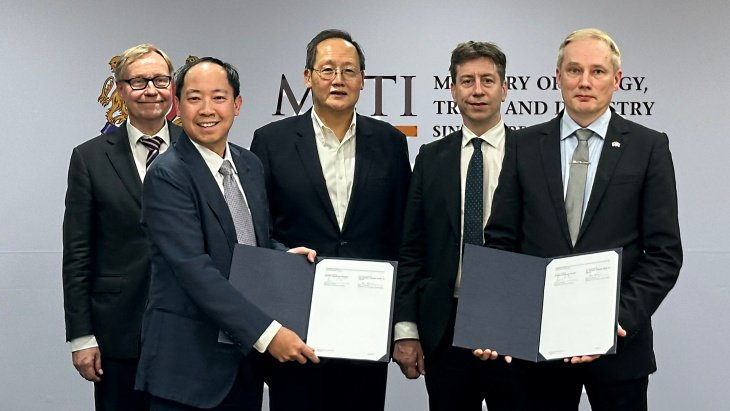
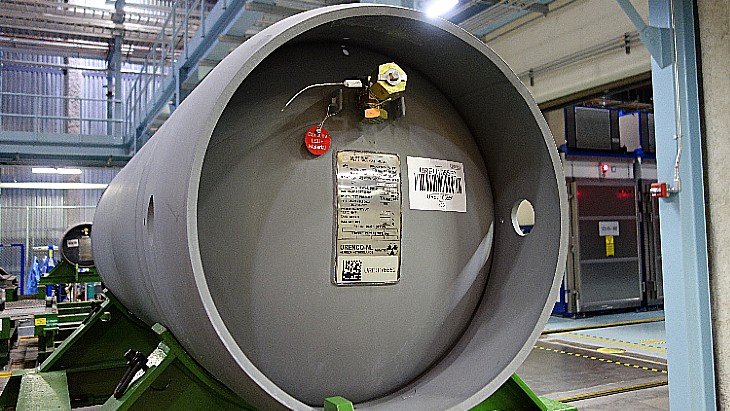
In total the Nuclear Decommissioning Authority (NDA) will provide Bicycle Therapeutics with access to 400 tonnes of reprocessed uranium over the 15 years.
The Cambridge-based biotech company will use technology developed by the UK’s National Nuclear Laboratory and it will extract lead-212 using a novel radioisotope generator developed for them by Spectron Rx.
The National Nuclear Laboratory explains that the “sophisticated chemical separation process isolates exceptionally small quantities of lead-212’s parent material from used nuclear fuel. To put the scale in perspective, the initial parent material extracted is comparable to finding a single drop of water in an Olympic swimming pool. From this already minuscule amount, an even smaller fraction of lead-212 is then separated for medical applications. These trace quantities can then be developed into radiopharmaceuticals – targeted treatments designed to combat some of the most challenging cancer types”.
The reprocessed uranium will continually regenerate the isotopes required “providing an enduring source of tens of thousands of doses of lead-212, for lifesaving precision therapies, each year”, said the UK’s Department for Science, Innovation and Technology.
Targeted radiopharmaceuticals work by delivering radiotherapy directly to cancer cells, reducing side effects and being able to treat some cancers that conventional treatments cannot.
Science and Technology Secretary Liz Kendall said: “Turning nuclear material into cutting-edge cancer treatments sounds like science fiction – but thanks to the brilliance of scientists, researchers and doctors, it could be a life-saving reality.”
Bicycle Therapeutics CEO Kevin Lee said: “We are incredibly grateful to the UK Government for their recognition of Bicycle’s Nobel-prize winning science and potential to create radiopharmaceutical cancer therapies from up to 400 tonnes of reprocessed uranium over 15 years.”
Julianne Antrobus, Chief Executive Officer at UK National Nuclear Laboratory said: “Our purpose is nuclear science to benefit society, and this partnership is a perfect example of this in action. Decades of research by our dedicated teams has made unique partnerships like this possible, and I look forward to seeing our work with Bicycle and the NDA progress.”
NDA CEO David Peattie said: “We’re proud to make part of our uranium inventory available to Bicycle, enabling the development of innovative, life-saving treatments. As the organisation entrusted with the safe and secure management, storage, and disposal of the UK’s radioactive materials and waste – a responsibility we take extremely seriously – this collaboration demonstrates how we can go beyond our core mission.”
The contract announcement comes a month after GBP20 million (USD26.8 million) of funding was announced for research by UK National Nuclear Laboratory and Medicines Discovery Catapult into lead-212 extraction.
According to a case study published by the National Nuclear Laboratory, “as the reprocessed uranium undergoes natural radioactive decay, many different chemical elements are produced which can be separated and utilised. To extract the useful radionuclides, a multi-step process dissolves the uranium before extracting thorium-228 in a set-up known as a thorium cow. The thorium decays naturally over several years, allowing the useful radionuclides – radium-224 which decays to lead-212 – to be extracted periodically. Having demonstrated the success of the thorium cow, UKNNL is now focusing on achieving the purity required for the next stage”.
The laboratory has been collaborating with researchers to enable access to radionuclides for investigations into a range of new treatments and diagnosis, including for cancer, Alzheimer’s and complex heart conditions. Researchers are keen to get materials to test and develop new treatments, and scale up treatments where trials have been successful.
There have been ongoing discussions in the UK about how the valuable radioisotopes in the nuclear legacy material in the country can be recognised and influence future plans for the material.
You can hear more about UKNNL’s work getting value from legacy nuclear material in a World Nuclear News podcast from April 2024: