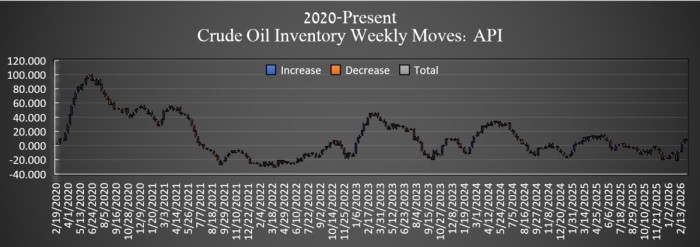
The American Petroleum Institute (API) estimated that crude oil inventories in the United States fell by 1.7 million barrels in the week ending March 6, after adding 5.6 million barrels in the week prior. Analysts had expected a build of 1.4 million barrels.
Inventories in the US Strategic Petroleum Reserve (SPR) have stayed at 415.4 million barrels for multiple weeks in a row as of the week ending March 6. This is 310.1 million barrels shy of maximum capacity.
US production fell again, by 6,000 bpd, sinking to an average of 13.696 million bpd for week ending February 27, according to the latest EIA data. This is 188,000 bpd more than this same time last year.
At 4:23 pm ET, Brent crude was trading down sharply on the day at $91.02 (-8.02%). Brent is still up roughly 11 per barrel up from this time last week with stalled tanker traffic in the Strait of Hormuz and large production losses in Iraq. WTI was also trading down on the day, by $8.03 per barrel (-8.47%) at $86.74.
Gasoline inventories also fell this week, shrinking by 1.8 million barrels in the week ending March 6. In the week prior, gasoline inventories fell by 3.3 million barrels. As of last week, gasoline inventories were 4% above the five-year average for this time of year, according to the latest EIA data.
Related: Little-Known US Company Lands Important Pentagon Contract in Rare Earth Race
Distillate inventories sank by 2.3 million barrels, after increasing by 516,000 barrels in the week prior. Distillate inventories were 3% below the five-year average as of the week ending February 27, the latest EIA data shows.
Cushing inventory—the inventory kept at the delivery hub for the WTI Crude futures contract—rounded out the inventory losses this week with a 370,000-barrel dip.
By Julianne Geiger for Oilprice.com
More Top Reads From Oilprice.com
- Why $100 Oil Isn’t Going to Spark a New Shale Boom
- The Chokepoint Economy: What Happens When Everything Breaks at Once
- Gulf Producers Slash Oil Output by 5 Million Bpd