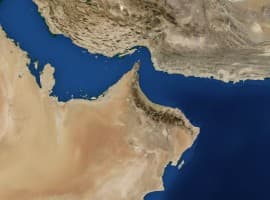
Iran has begun laying naval mines in the strategically vital Strait of Hormuz, according to two people familiar with U.S. intelligence reporting, in what analysts warn could extend the effective blockade of the world’s most critical energy chokepoint and deepen disruption to global oil flows.
The mining activity — currently limited to a few dozen mines laid in recent days — represents an escalation in Iran’s campaign to assert control over the narrow waterway, sources said. Tehran still possesses roughly 80%–90% of its small naval vessels and mine-laying craft, enabling it to potentially deploy hundreds more mines if it chooses, CNN reported.
Iran’s Islamic Revolutionary Guard Corps (IRGC), now sharing control of the strait with the regular navy, has a range of asymmetric capabilities, including scattered mine-laying craft, explosive-laden boats and shore-based missile batteries, giving it the ability to create a complex array of threats to passing vessels. The IRGC has previously warned that any ship attempting to transit the Strait will be attacked, effectively rendering the passage a “death valley” for commercial mariners in the current war environment.
Disruptions in Hormuz have already had significant ripple effects: tanker traffic through the strait has plummeted as shipping companies avoid the area and insurers hike premiums amid risk, and analysts warn that prolonged disruption could trigger one of the largest energy shocks in decades by choking off roughly one-fifth of daily seaborne oil and liquefied natural gas exports, hitting prices, inflation and global supply chains.
Related: Little-Known US Company Lands Important Pentagon Contract in Rare Earth Race
Amid the heightened tensions, confusion over U.S. efforts to secure passage for oil shipments added to market volatility. On Tuesday, the White House confirmed that the United States Navy has not yet escorted any vessels through the strait, contradicting an earlier social media post by U.S. Energy Secretary Chris Wright that claimed an escort had taken place. Press secretary Karoline Leavitt said the Navy escort remains an option “if and when necessary,” but provided no timetable or conditions for such an operation.
U.S. crude prices fell almost $10 on the initial report before rebounding after the clarification, underscoring the sensitivity of markets to both geopolitical developments and shifting official statements.
Military planners, including the Chairman of the Joint Chiefs of Staff Gen. Dan Caine, acknowledged that if tasked with escort missions, the U.S. military would evaluate options to secure conditions for safe passage. But the absence of a clear naval protection strategy, combined with Iran’s growing mine and missile threat, leaves the future of commercial traffic through the Strait of Hormuz highly uncertain.
Analysts say that unless mines are cleared or diplomatic pressures force a reduction in hostilities, the blockade could remain in place for weeks or longer, potentially provoking wider economic impacts that extend far beyond energy markets.
By Tom Kool for Oilprice.com
More Top Reads From Oilprice.com
- Why $100 Oil Isn’t Going to Spark a New Shale Boom
- The Chokepoint Economy: What Happens When Everything Breaks at Once
- Gulf Producers Slash Oil Output by 5 Million Bpd