The new year has barely begun, yet it has already brought a major development for the global energy landscape. The recent US operation that removed Venezuelan President Nicolás Maduro marks the start of a new chapter for a country often cited as holding the world’s largest oil reserves. Although the immediate effect on global oil markets has been limited, the long-term implications for energy are likely to be significant. To explore how this uncertain situation may unfold, host Ed Crooks is joined by frequent guest Amy Myers Jaffe, Director of NYU’s Energy, Climate Justice and Sustainability Lab and a long-time expert on oil markets.
Amy notes that while history does not repeat itself, it often echoes, drawing a comparison between Venezuela today and Iraq after the 2003 US-led invasion that removed Saddam Hussein. Both nations experienced economic decline driven by mismanagement and sanctions, but she argues that Venezuela’s oil industry is in even worse condition. Years of looted equipment, severe fuel and electricity shortages, and deep structural damage raise doubts about how much of the sector can be restored. Melissa Lott, another regular on The Energy Gang and currently a partner at Microsoft, also joins the discussion, appearing in her capacity as an independent energy expert. She examines what Venezuela’s political shift might mean for the broader energy transition.
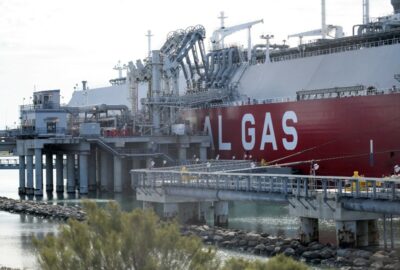
The conversation then moves to other regions, people, and technologies expected to shape energy in 2026. Ed highlights the rapid buildout of liquefied natural gas (LNG) facilities along the US Gulf Coast. According to Wood Mackenzie, this boom could push US LNG exports to nearly double their 2023 levels by around 2030, with further expansion still possible. The group considers the global effects of this surge, including downward pressure on gas prices and increased financial risk for exporters. A potential peace agreement in Ukraine could intensify the oversupply, as more Russian gas might return to European markets.
Looking at influential people to watch in 2026, Melissa points to US Energy Secretary Chris Wright, while Ed focuses on newly appointed FERC Chairman Laura Swett. With the US grid under strain from the growing power demands of AI-driven data centers, effective leadership and policy direction will be crucial. Amy selects China’s President Xi Jinping, noting that China’s next five-year plan could significantly alter global competition for energy leadership.
The episode also highlights key technologies that merit close attention this year. Battery storage remains a central topic, and Melissa and Ed examine the supply chains required to support rising demand, as well as new innovations like Form Energy’s iron-air batteries. These long-duration storage units are entering their first commercial deployment and expected to become fully operational within the year. Amy’s technology pick is humanoid robots, still costly and imperfect, but rapidly evolving. While today’s household robots struggle with simple tasks, she suggests that next-generation AI-enabled robots might eventually take on complex, repetitive work in industrial settings.
Subscribe to get the latest posts sent to your email.