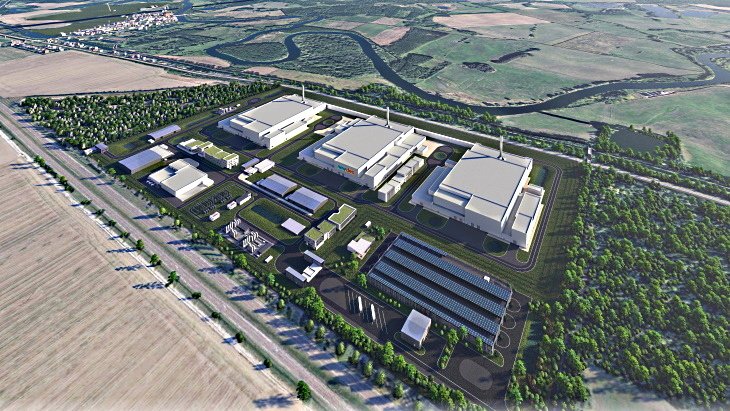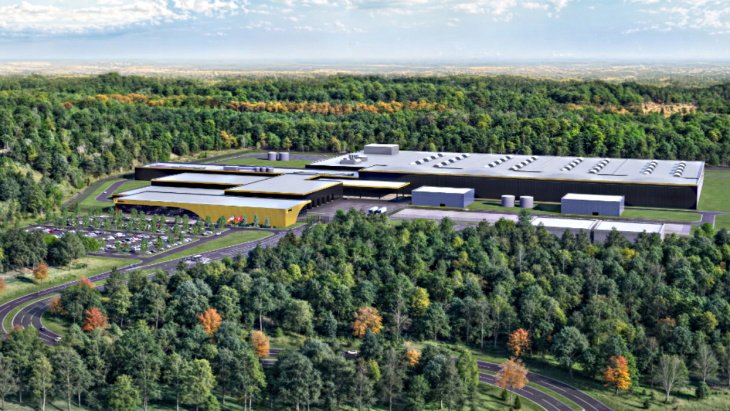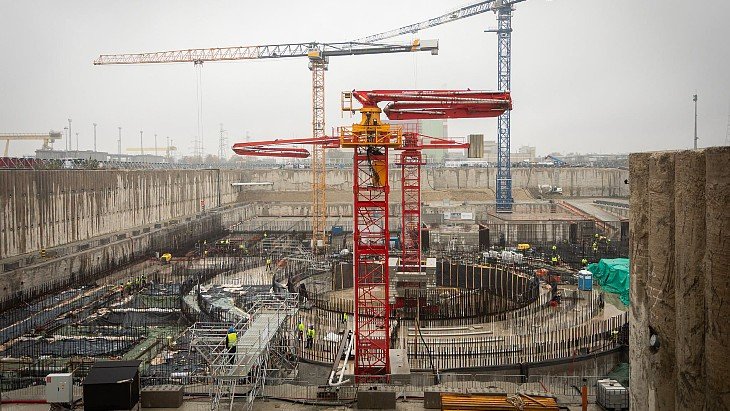
First concrete was poured for the first new unit in February, before the Hungarian elections saw a change of government.
In May, new Hungarian Prime Minister Peter Magyar’s government announced a review of “the status of the Paks Nuclear Power Plant’s operating life extension and the contracts for the Paks II project, as well as the entire investment process”. During the election campaign he had suggested the price agreed for the new units was too high.
According to a report by the official Russian Tass news agency, Attila Sagodi, CEO and chairman of Paks II said: “We’re now conducting a formal, thorough audit of the entire project, covering everything from the design, the readiness of the design documentation and the work schedule to the financial, technological and legal aspects. We plan to complete the audit by the end of this year, then see whether we need to look into any issues in more depth or do any additional work.”
He said the Hungarian government was gathering the information it needs on the project before they “can make a considered decision and choose the right course” and added that on financing “the question goes beyond whether the government will provide funding. The EPC (engineering, procurement and construction) contract has a complex structure that imposes obligations on all parties, so the government can’t simply decide to do things in a way they want to”.
Alexei Likhachev, Director General of Russia’s state nuclear corporation Rosatom, speaking at World Atomic Day at the UN’s COP31 summit in Turkey, said “the Russian side is understanding and willing to provide the necessary clarifications on economic and technological issues”, according to a report in the in-house Strana Rosatom publication.
He also stressed that construction is on-going and said the next step would be the approval of the financial and production plans for next year, adding: “We can only move forward with the project at the speed the client allows us.”
Background
The Paks plant, 100 kilometres south of Budapest, currently comprises four Russian-supplied VVER-440 pressurised water reactors, which started up between 1982 and 1987. An inter-governmental agreement was signed in early 2014 for Russian enterprises and their international subcontractors to supply two VVER-1200 reactors at Paks as well as a Russian state loan of up to EUR10.0 billion (USD10.5 billion) to finance 80% of the project.
The construction licence application was submitted in July 2020, the licence was issued in August 2022, and a construction timetable was agreed in 2023, with a target to connect the new units to the grid at the beginning of the 2030s. The Hungarian Atomic Energy Authority issued permits in November 2025 for first concrete pouring for the foundation of what will be Paks unit 5, with first concrete being poured in February this year.
The project is the first Russian nuclear energy construction project started in a country while it is a member of the European Union, and is taking place despite sanctions targeting Russia. It was also the first pouring of first concrete for any nuclear energy unit in the European Union since first concrete was poured in the then EU member country, the UK, for Hinkley Point C unit 2 in December 2019.