Monday, 6 January 2025
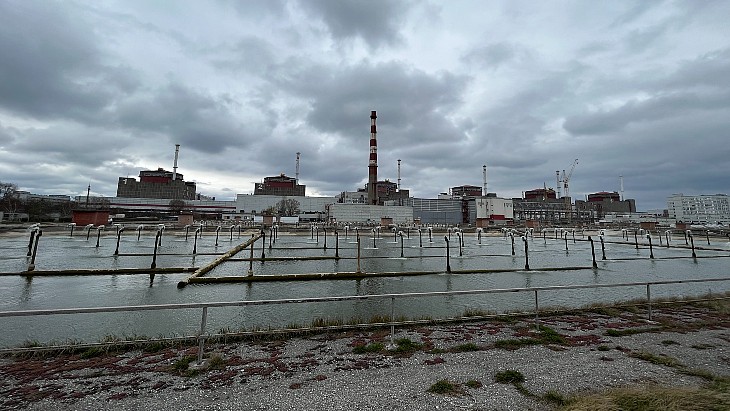
In the agency’s 5 January update it says blasts, from outside the site perimeter, were heard at 12:45 and 15:45 local time on Sunday which coincided “with reports of a drone attack on the plant’s training centre”, which is located outside the power plant’s perimeter. The update added that the IAEA has not been able to confirm any impact and also referred to its staff hearing machine-gun fire on multiple occasions.
The IAEA cited reports which said there were no casualties or impact on the nuclear power plant equipment, but Grossi said: “An attack on any nuclear power plant is completely unacceptable. In light of the increased military activity at ZNPP, I once again call for maximum restraint to avert the clear danger to its safety, and for the strict adherence to the established by the IAEA at the United Nations Security Council to protect the facility.”
Among these five principles are that there should not be attacks on, or from a nuclear power plant, and it should not be used as a military base for heavy weaponry or personnel.
The Zaporizhzhia nuclear power plant has been under Russian military control since early March 2022. All six of the unit’s reactors are currently shut down and there have been IAEA teams stationed at the site – which is on the frontline of Russian and Ukrainian forces – since September 2022 as part of measures to minimise the safety and security risks. The IAEA has not attributed blame for incidents where the plant, and nearby areas, have suffered damage during the war, with each side blaming the other side’s forces.
According to the Tass news agency, Alexei Likhachev, Director General of Russia’s nuclear power corporation Rosatom, told the Russia 24 television channel that they would continue to meet with Grossi in 2025, saying “the IAEA is probably the only organisation from the UN umbrella that has not in any way limited the activities of either Russia or the Rosatom state corporation”.
In an interview published by the company’s Strana Rosatom, Ramil Galiev, newly appointed CEO of the Zaporizhzhia NPP operating organisation, said his plans included restructuring the organisation “to the typical structure of Rosenergoatom NPPs”. He said his top priority was doing everything that could be done to ensure safety of the NPP, followed by preparing the units for switching to power generation mode: “We are preparing a package of documents for Rostekhnadzor to obtain a licence to operate the first unit. And then for the rest”.
He said the third key task was to “replenish the water supply” in the plant’s cooling pond where the “water level is decreasing due to the destruction of the Kakhovka reservoir dam. A decision has been made to manufacture new pumping station equipment and install it in the Dnieper riverbed”.
Ukraine’s nuclear operator Energoatom says that the plant “must be transferred back under the control of its legal operator, Energoatom, as soon as possible. This is the only way to guarantee the safe operation of the nuclear facility”, with Energoatom CEO Petro Kotin saying that they “receive evidence of the degradation of the equipment almost every day”.