Thursday, 22 May 2025
_52327.jpg)
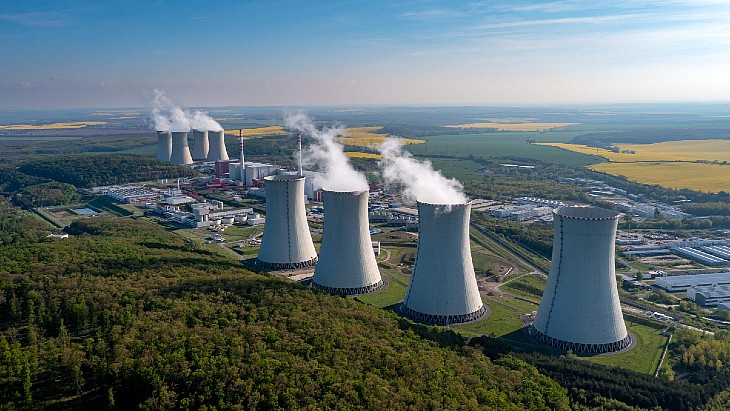
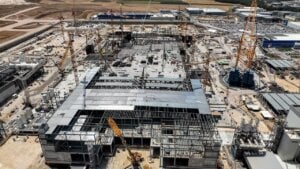
In November 2022, the then Polish government selected Westinghouse AP1000 reactor technology for construction at the Lubiatowo-Kopalino site in the Choczewo municipality in Pomerania in northern Poland. An agreement setting a plan for the delivery of the plant was signed in May last year by Westinghouse, Bechtel and Polskie Elektrownie Jądrowe (PEJ) – a special-purpose vehicle 100% owned by Poland’s State Treasury. The Ministry of Climate and Environment in July issued a decision-in-principle for PEJ to construct the three-unit plant. The aim is for Poland’s first AP1000 reactor to enter commercial operation in 2033. The total investment costs of the project are estimated to be about PLN192 billion (USD49 billion).
The government expects Polish companies to supply at least 40% of the components and services for the country’s first nuclear power plant.
“We are starting our adventure [in nuclear power],” Andrzej Sidlo, counsellor at the Polish Ministry of Industry told the event, organised by World Nuclear Association. “However, we are not starting from scratch … we don’t yet have nuclear in our energy mix, however we have a lot of experienced nuclear companies because of export projects and because of international cooperation.”
Monika Silva, Deputy General Director of IGEOS Nuclear – part of the Chamber of Commerce for Energy and Environmental Protection – told those attending that, overall, Polish companies have already supplied components and services to 44 nuclear power plant projects, two nuclear laboratories and two nuclear facilities in 26 countries around the world.
In March, international law firm Baker McKenzie – which acted as legal counsel to Korea Electric Power Cooperation in relation to all aspects of the development, financing and refinancing of the UAE’s Barakah project – published a report assessing the current state of readiness of the Polish nuclear sector in respect of the construction of the country’s first nuclear power plant. The report also describes the further actions needed to bring Poland closer to completing the project.
The report, using the Nuclear Energy Readiness Index, found that Poland was about 58% ready to start construction of the Choczewo plant, scoring the highest scores for the political (9/10), regulatory and social (8/10) aspects of the undertaking. The lowest score was in the technology field (3/10). Investment and systemic issues, which consist of finance, human resources, accompanying investments and preparation of public administration, received 4 points each.
“It’s very surprising that we have a very high score on the Polish political readiness because we are a pretty divided country when it comes to politics,” said Agnieszka Skorupinska, Partner, Head of Sustainability and Energy Transition at Baker McKenzie. “But here we all agree we need to have nuclear, so this is a very important development and very important conclusion.”
However, the Baker McKenzie report found that the preparedness of the country’s supply chain was low, with local companies particularly needing guidance on norms and standards.
“We did rate it rather low, but not in the sense of companies being not fit or not prepared, but simply where the first nuclear project is … the problem they have is that they really don’t know 100% what is expected from them,” Silva said. “I think when the information is clear – we need you to do this and that and this will be our requirements for that product – then it will be much easier for the Polish companies to show their real potential.”
She said that the Polish industry was quite divided into two distinct groups – one that is “already involved, very developed, very skilled, having all of the levels of the requirement fulfilled”. The second group are those that for many years did not believe that the Polish nuclear power plant project would materialise, so now need to take steps to prepare for it.
According to a survey released earlier this year by the Polish Economic Institute, more than 70% of Polish companies said they have experience in the energy sector that can be used in a nuclear project. One-third of companies declare experience from other projects in the nuclear sector abroad. The survey questioned more than 100 Polish companies, including more than 30% of the sample from the Pomeranian Voivodeship, where the project of the first Polish nuclear power plant is being implemented. The study included companies from the construction sector (30%), engineering and construction (28%) and machinery (22%).
Most of the surveyed companies have experience in large infrastructure projects, of which almost half (45%) have worked on the construction of gas or coal-fired power plants, and almost one-third (29%) have experience in nuclear energy. The study also showed that as many as three-quarters of Polish companies have experience in implementing at least one project in the energy sector.
The factors most frequently mentioned among those attracting domestic entrepreneurs to the Polish nuclear project included the opportunity to enter the nuclear energy sector, the possibility of developing and increasing the scale of operations, increasing employee competences and obtaining valuable references, as well as the ambitious and demanding nature of the project.
The companies surveyed were also aware of possible difficulties in joining the project. They mainly indicate a lack of financial support, a competence gap, too high investment requirements and difficulty in recruiting suitably qualified employees.