Thursday, 5 June 2025
_38013.jpg)
Westinghouse, Radiant, and Ultra Safe Nuclear were competitively selected last year to receive federal funding totalling USD3.9 billion to support them in the front-end engineering and experiment design – or FEEED – process in preparation for the testing of fuelled reactor experiments at the National Reactor Innovation Center’s Demonstration of Microreactor Experiments (NRIC-DOME) test bed. Westinghouse’s submission in September last year of the Preliminary Safety Design Report marked the company’s completion of the FEEED process, which involves developing a detailed schedule, budget, design, and test plan for the experiment, as well as the detailed preliminary safety report on its design to ensure safe operations during testing.
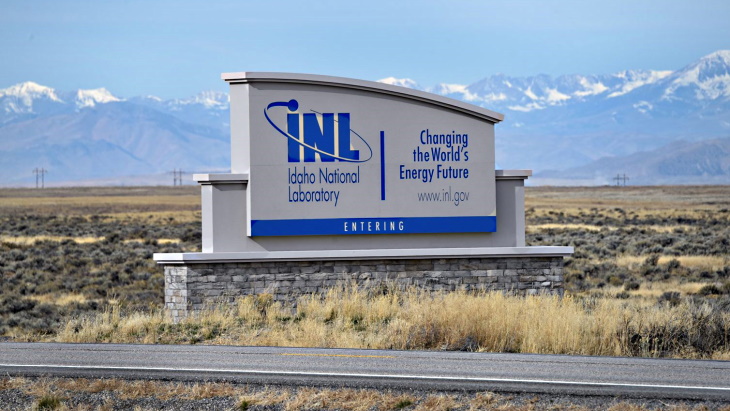
The Preliminary Safety Design Report (PSDR) provides the detailed design and safety case overview of the eVinci nuclear test reactor required by the Department of Energy (DOE) to locate it at the NRIC-DOME, which is one of two historic facilities at Idaho National Lab that are being remodelled and retrofitted by NRIC to create test beds for advanced reactor technology. DOME’s 80-foot-tall concrete and steel structure was built in the 1960s to house the Experimental Breeder Reactor-II which operated from 1964 until 1994. It is expected to be ready to begin testing in 2026.
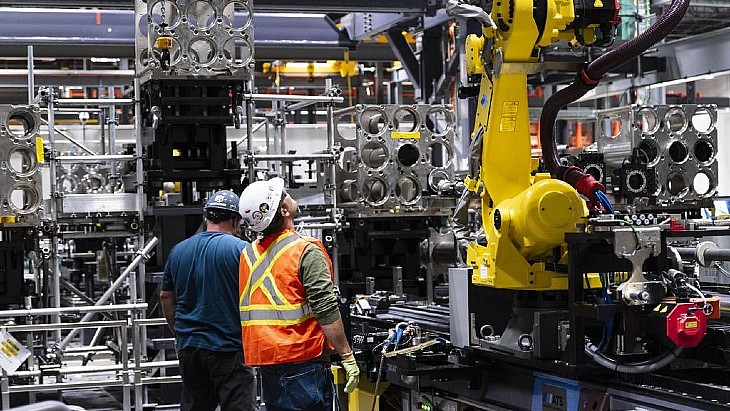
The eVinci is a heat pipe-cooled microreactor which can produce up to 5 MWe with a 15 MWt core design. The TRISO-fuelled reactor core is designed to run for eight or more full-power years before refuelling, and the factory-built and assembled reactor can be shipped in a container to provide versatile, scalable energy for a variety of applications.
The eVinci test reactor is a scaled-down 3 MWt version designed to demonstrate key portions of the eVinci design and enable the development of the larger commercial eVinci microreactor.
“Becoming the first test reactor to receive approval of its PSDR demonstrates the maturity of our eVinci design and underscores the momentum we have in commercialising and deploying this technology,” said Jon Ball, eVinci Technologies President at Westinghouse. “We appreciate our strong partnership with the teams at INL and DOE and look forward to their continued collaboration in the NRIC-DOME programme.”
Westinghouse said its eVinci Licensing Department is now developing the draft Preliminary Documented Safety Analysis, which is the third of four DOE submissions needed to site the eVinci test reactor.
The company is currently engaged in pre-application activities with the US Nuclear Regulatory Commission (NRC) to support the eventual licensing of the eVinci microreactor. In December, the regulator approved the reactor’s Advanced Logic System Version 2 instrumentation and control platform, making it the first microreactor with an NRC-approved I&C system.
In April, the NRC approved the Principal Design Criteria Topical Report for the eVinci microreactor in the USA. Principal Design Criteria – or PDCs – define how each part of the reactor’s structures, systems, and components will function, and ensure that the design conforms to design bases outlined in NRC regulations. Approval of these criteria provides a clear path to licensing the eVinci microreactor for deployment as well as simplifying and streamlining the licensing process for customers, Westinghouse said.