• How do you see the current growth and potential of the solar PV market in the Philippines?
The solar PV market in the Philippines is experiencing remarkable growth, with strong potential for further expansion. The country’s abundant solar resources, coupled with increasing awareness of renewable energy’s benefits and supportive government policies, make it an ideal environment for solar investments. The declining cost of solar technology, growing energy demand, and the need for sustainable power solutions are accelerating adoption. These are also our major driver for pushing floating solar in the Philippines. We see floating solar to play a key role in the country’s energy transition.
• What are the key challenges facing solar energy adoption in the country, and how is Blueleaf Energy addressing them?
With over 15 years of experience in the power industry, I’ve seen the complexities facing the solar energy sector in the Philippines, particularly the high upfront costs driven by specialized materials and engineering. At Blueleaf Energy Philippines, we tackle this challenge through cost-efficient designs and innovative technologies. Securing suitable bodies of water also involves navigating intricate permitting processes, but we work closely with government agencies such as the Board of Investments, and communities to streamline approvals.
Integrating solar power into the grid can be challenging, especially in remote areas with limited infrastructure. We address this by strategically selecting project sites with available grid capacity or proximity to substations. Early collaboration with the National Grid Corporation of the Philippines (NGCP) and the Department of Energy (DOE) ensures alignment with grid development plans, minimizing potential delays.
Despite these hurdles, we remain optimistic about the future of floating solar energy. By leveraging our expertise and fostering strong partnerships, we are committed to unlocking the full potential of this clean and sustainable energy source.
• What role do you see government policies and incentives playing in the expansion of solar energy in the country?
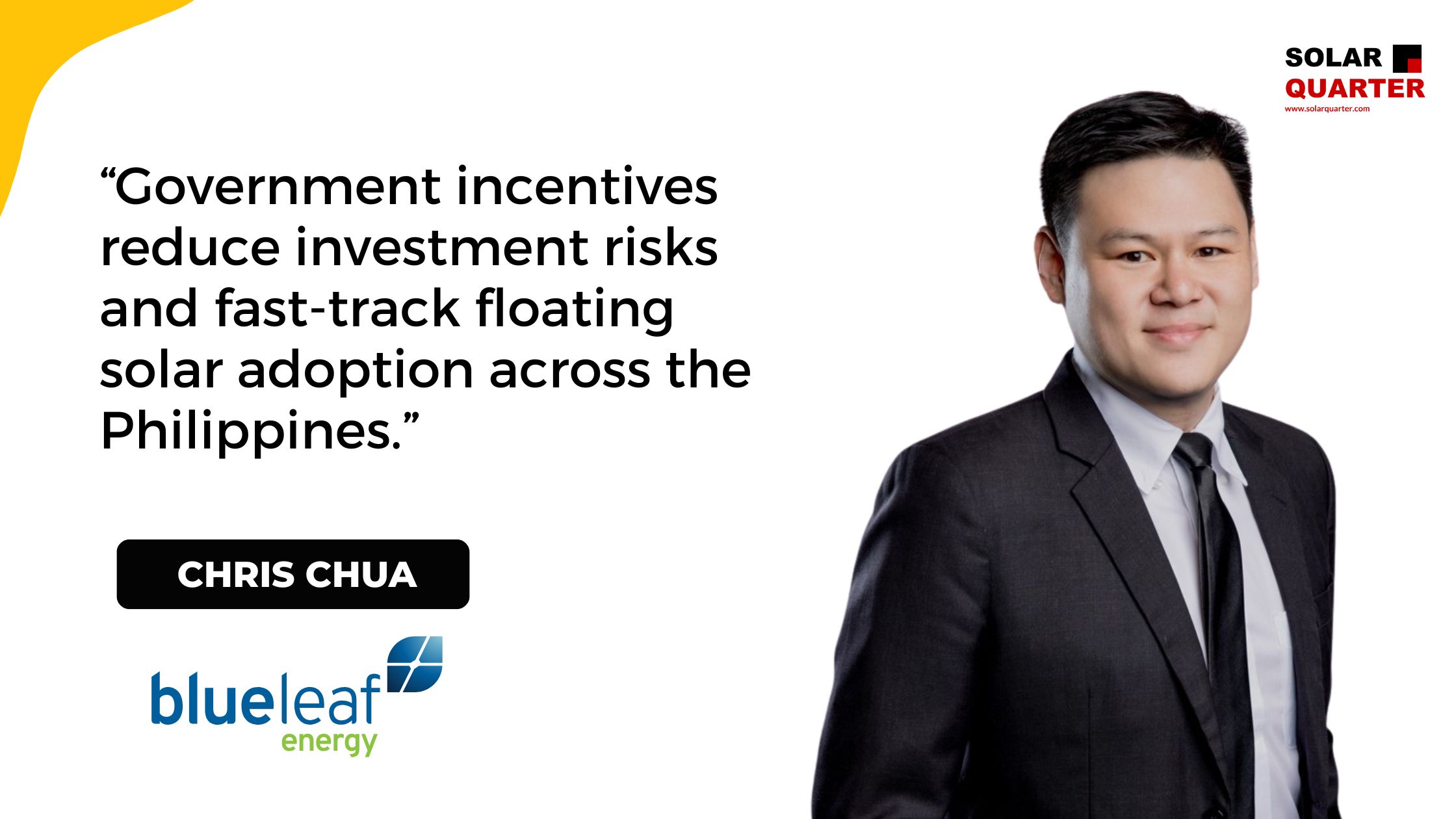
Government policies and incentives are instrumental in accelerating the growth of floating solar in the Philippines by reducing investment risks, streamlining regulations, and enhancing project viability. Clear and consistent policies provide the confidence investors need to support large-scale renewable energy projects. Initiatives like the Board of Investments (BOI) Green Lane are particularly impactful, as they expedite the permitting process for renewable energy projects, significantly reducing approval times and allowing developments to proceed without unnecessary delays. Additionally, the Renewable Energy Law offers various incentives, including tax exemptions making solar energy projects more financially viable and attractive for both local and international investors.
Further, we actively collaborate with government agencies and stakeholders to advocate for policies that foster a supportive environment for floating solar development. Open dialogue and strong partnerships are essential to addressing challenges, refining regulations, and ensuring that renewable energy goals are met. A robust regulatory framework not only drives investment but also enables the country to accelerate its transition to clean energy, contributing to energy security, economic growth, and environmental sustainability.
• How is Blueleaf Energy leveraging technology and innovation to enhance solar PV efficiency and reliability?
We are committed to integrating cutting-edge technology and innovation to maximize the efficiency and reliability of floating solar PV.
- We utilize high-efficiency solar panels to optimize energy generation.
- Our advanced mooring systems ensure stability and durability, even in challenging environmental conditions.
By continuously adopting and refining innovative technologies, we aim to deliver efficient, resilient, and sustainable floating solar solutions for the Philippines.
• How do you see the role of utility-scale solar projects versus distributed solar in meeting the country’s energy demands?
Both utility-scale solar and distributed solar play crucial roles in meeting the Philippines’ growing energy demands.
Utility-scale solar projects contribute large amounts of clean energy to the grid, supporting national energy security and reducing dependence on fossil fuels. These large-scale installations are particularly effective in areas with abundant land or water resources. Our NKS Solar One floating solar project for example, will be set up in Lakes Caliraya- a man-made lake in Laguna which is already being used for hydropower.
On the other hand, distributed solar—such as rooftop installations on homes and businesses—empowers consumers to generate their own electricity, lowering costs and improving grid resilience. This decentralized approach can be especially beneficial in urban centers and off-grid communities.
I believe that a balanced mix of utility-scale solar and distributed solar is essential for building a sustainable energy future for the Philippines. By leveraging both approaches, we can enhance energy access, improve grid stability, and drive the transition toward a cleaner, more resilient energy system.