By Aimee Donnellan and Karen Kwok
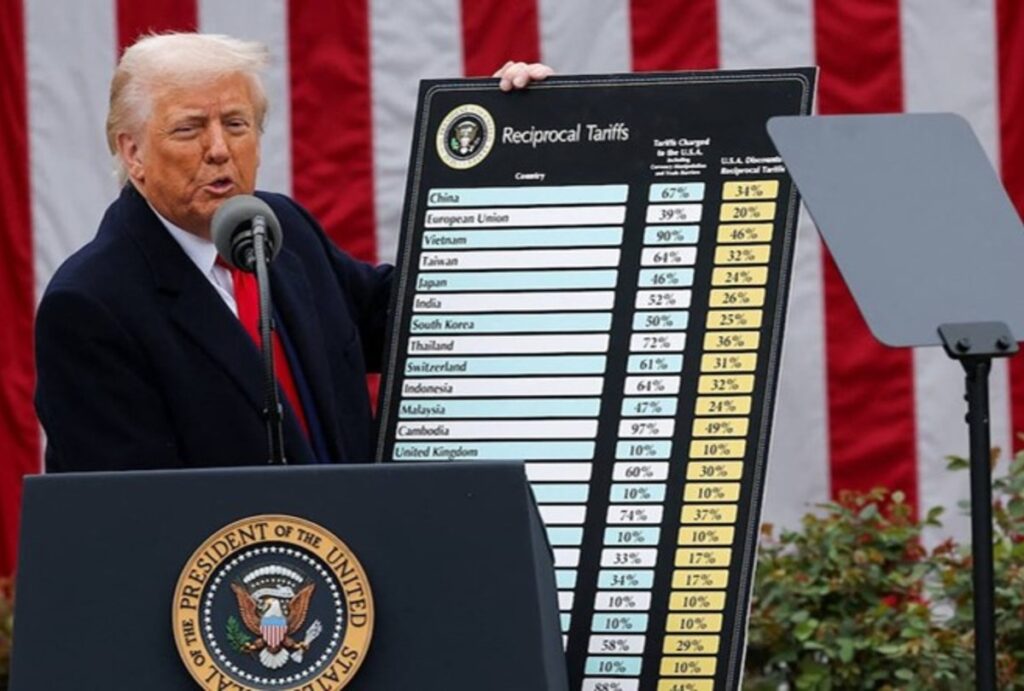
DUBLIN/LONDON, July 9 (Reuters Breakingviews) – A good tradesperson picks the right tool for the job. That’s not the approach Donald Trump is taking to his retooling of the American economy. The U.S. president floated 200% and 50% tariffs on drugs and copper respectively. But the outcome of hammering these two wildly different industries with the same blunt instrument is likely to disappoint him. Trump’s aim is to bring more manufacturing back home and to make the United States less reliant on imports of key materials. The hope may be that punitive tariffs on copper, which is critical to making everything from data centres to power grids, will incentivise companies like $66 billion Freeport-McMoRan to open new mines. When it comes to pharmaceuticals, Trump has an even greater gripe. U.S. drug imports soared to $213 billion in 2024, more than two and a half times the total from 10 years earlier. His threats to the industry are about getting a large chunk of the lost pharmaceutical production back onshore, which could create jobs and secure U.S. access to key medicines.
Get the Latest US Focused Energy News Delivered to You! It’s FREE:
Still, CEOs have good reason to take Trump’s words with a pinch of salt. This week, the U.S. president extended some of the so-called reciprocal tariff deadlines for the second time. European pharma stocks have barely budged, perhaps because investors are looking at the possible 18-month timeline and concluding that those tariffs will never happen. Copper prices have moved more, with New York-traded prices for the red metal up 30% over the past six months, suggesting a higher degree of faith that Trump’s words will translate into actual policy.
These differing reactions also reflect the wildly different ways in which tariffs might affect the two sectors. Drugs and copper are arguably at opposite ends of the spectrum, in terms of how easy it is to move production. To make a medicine, drugmakers need factories, workers, regulatory approval and ingredients. Once they have those things in place, they can manufacture as many drugs as they can afford. Companies like AstraZeneca, GSK and Novartis operate with cushy EBITDA margins around 30% or more, affording room for large capital expenditures on new sites. What’s more, the giant U.S. market is too big to ignore, meaning that a consistent duty might bring more manufacturing into the country over time, if CEOs can eventually look past Trump’s erratic policymaking. The copper market, however, tells a different tale. In 2024, the U.S. only produced enough of the red metal to meet half of its local demand, according to Morgan Stanley analysts. Cutting out Chile, Canada and other trading partners therefore looks forlorn. Developing a mine takes 29 years in the United States, according to S&P Global, partly due to restrictive regulations around permits. And unlike with sneakers, food and drinks, it’s harder to find the so-called substitution with a commodity. Electric vehicles’ need for copper, for example, can in theory be reduced by using other conductive metals, but doing so takes time and money. The upshot is that tariff costs will feed directly into prices of the related goods.
In other words, Trump is wielding the same tariff hammer at wildly different problems, and seems likely to get predictably mixed results.
CONTEXT NEWS
U.S. President Donald Trump said on July 8 that he would announce a 50% tariff on copper.
After Trump spoke, Commerce Secretary Howard Lutnick said in a CNBC interview that duties on the metal would likely be in place by the end of July or August 1.
Shares in one of the world’s largest copper producers, Arizona-based Freeport-McMoRan, were up 4.8% as of 0955 GMT on July 9, using the company’s German-listed securities.
Meanwhile, on July 8 Trump threatened to impose 200% tariffs on the pharmaceutical sector. He said that these levies could be applied after a transitional period of a year to 18 months.
The share price reaction from European drugmakers was muted in morning trading on July 9. Novo Nordisk’s shares fell 1.6%, AstraZeneca was down 0.33%, Novartis was down 0.5%, GSK was up 0.1% and Roche was down by 0.1%.
The authors are Reuters Breakingviews columnists. The opinions expressed are their own.
Editing by Liam Proud; Production by Oliver Taslic
Share This:
More News Articles