India’s transition to a low-carbon, sustainable economy is on the threshold of a turning point. With the 2070 net-zero goal, India is reorienting the priorities of its energy policy towards the largest growth of renewable energy, natural resource efficiency, and future-proof storage technology. The priorities are moving away from capacity addition and toward the creation of an integrated, robust, and future-proof growth of energy infrastructure.
Solar Power: The Growth Engine
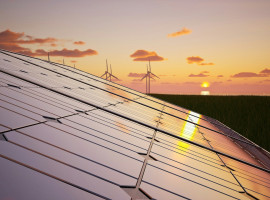
Solar is ahead of India’s clean energy revolution. With plenty of sunshine across much of the nation, solar power is a low-cost, scalable source of clean energy. India’s solar capacity today stands at more than 85 GW and is on its way to reaching 280 GW by 2030. Falling panel costs, rising manufacturing under the Production Linked Incentive (PLI) scheme, and brisk uptake of distributed rooftop installations are driving deployment.
But it must invest in smart energy management systems, transmission, and grid integration at the same time. Otherwise, solar’s promise—and especially its contribution to energy security—will be squandered.
Waste-to-Energy: Turning Challenges into Assets
Urban India produces more than 160,000 tonnes of solid waste per day, the major share of which reaches landfills. It’s not only an environmental threat; it’s also a loss of potential in tapping the energy source in waste. Waste-to-energy (WTE) plants can reduce cities’ dependence on landfills, curb methane emissions, and produce baseload power.
Technologies like the WTE of today’s times now allow for cleaner burning, higher efficiency, and reduced emissions, which are socially and environmentally more desirable. Putting WTE in India’s renewable basket will solve two of its most critical needs simultaneously—waste disposal and clean energy.
Energy Storage: The Missing Link
For India to be so dependent on such volatile renewables as wind and solar, storage has to become an investment and policy priority. Storage fills the gap between demand and supply, providing reliability and stability to the grid.
Lithium-ion batteries reduced their costs for much of the globe, and India is also developing alternatives such as sodium-ion, flow batteries, and pumped storage hydropower (PSH). PSH provides proven large-scale storage by tapping off-peak power to pump water up the hill and allowing it to return downhill to produce power when demand is high. The majority of the PSH schemes are currently in fast-track mode, acknowledging their contribution to balancing the grid with its dominant share of renewables.
Policy Alignment for Net-Zero
The recent policy initiatives of the government—whether it is renewable procurement obligations (RPOs) and energy efficiency standards to green hydrogen and storage incentives—are a prelude to more decisive action on clean energy transition. But quicker execution, quicker clearances, and increased public-private partnership will be the mantra if the ambitious 2070 deadline is to be realized.
A Call for Integrated Action
India’s future energy does not rest in silo answers but in synergy among multiple technologies—solar to scale, WTE to harvest the circular economy, and storage for reliability. Convergence facilitated by policy, innovation, and investment can assist us in creating a clean, secure, and equitable energy system.
Going ahead, we must never forget that net-zero is not just an environmental requirement but a strategic choice to transform India’s economy for growth and sustainability in the times to come.
Subscribe to get the latest posts sent to your email.