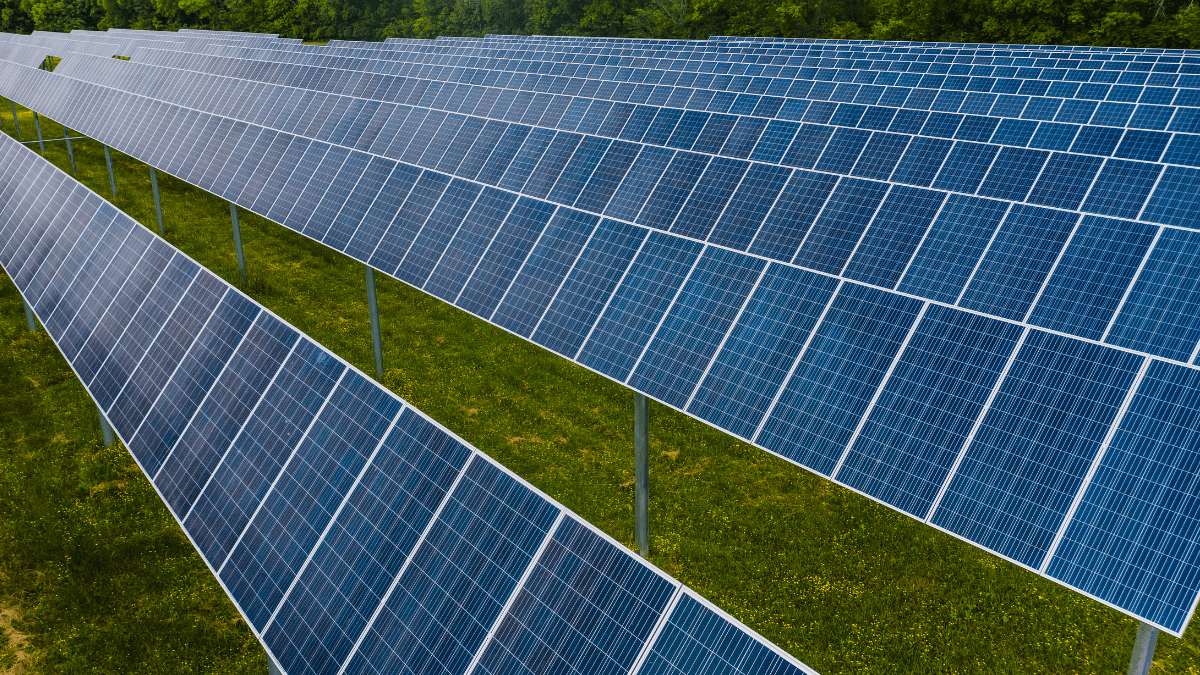
The Middle East and North Africa (MENA) solar sector has entered a decisive phase in 2025. While capacity growth remains strong, the latest MESIA Mid-Year Report reveals that the industry’s trajectory is being reshaped by a new set of priorities: resilience, digital integration, and system intelligence.
From Desert Strength to Desert Fragility
Desert nations like Saudi Arabia and the UAE, long heralded for their vast solar potential, are also confronting the region’s harsh realities. High winds, abrasive dust, and soaring temperatures are exposing vulnerabilities in solar tracker systems. Failures in markets such as Brazil, Australia, and the Middle East itself show that wind tunnel tests alone are not enough. The new frontier is system-wide resilience—a blend of smarter sensors, AI-driven stow strategies, and robotic cleaning. Without such integration, even minor tracker faults can erase a year’s returns.
Floating Solar: Complement, Not Competitor
Floating solar PV (FPV) is emerging as a niche but promising solution. Reservoir-based FPV could, in theory, supply more than 9,000 TWh annually worldwide, but in MENA, adoption remains slow. Projects in Morocco, Egypt, and the UAE show potential—especially for conserving water and land—but bankability remains in question. Analysts stress that FPV will not replace ground-mounted PV. Instead, its role will be complementary, especially where land is scarce and water conservation is critical.
Smart Solar Ecosystems Take Shape
Perhaps the most striking shift is the move from fragmented procurement to integrated solar ecosystems. Instead of chasing panel-level efficiency gains, developers and financiers are now prioritizing lifecycle performance and system intelligence. Bundled solutions—combining modules, trackers, storage, and digital controls—are being favored in tenders. This shift reflects a broader reality: in extreme environments, adaptability trumps low cost.
Artificial Intelligence: From Buzzword to Backbone
AI is no longer an experimental add-on in solar operations; it is becoming the operational backbone. With soiling rates in Abu Dhabi as high as 0.87% per day, manual cleaning is unsustainable. Fully automated cleaning robots now achieve 99.5% efficiency, while AI-enhanced SCADA systems predict faults before they escalate. Drone-based inspections and machine learning-driven maintenance scheduling are accelerating the sector’s pivot toward predictive, rather than reactive, operations.
Digital Meets Solar: The Rise of Green Data Centers
One of the more unexpected synergies is the marriage of solar energy and digital infrastructure. The Middle East green data center market—valued at USD 2.3 billion in 2024 and projected to quadruple by 2032—is increasingly tied to solar deployment. Landmark projects like the Moro Hub solar-powered data center in Dubai and Israel’s USD 1.1 billion Ashalim facility highlight how solar is becoming foundational to the region’s digital economy. Here, solar is no longer just about decarbonization—it is a strategic lever for competitiveness in the global data economy.
Storage: The Silent Risk Factor
Battery Energy Storage Systems (BESS) remain essential to grid stability, but the report points to a troubling finding: 72% of defects occur at the system integration stage, not during cell or module production. Issues with fire suppression, thermal management, and auxiliary circuits threaten performance and safety. The message is clear—without rigorous factory acceptance testing and supply chain accountability, storage risks undermining the reliability of MENA’s clean energy transition.
The Big Picture: Net-Zero Requires More Than Megawatts
MESIA’s analysis underscores a strategic pivot. Success in MENA is no longer defined by the number of megawatts installed but by how intelligently systems are designed and managed. Governments are embedding local content rules, investing in domestic manufacturing, and pushing hybrid solar-storage-grid models. In markets from Egypt to Saudi Arabia, the focus is shifting to grid resilience, digital integration, and local innovation.
A Smarter Solar Future
The takeaway is unmistakable: the MENA solar sector is evolving from a race for scale into a test of intelligence and durability. The winners will be those who integrate AI, storage, and digital ecosystems, while mitigating risks in trackers, floating solar, and BESS. As solar becomes the backbone of net-zero pathways, the real question for the region is not whether it can expand fast enough—but whether it can expand smartly enough.
Subscribe to get the latest posts sent to your email.