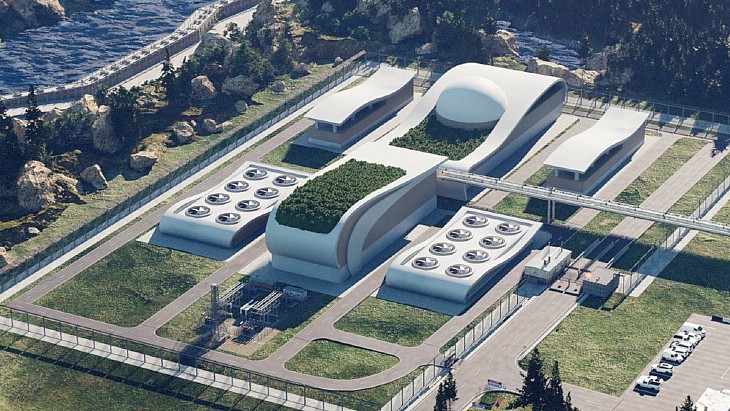
The facility will consist of several concrete bunkers that will house large concrete vaults in which short-lived low- and intermediate-level waste will have been encapsulated with mortar. Currently, 28,831 vaults are planned, spread across two zones: 20 bunkers in the first and 14 in the second.
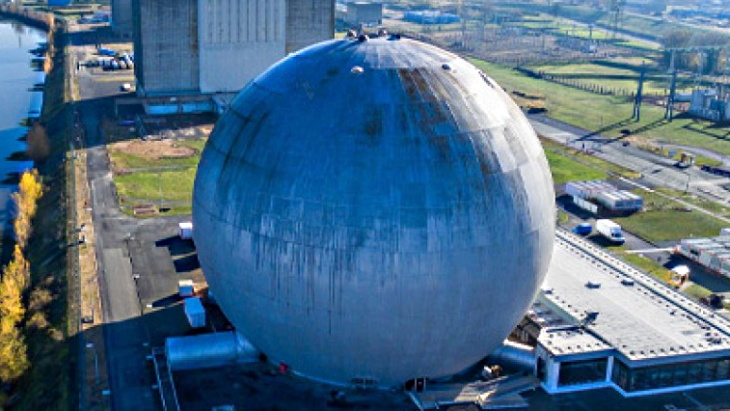
The Dessel facility will house all Belgian low- and intermediate-level, short-lived radioactive waste including that from nuclear power plants, hospitals, research institutes and the decommissioning of nuclear facilities. Currently, this waste is managed by national radioactive waste management agency ONDRAF/NIRAS’s industrial subsidiary Belgoprocess in several dedicated buildings on the Dessel site.
The storage phase will last about 50 years. Afterward, the site will be permanently covered by several natural and artificial layers to prevent water infiltration. Two green hills approximately 20 metres high will then appear in the landscape. After filling, the facility and its surroundings will be monitored and controlled for 300 years. After that, monitoring will no longer be necessary to ensure safety.
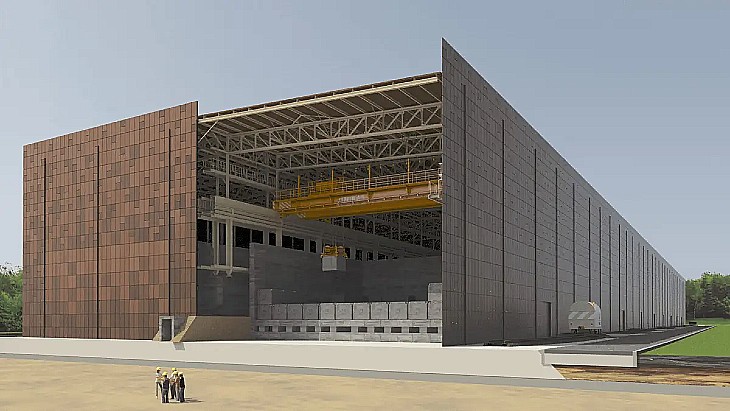
A rendering of the new facility (Image: ONDRAF/NIRAS)
In 2006, the federal government approved the development of the surface storage project in Dessel. ONDRAF/NIRAS submitted an initial version of the licence application for the facility to the Federal Agency for Nuclear Control (FANC) on 31 January 2013. However, FANC declared that the dossier was incomplete and requested a number of additional clarifications and additions. ONDRAF/NIRAS submitted the completed version of the application to FANC in February 2019. A permit to construct and operate the facility was granted in 2023.
In June this year, the NucleusSafe partnership – a joint venture of Belgian contractors Deckx, BESIX, Vanhout and Stadsbader – was announced as the contractor for civil engineering works, with construction company Denys responsible for electromechanical aspects.
“This is a unique moment for our country, one of which I am very proud,” said ONDRAF/NIRAS Director General Marc Demarche. “It took many years and a lot of effort on the part of our teams to meticulously prepare this disposal project. For example, the safety file is nearly 25,000 pages long, demonstrating in detail how we will guarantee safety for at least 300 years. Now it’s up to the contractors to start the work and up to us to monitor it.”
Prime Minister Bart De Wever added: “Nuclear technology is one of the keys to a better future. That is why, after years of hesitation, this government has finally abandoned the nuclear phase-out. Reliable and affordable energy, medical advances, or industrial safety: for many important applications, nuclear technology is crucial. Our country enjoys a solid reputation in these areas. With this fantastic project, we are once again strengthening our pioneering role in the safe and collectively supported storage of nuclear waste.”
Belgium has yet to take a position on the final disposal of high-level and/or long-lived waste.