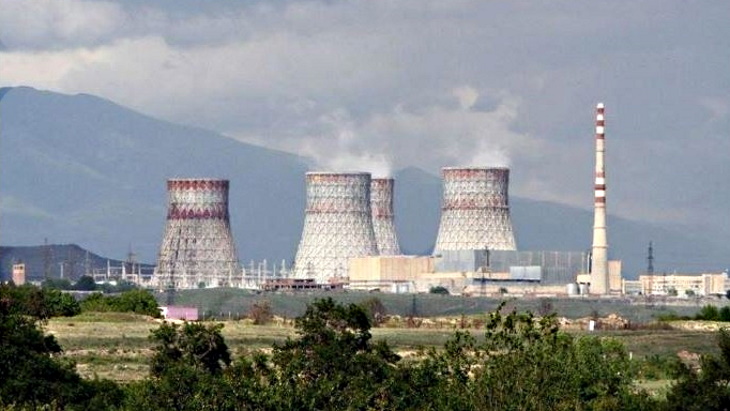
The Armenian Nuclear Power Plant (ANPP) comprises two Russian-built 376 MWe VVER reactors which started operating in 1976 and 1980, respectively. Both units were taken offline in 1988 due to safety concerns regarding seismic vulnerability, although they both continued to operate and had not sustained any damage in a major earthquake in the region earlier that year. Unit 2 was restarted in 1995, and is subject to ongoing safety improvements. Unit 1 is now being decommissioned.
In October 2021, the Armenian Nuclear Regulatory Authority (ANRA) issued a permit to the operator to continue operating unit 2 until September 2026. This is beyond the originally granted licence, which was until the end of 2021. The operator has requested permission from ANRA to operate the unit for an additional 10 years, until September 2036.
A Safety Aspects of Long-Term Operation (SALTO) peer review is a comprehensive safety review addressing strategy and key elements for the safe long-term operation (LTO) of nuclear power plants. SALTO missions complement IAEA Operational Safety Review Team (OSART) missions which are designed as a review of programmes and activities essential to operational safety. SALTO peer reviews can be carried out at any time during the lifetime of a nuclear power plant, though according to the IAEA the most suitable time lies within the last 10 years of the plant’s originally foreseen operating period. SALTO and OSART reviews are carried out at the request of the IAEA Member State in which the review is to take place.
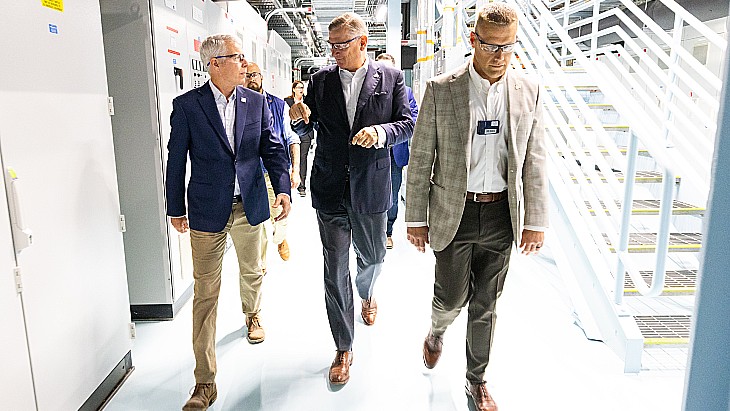
An IAEA team completed a ten-day SALTO mission to the Armenian plant on 9 October, which built upon a previous SALTO mission in 2018 and a follow-up mission held in 2021. The ten-person team included experts from Argentina, the Netherlands, Romania, Ukraine, the UK and the USA, as well as two IAEA staff members and two observers from Hungary and the World Association of Nuclear Operators.
“The plant has clearly made progress since previous missions and has done a lot to address the previous SALTO findings,” said team leader and IAEA Nuclear Safety Officer Bryce Lehman, who noted that many ageing management and LTO activities were in alignment with IAEA safety standards. “We encourage the plant to continue implementing the remaining activities for LTO and to address the review findings.”
The team identified good performances that will be shared with the nuclear industry globally, including: continuously improving organisational practices, adopting international best practices and experience from the first LTO period to improve the approach and documentation for the upcoming second LTO period; conducting periodic reviews of the seismic qualification programme, considering the latest knowledge and international operating experience; and implementing a comprehensive modernisation process performed by the staff of the plant.
The team also provided suggestions and recommendations to further improve safe LTO, for example, the plant should: update the existing plant programmes to fully address ageing management for the upcoming second LTO period; complete the qualification programme for equipment in harsh environments and fully implement it for LTO; and effectively implement the ageing management programmes for civil structures.
“We appreciate the IAEA’s support in ageing management and preparation for our second LTO period,” said ANPP Chief Engineer Artur Grigoryan. “It is very important for us to get an external review of our ageing management activities. The competencies and experience of the IAEA team will help us identify areas for improvement. The results of this mission will help us improve our activities for safe LTO and further align our activities with IAEA safety standards.”
A draft report has been provided to plant management and ANRA. They have the opportunity to make factual comments on the draft, with the final report to be submitted to them and the Armenian government within three months.