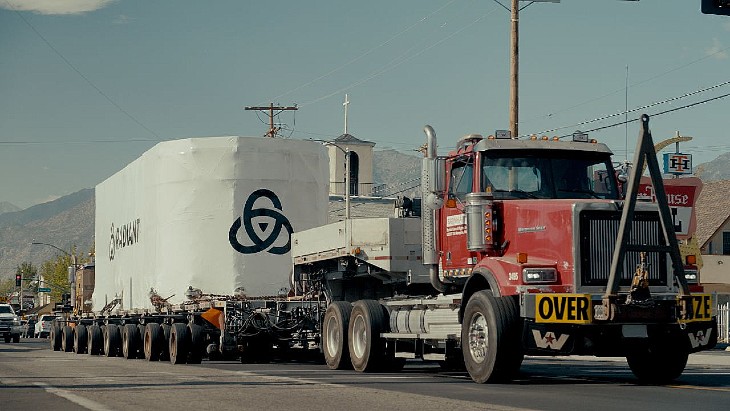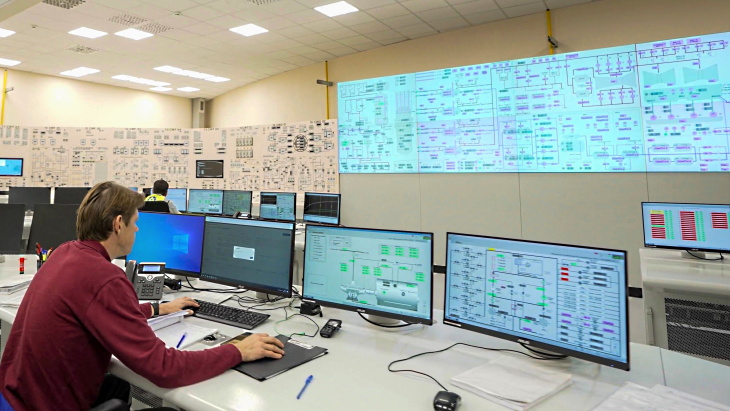
The automated process control system (APCS) was manufactured by Rosatom Automated Control Systems Joint-Stock Company, Rosatom’s APCS and Electrical Engineering Division.
The delivery consisted of 42,000 pieces of equipment weighing a total of 555 tonnes. It included control cabinets, controllers, computing modules, and auxiliary components necessary for the operation of the automated process control systems and the reactor safety control system. Rosatom said the installation and commissioning of the APCS equipment will be a key step toward the commissioning of the first power unit.
It noted that most of the control and safety systems required for cold and hot tests of the reactor installation of Akkuyu unit 1 have already been installed. “These processes are crucial for the complete connection of the unit’s systems and subsequent commissioning,” Rosatom said.
“Technological processes at nuclear power plants require the coordinated operation of dozens of primary and auxiliary systems and units,” said Sergey Butskikh, Director General of Akkuyu Nuclear JSC. “This is possible thanks to a high degree of automation, allowing a small number of operating personnel to effectively manage a nuclear power plant. Automated control systems for nuclear power plants are a comprehensive technical and software solution that automates key process operations within a power unit’s systems.
“Modern units with VVER-1200 reactors are equipped with the latest APCS components. These components are based on the extensive experience of the Russian nuclear industry, ensuring a high level of operational safety. Highly qualified specialists are currently completing the installation and commissioning of the APCS equipment and its integration with the infrastructure of the first power unit.”
Background
Akkuyu, in the southern Mersin province, is Turkey’s first nuclear power plant. Rosatom is building four VVER-1200 reactors, under a so-called BOO (build-own-operate) model. According to the terms of the 2010 Intergovernmental Agreement between the Russian Federation and the Republic of Turkey, the commissioning of the first power unit of the nuclear power plant must take place within seven years from receipt of all permits for the construction of the unit.
The licence for the construction of the first unit was issued in 2018, with construction work beginning that year. Nuclear fuel was delivered to the site in April 2023. Turkey’s Nuclear Regulatory Agency issued permission for the first unit to be commissioned in December 2023, and in February 2024 it was announced that the reactor compartment had been prepared for controlled assembly of the reactor – and the generator stator had also been installed in its pre-design position.
The aim is for unit 1 to begin supplying Turkey’s energy system in the next year. When the 4800 MWe plant is completed, it is expected to meet about 10% of Turkey’s electricity needs, with the aim that all four units will be operational by the end of 2028. First concrete for unit 4 was poured in August 2023.