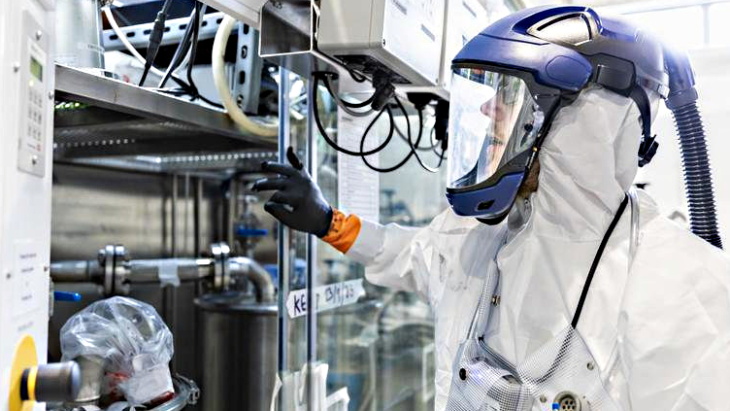
Before being cleared for release the materials “were fragmented, decontaminated, and then thoroughly checked at the Free Release Facility FRM-03 using gamma-spectrometric monitoring”, Chernobyl Nuclear Power Plant (ChNPP) said.
The power plant operators said: “Launching this process is an important step not only for the Chernobyl NPP but for Ukraine as a whole. Environmentally, it helps reduce the amount of radioactive waste. Economically, it allows additional funds to be directed to decommissioning activities and helps ease the burden on the State Budget of Ukraine. Most importantly, it demonstrates the reliability and effectiveness of Ukraine’s radiation monitoring system.”
This first batch was generated during dismantling of plant equipment, with the next step being to “expand this process to include materials from the three power units that are currently being decommissioned”.
The free release facility entered into industrial operation in September to support the plant’s decommissioning. It was established with European Union funding and can process up to 10 tonnes of material a day.
The State Nuclear Regulatory Inspectorate of Ukraine explained that during dismantling “of equipment, systems and components as part of the Chernobyl NPP decommissioning programme, significant amounts of radioactive materials are generated, some of which, after appropriate treatment (sorting, fragmentation, decontamination) and subsequent radiation survey, are subject to release from regulatory control. This approach is in line with best international practice and makes it possible to minimise the amount of radioactive waste requiring further treatment and disposal, while at the same time returning a significant amount of valuable materials to the national economy for further use for the public good, with the unconditional protection of the population and the environment”.
Background
(Image: ChNPP)
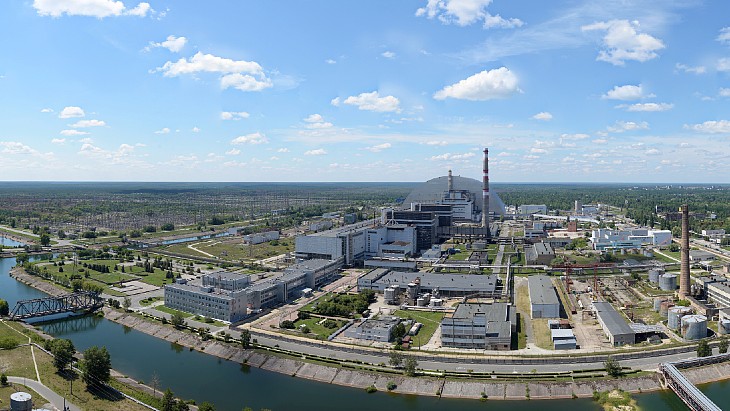
The Chernobyl nuclear power plant lies about 130 kilometres north of Kiev and about 20 kilometres south of the border with Belarus. Following the Chernobyl accident in April 1986 (you can read more about it in the ) a 4200-square kilometre Chernobyl Exclusion Zone was established, which has been largely uninhabited since.
A containment shelter was built at speed over the ruins of unit 4 after the accident and there has since been a giant new shelter – the New Safe Confinement – built over it. The three other units at the site continued to operate after 1986 – the last operating unit at Chernobyl, unit 3, operated until 2000.
Decommissioning of the site is taking place and, in addition to the reuse/recycling initiatives, there are also plans to gradually reduce the size of the exclusion zone around the plant, with some consideration of the suitability of the site for hosting small modular reactors.