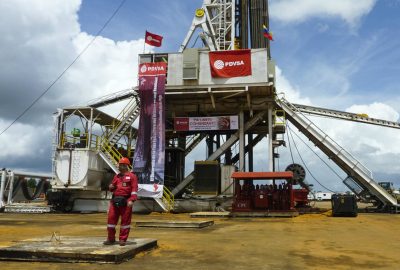
The United States’ tightening grip on Venezuela’s oil exports could strangle the country’s crude output and cut off President Nicolas Maduro’s main economic lifeline, but it will have limited impact on the global market.
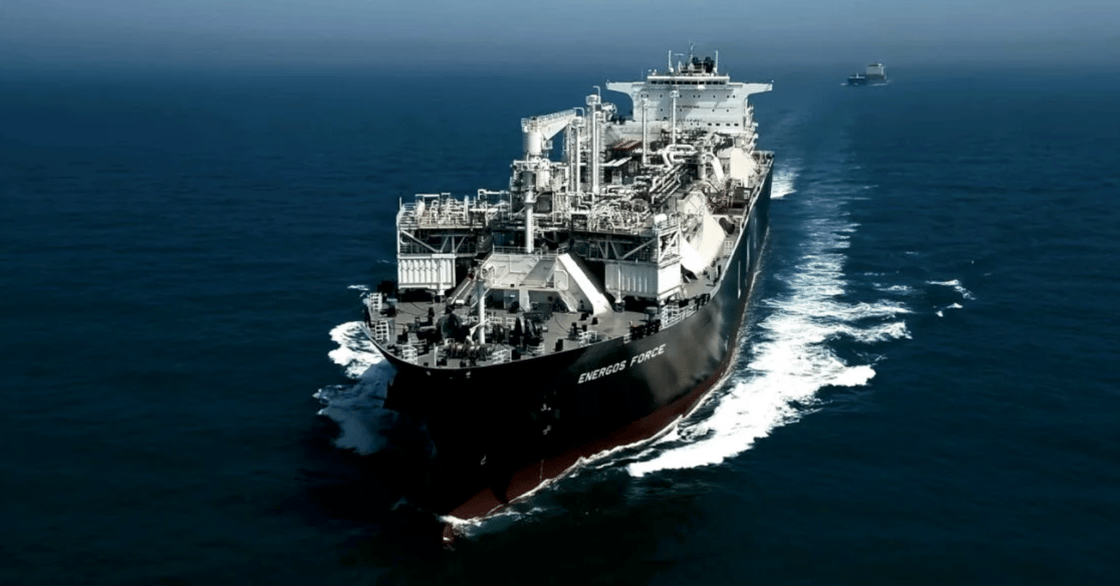
The U.S. Coast Guard last week seized in mid-ocean a supertanker carrying Venezuelan crude to Cuba, marking a step-up in Washington’s campaign against Caracas as the U.S. military continues to build up its biggest presence in the Caribbean since the Cuban missile crisis.
The U.S. is preparing to intercept more ships transporting Venezuelan oil, Reuters reported last Thursday, while Washington has also imposed new sanctions on Maduro’s family, six crude tankers and shipping companies linked to them.
Get the Latest US Focused Energy News Delivered to You! It’s FREE:
The military chokehold on Venezuela is intended to deter shipment of Venezuelan oil via the expanding “dark fleet” – unregulated, sanctioned and uninsured ships also used extensively by Russia and Iran.
There are at least a dozen sanctioned crude tankers already inside Venezuela’s exclusive economic maritime zone, according to Reuters analysis of LSEG data – many of which are now at risk of being seized.
CRUDE REALITY
The pressure is already having an impact on Venezuela’s oil industry.
The country’s crude exports had spiked in September to over 1 million barrels per day, the highest since February 2019, likely because state-run oil company PDVSA was depleting inventories in anticipation of tightening restrictions.
Venezuelan crude exports are now set to drop in December to 702,000 bpd, the lowest since May, according to data from analytics firm Kpler. Meanwhile, there are signs that Asian buyers are asking for deeper discounts for Venezuelan crude to accommodate the growing trading risk.
The tightening restrictions have also led to a drop in Venezuelan crude production, which declined by roughly 150,000 bpd in November from a month earlier to 860,000 bpd, following several months of production hovering above 1 million bpd, according to the International Energy Agency.
The drop is partly due to declining exports, meaning output could decline further if exports are constrained as Venezuela’s storage fills up.
On top of this, production could be severely curtailed if U.S. restrictions impede imports of naphtha and diluents that are critical for the extraction and processing of Venezuelan oil.
Over two-thirds of Venezuela’s oil production is of so-called heavy grade that is tar-like when extracted. Naphtha is used to reduce the oil’s viscosity, enabling it to flow through pipelines for export via terminals and tankers.
Venezuela’s six refineries can produce naphtha but have suffered from years of disrepair, leading the country’s upstream oil industry to become heavily reliant on imports.
Venezuelan imports of naphtha and chemicals are set to drop to 39,000 bpd in December, compared with 54,000 bpd in November and 89,000 bpd in October, according to Kpler.
It is hard to estimate how much production will be impacted by naphtha shortages, however, as Venezuela imported large volumes in recent years that may have been placed partially into storage.
But, regardless, a collapse in naphtha imports puts Venezuela’s production at high risk.
A U.S. CARVE-OUT
Venezuela’s heavy crude production is unlikely to stop completely, though, regardless of the rising tensions, because President Donald Trump’s administration has issued Chevron, the second-largest U.S. oil producer, with a special licence to continue operating its joint ventures in Venezuela’s Orinoco belt, which produce around 250,000 bpd.
Chevron exports around 150,000 bpd of crude from Venezuela to the U.S. Gulf Coast, where refineries were built decades ago to process heavy grades from Mexico, Canada and Venezuela.
Putting all of this together, Venezuela’s oil production could decline by between 300,000 to 500,000 bpd because of lower exports and production restrictions, according to Reuters estimates.
This figure, however, is unlikely to have much of an impact on today’s well-supplied global oil market, which faces the prospect of a severe glut next year. Any shortfalls in the production of heavy crude would likely be offset by sharply increased output from Canada and the Gulf of Mexico, which also produce these types of grades. Indeed, installing a U.S.-friendly government that will lead to the removal of sanctions on Caracas could lead to a rapid revival of oil production in Venezuela, which holds the world’s largest oil reserves of around 303 billion barrels.
The escalating tensions around Venezuela are already having a profound impact on the country’s oil industry, but these effects are unlikely to reverberate across the world – unless, of course, the Maduro regime does fall, kicking off a rush of western energy majors back into the oil-rich nation.
(Ron Bousso; Editing by Nia Williams)
Share This:
More News Articles