The latest flare-up between Saudi Arabia and the United Arab Emirates over Yemen looks dramatic on the surface, but OPEC cohesion, not missiles or militias, is what ultimately matters to the oil markets, which is why the latest public spat between Saudi Arabia and the UAE over Yemen created just a temporary blip in crude prices.
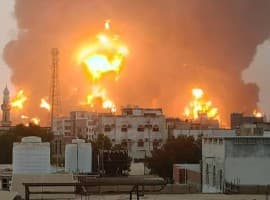
Saudi forces intercepted this week what they said was an unauthorized UAE-linked shipment of weapons and military equipment destined for southern Yemen. The Saudi-led coalition dished out an airstrike on the southern Yemeni port of Mukalla after Riyadh framed it as a security breach. Abu Dhabi claimed that the equipment was intended for its own counterterrorism forces and denied that it was arming separatist groups.
In the end, the UAE said it would pull out its remaining forces out of Yemen, according to Reuters.
It is messy, public, and awkward — especially given that Saudi Arabia and the UAE sit at the core of OPEC’s decision-making. Yet for oil markets, the immediate impact is close to zero. And that is precisely because OPEC is not a club held together by shared values, shared foreign policy, or shared views on Yemen.
OPEC works because its members can disagree (even loudly) on politics while still coordinating production plans.
We have seen this before, although perhaps not on this scale. Saudi-Emirati tensions over Yemen are not new. Both countries entered the conflict together in 2015, then gradually diverged as their interests in southern Yemen split. Riyadh prioritizes territorial unity and border security. Abu Dhabi has backed southern factions it sees as better aligned with its maritime and security goals. Those differences have simmered for years, and yet they haven’t blown up OPEC policy.
There is precedent to draw on for the oil market. In 2021, the UAE openly threatened to block an OPEC+ deal over production baselines, arguing that its rapidly expanding capacity was being unfairly constrained. A compromise eventually resolved the dispute, but exposed OPEC’s real sticking point: capacity growth versus quota discipline.
That dynamic is far more relevant heading into 2026 than any Yemen-related spat. Next year is already looking like it will be a tense one for OPEC, with forecasts warning of oversupply and softer prices, even as OPEC itself has avoided endorsing the glut narrative. But managing production targets in that environment will require cohesion—harmony over Yemen is not required.
Saudi Arabia’s challenge is not that its partners occasionally clash outside the oil market. It is ensuring that those clashes do not bleed into production policy when restraint matters most. Yemen noise may test diplomatic bandwidth, but history suggests that OPEC can function perfectly well without everyone holding hands, as long as they still agree on the math.
By Julianne Geiger for Oilprice.com
More Top Reads From Oilprice.com
- Trump Says U.S. Hit Drug Boat Loading Dock as Pressure on Venezuela Mounts
- Oil Prices Climb as Trump Issues Stark Warning to Iran
- Storm Forces Halt to Kazakhstan’s Oil Exports from the Black Sea