(Update) April 9, 2025, 8:12 AM GMT: Article updated throughout with mention of a third Chinese VLCC.
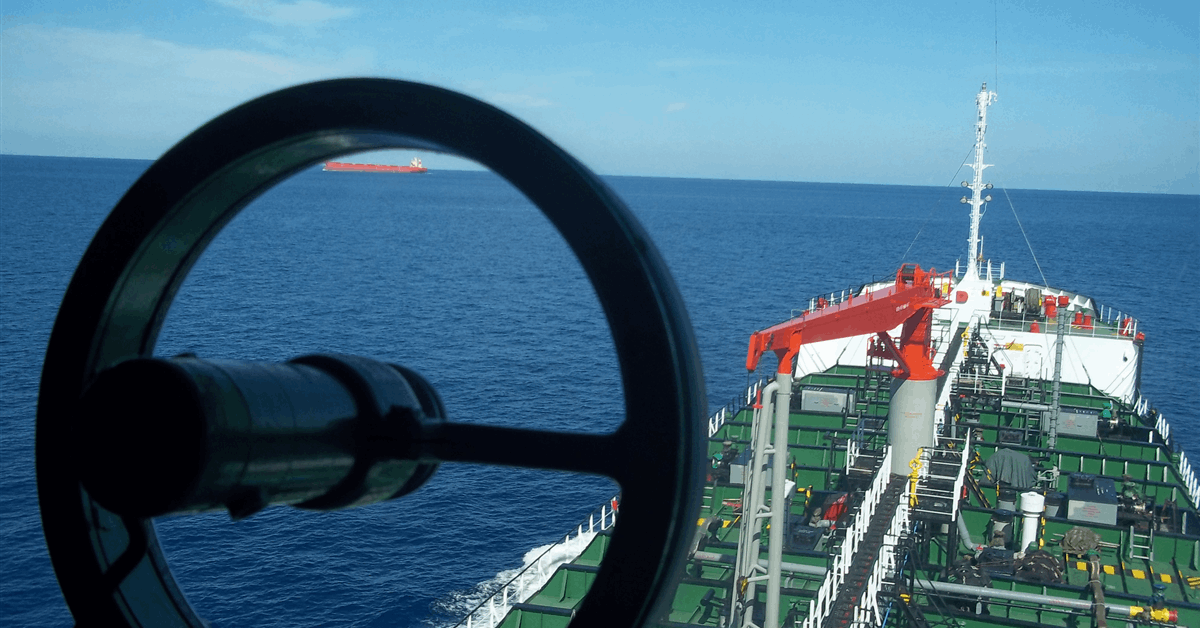
Two fully laden Chinese oil tankers are waiting near the Strait of Hormuz with a third on its way, putting them in a position to become the first such vessels to leave the Persian Gulf under a day-old US-Iran ceasefire, even as shipowners scrutinize the details of the truce.
The Cospearl Lake, a very-large crude carrier linked to China’s state-owned Cosco Shipping Corp., and He Rong Hai, owned by a smaller entity, appeared to be traveling east early on Thursday morning at near-top speeds, according to ship-tracking data, before coming to a virtual halt. Another Cosco-linked VLCC, the Yuan Hua Hu, began its eastward journey a few hours later.
All three are signaling Chinese ownership on their tracking systems, a move typically done for safety during Iran-approved transits.
The tankers are part of a growing armada amassing at the entrance to the strait, off the United Arab Emirates. A Saudi Arabian-flagged VLCC, the Jaham, has moved east toward a nearby holding area off Dubai. They join other ships including two Indian-flagged, fully-laden supertankers that have been in the area since late March – the Desh Vibhor, which is off Ras Al Khaimah, and the Desh Vaibhav, which is near Dubai.
Iran and the US agreed to a pause in fighting in exchange for the unblocking of Hormuz, but there is still little clarity on the fine print. Continued attacks – including Israeli strikes in Lebanon – have raised questions about the effectiveness of a ceasefire. Since the truce and supposed opening of the strait were announced a day ago, there has also been little change in traffic.
The Chinese and Saudi vessels’ shifts in positions along the gulf underscore their intentions to cross the strait after having been locked up in the inland sea for weeks. Their journeys onward remain uncertain.
Shipowners said Thursday they were still awaiting details on how safe passage can be carried out. Iran warned vessels on Wednesday in radio transmissions that transits still required permission from Tehran, while Iranian media has also reported the country has designated routes for vessels to transit Hormuz, with both inbound and outbound passages circumventing Larak Island in the strait.
Japan’s Mitsui OSK Lines Ltd., one of the world’s largest shipping companies, is among the groups that says it needs to see “sustainable stability” before sending its vessels through.
“How it is implemented in the water, that is something we really need to understand,” Jotaro Tamura, the firm’s new president, told Bloomberg Television.
The Chinese ships are already notable for their cargoes. Two are carrying Iraqi crude, and the other Saudi. While Iran has referred to “brotherly” Iraq, most other transits have been granted to friendly nations. Iraq has told traders and refiners that vessels carrying the country’s oil are now able to transit the Strait of Hormuz thanks to an Iranian exemption.
Cospearl Lake’s and Yuan Hua Hu’s passages would also mark the first such attempt by a Cosco oil tanker in the six-week war. The company, like other large shipping firms, tends to be conservative, and its crude carriers have been trapped since US and Israeli strikes on Iran began, prompting Iran to all but close Hormuz in retaliation.
The three Chinese-linked VLCCs idled in the middle of the Persian Gulf as part of a group of tankers for most of March. On Thursday, they began sailing eastward at speed, with the first two eventually slowing and stopping just at the entrance to the strait.
Electronic interference in the area can tamper with ships’ signals and misrepresent their true locations. Some vessels can also disable their transponders in high-risk waters.
Late last month, two Cosco container ships took a similar route before veering north along the Iranian coast, a path pursued by others that have made successful, Tehran-sanctioned exits. Beijing later acknowledged that it had worked with relevant parties to extract Chinese ships from the gulf, but did not name the vessels.
Cospearl Lake entered the gulf in late January, spending some time ballasting off Dubai, before sailing to Iraq’s Basrah to pick up nearly 2 million barrels of crude in early March. Yuan Hua Hu sailed into the gulf in late February to load Basrah crude at around the same time as Cospearl Lake.
The vessels are operated by Cosco Shipping Energy Transport, maritime database Equasis shows. Cospearl Lake’s registered owner is Cospearl Lake Maritime Ltd., which shares the same address as CSET, while Yuan Hua Hu is also owned by CSET. China Cosco Shipping Corp., CSET’s parent company, didn’t reply to an email seeking comment.
He Rong Hai sailed into the gulf just before the war broke out in late February. It picked up its more than 2 million barrels of crude from Saudi Arabia’s Juaymah terminal in early March.
Its owner is listed as Hainan Herong Shipping Co., according to Equasis, which shares the same address as its manager Shanghai Yucheng Shipping Co. No contact details were listed for either.