The submittal of Revision 20 of the AP1000 Design Control Document (DCD) to the Nuclear Regulatory Commission (NRC), is part of Westinghouse’s strategic plan to enable a fleet-scale deployment of the advanced AP1000 modular reactor and support President Donald Trump’s vision to build a US fleet of large nuclear reactors, the company said.
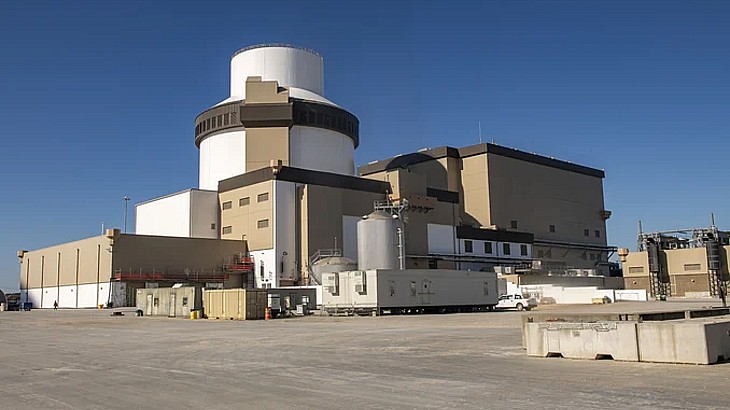
Vogtle 4 entered commercial operation in April 2024, following Vogtle 3 which entered commercial operation in July 2023. They are the first new nuclear units to be constructed in the USA in more than 30 years.
DCDs define the technical details of a standard reactor design to ensure it meets all regulatory and safety requirements and serve as the primary reference for licensing new units. Revision 20 formally implements the as-built Vogtle Unit 4 as the standard reference unit for all new AP1000 projects, accelerating new AP1000 combined licence (COL) applications and enabling a rapid fleet deployment of AP1000 plants.
According to the NRC – which is evaluating the application to determine if it is acceptable for docketing and technical review – the submittal would establish a validated baseline that could facilitate streamlined licensing for future applicants to replicate, which could lead to faster licensing approvals, lower regulatory uncertainty and costs, and increased deployment of new nuclear plants to meet the rising electricity demand.
The regulator first certified the AP1000 design in 2006. That certification is valid until 2046. Westinghouse’s application requests a 40-year renewal of the certification while incorporating design changes approved during the construction and licensing of Vogtle Units 3 and 4, many of which represented departures from the original certified design.
“Future applications referencing the updated AP1000 should benefit from efficiencies introduced through standardised, nth-of-a-kind licensing and the incorporation of lessons learned from Vogtle’s licensing, construction, and startup,” the NRC said. “The planned amendment process is part of the NRC’s broader effort to streamline design certification updates and combined licence application reviews for reactors referencing approved designs, enhancing regulatory predictability while maintaining the agency’s high safety standards.”
“The AP1000 stands alone as the only fully designed, licensed and operating advanced modular reactor that is ready for construction right now. Establishing Vogtle Unit 4 as the standard as-built reference plant for all new AP1000 projects will enable Westinghouse and its partners to rapidly deliver multiple industry-leading AP1000 units simultaneously with more predictability,” Westinghouse Interim Chief Executive Officer Dan Sumner said. “For our customers, the ability to deploy a standard plant based on an as-built and operating unit without the technology risk associated with a first of a kind, never built design is a game changer for unlocking fleet-scale deployment.”
In addition to the Vogtle units, four AP1000 reactors are currently in operation in China, with 14 additional reactors under construction and five more under contract. The design has been localised in China as the CAP1000.