Traykov was speaking during a meeting with South Korea’s Ambassador to Bulgaria, Dong-bae Kim, and representatives from Hyundai Engineering and Construction, which included a discussion on progress.
According to the Ministry of Energy report, Traykov “welcomed the commitment of the Korean side to assign 30% of the activities to Bulgarian companies. According to him, Bulgaria’s expertise and long-term experience in the operation of nuclear power plants make it a safe and reliable partner in the implementation of such large-scale projects”.
The engineering contract for the construction of the two new units was signed in November 2024. During the discussions, the two sides agreed on the terms of its extension “so that work on the project is not interrupted”.
Traykov, who is energy ministry as part of the caretaker government in place ahead of elections this weekend, was reported by the ministry to have said “we have traumatic experience from other similar projects, where endless extension and lack of control over the price ultimately lead to failure” and emphasised “the need for the new capacities at the Kozloduy NPP to be built at fixed prices”.
Background
Kozloduy units 1-4 were VVER-440 models which the European Commission classified as non-upgradeable and Bulgaria agreed to close them during negotiations to join the European Union in 2007. Units 5 and 6 feature VVER-1000 reactors that were connected to the grid in 1987 and 1991, respectively. Both units have been through refurbishment and life-extension programmes to enable extension of operation from 30 to 60 years. The country’s two operable reactors generate about one-third of its electricity.
Westinghouse’s AP1000 has been selected as the technology for the two proposed new units and in November 2024 Hyundai Engineering & Construction, Westinghouse and Kozloduy NPP-New Build signed an engineering contract for the new capacity, with ministers saying that signing the contract meant that schedule and finance details would be firmed up for the new capacity. The Ministry of Energy and the USA’s Citi bank agreed on a partnership in July last year to secure funding for the construction of the new units, and site location applications were submitted.
In December Kozloduy NPP-New Build EAD and a consortium comprising Laurentis Energy Partners, its subsidiary Canadian Nuclear Partners SA (CNPSA) and BWXT Canada, signed an owner’s engineer contract to advance the two new AP1000 units.
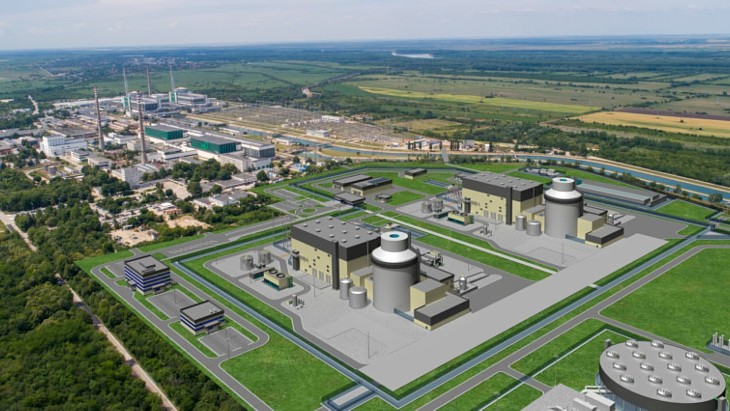
The aim is for the first new Westinghouse AP1000 unit – unit 7 at Kozloduy – to be operational in 2035 and the second one – unit 8 – to be operational in 2037. The 2,300 MWe capacity of the two new units would exceed the 1,760 MWe capacity of the closed first four units. The Bulgarian government has also said that further units will be needed to replace units 5 and 6 by 2050. It has also been considering the deployment of small modular reactors in the country.