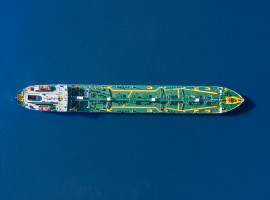
The war in Iran and the closed Strait of Hormuz are accelerating a major shift in the oil tanker market, in which smaller tankers carrying fuels are becoming crude carriers amid better economics as crude buyers scramble for supply that’s not trapped behind the Strait.
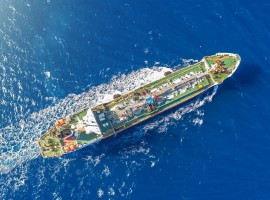
As many as 68 so-called long range-2 (LR2) clean tankers that have transported fuels such as diesel and gasoline have become the so-called dirty tankers and started shipping crude so far this year, per data by ship-tracking platform Signal Ocean compiled by Bloomberg.
The phenomenon is not new, but the crisis in the Middle East has accelerated this move from clean to dirty tankers as switching to crude carriers has become more profitable.
To compare, in all of 2025, a total of 49 tankers moved from clean to dirty trade, according to the data.
The LR2 tankers are similar in capacity to the Aframaxes crude tankers which can ship 800,000 barrels of crude each.
Nearly 300 LR2s are now transporting crude oil, according to the data by Signal Ocean. This number represents 66% of the entire global tanker fleet.
The share of dirty tankers surpassed 50% in December last year when OPEC was boosting supply and crude in floating storage began to build significantly amid an expected oversupply—a trend that was abruptly cut short by the war in Iran. The 66% share of dirty tankers of the entire global fleet is the highest in Signal Ocean data dating back to 2019.
Longer voyages, the need of crude on water, and the high prices buyers are willing to pay for physical crude cargoes have all contributed to the acceleration of the shift.
As a result of the major upheaval in oil markets, clean freight rates remain resilient as clean tanker availability has been tightened by longer voyages and LR2s switching into dirty trading, Wanying Zhang, Freight Analyst at Vortexa, said this weekend.
By Tsvetana Paraskova for Oilprice.com
More Top Reads From Oilprice.com
- Wall Street Giants Circle Shell’s $15 Billion LNG Canada Stake
- Russia Dismisses Price War Fears Following UAE Departure From OPEC+
- Crisis-Hit Southeast Asia Looks to Sign Petroleum Security Pact