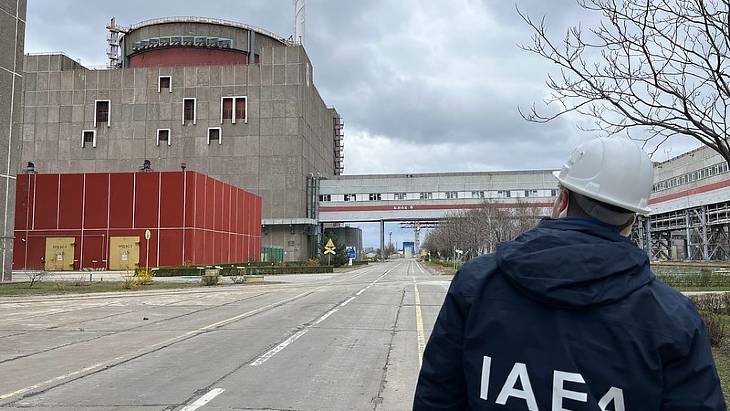
The IAEA’s Director General Rafael Mariano Grossi, in an update on the situation in Ukraine, also warned that the Zaporizhzhia Nuclear Power Plant had now been relying on its backup 330 kV Ferosplavna-1 line for external power for seven weeks, since its main 750 kV Dniprovska line was disconnected on 24 March.
Negotiations continue with both sides to secure a temporary localised ceasefire to allow essential repairs to take place. Previous repairs have taken place during such negotiated pauses in hostilities. The plant has been under Russian military control since March 2022.
Grossi said that although there had been no direct impact on nuclear safety “any military action in the vicinity of nuclear facilities significantly increases the risk of a nuclear accident” and he urged “maximum restraint” to be shown.
The IAEA also said the past week had seen the outbreak of a fire, covering 1,100 hectares, in the Chernobyl exclusion zone, “which was reportedly started by a drone impact. The IAEA team at the site was informed that the fire was brought under control and extinguished by early this week. The site confirmed that no abnormal radiation levels were detected during or after the incident”.
Grossi said: “Although no abnormal radiation levels were detected, incidents like this could disturb contaminated materials and cause radiological risks.”
The latest update from the IAEA follows one last week which expressed similar concerns about the dangers of drones after a drone damaged the External Radiation Control Laboratory, situated about 4 kilometres from the Zaporizhzhia Nuclear Power Plant’s perimeter.