Supply chains are rarely the centre of attention until something goes wrong. For the specialty gases sector, 2026 has served as a reminder that reliability of supply cannot be taken for granted.
Geopolitical tensions, shifting trade relationships and growing competition for strategic materials have pushed supply security back to the forefront of industry discussions, raising questions that extend far beyond logistics alone.
And few products illustrate those challenges more clearly than helium.
The global helium market was shaken earlier this year by disruption in the Middle East, removing a substantial share of global supply from the market and forcing suppliers and customers alike to revisit sourcing strategies.
Speaking during a recent gasworld webinar, Rich Brook, CEO of Garrison Ventures, confirmed around half of global helium supply .
“With Qatar offline that is 2 bcf out, out of a total supply of 6 bcf,” he said. “The market is really struggling at the moment.”
The disruption has been a key talking point in recent earnings discussions among the world’s largest industrial gas companies.
pointed to shifting regional demand patterns, has been drawing helium from storage in Texas, and has highlighted disruption affecting exports through the Strait of Hormuz while stressing its ability to meet customer commitments. Yet helium is only one part of a much wider picture.
Across specialty gases, customers are placing greater emphasis on sourcing diversity and long-term reliability.
Demand continues to grow from semiconductor manufacturing, electronics, healthcare and advanced industrial applications, while producers and distributors are also navigating sustainability targets, evolving regulations and rapid advances in digital technology.
Tech and AI take centre stage at Summit
It is against this backdrop that the Specialty Gas Summit 2026 arrives in Frankfurt, Germany this week.
Bringing together producers, distributors, technology providers and end-users, the event comes at a timely moment for an industry balancing opportunity with uncertainty.
Recent disruptions have exposed vulnerabilities in global supply chains while reinforcing the strategic importance of specialty gases to some of the world’s most advanced industries and that theme runs throughout the agenda.
Opening the summit, Bernd Eulitz of Messer will address the challenges and opportunities facing the sector as geopolitical developments, industrial policy and technological change reshape global markets.
And as Europe seeks to strengthen its position in advanced chip manufacturing, sessions led by Lita Shon-Roy and Eric Balossier of TechInsights will examine market developments and the growing influence of artificial intelligence on chip design and production.
Dr. Jonas Sundqvist of TECHCET will provide an assessment of the European specialty gases market and the factors shaping demand.

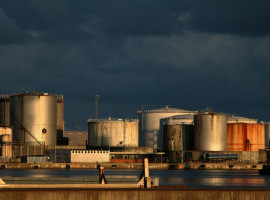
Semiconductors require over 30 to 50 different types of high-purity gases and special gas mixtures ©Shutterstock
The programme also extends beyond helium to the wider family of gases that underpin advanced manufacturing.
Rare gases, plasma etch gases and gas separation technologies will all feature, highlighting the growing focus on securing supplies of materials essential to semiconductor fabrication and other high-tech industries.
Geopolitics remains another key topic. Megan Sutcliffe of Sibylline will provide an update on developments in the Middle East and their implications for industrial gas supply chains, while Phil Kornbluth will examine the impact on global helium production and distribution.
Other sessions will explore sustainable plasma etch gases, calibration gases for carbon capture applications, digitised gas management systems and membrane-based gas separation technologies.
The full agenda, complete with topics and a list of speakers is available .