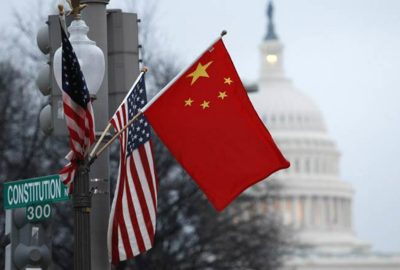
Shortly after tariffs on China imposed by U.S. President Donald Trump took effect on Tuesday, China’s Finance Ministry said it would impose levies of 15% on imports of U.S. coal and LNG and 10% for crude oil as well as on farm equipment and some autos, starting on Feb. 10.
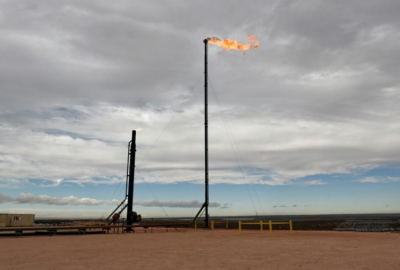
Chinese imports of U.S. crude oil declined 52% to about 230,540 barrels per day (bpd) in the first 11 months of 2024 from the same period a year earlier, data from U.S. Energy Information Administration showed.
For the full year, U.S. imports accounted for 1.7% of China’s crude imports, worth about $6 billion, according to Chinese customs data, down from 2.5% in 2023.
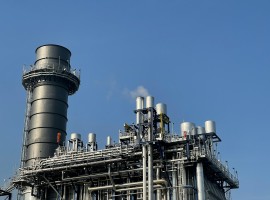
However, China’s LNG imports from the U.S. have been growing, totalling 4.16 million metric tons last year worth $2.41 billion, customs data showed, nearly double 2018 volumes for the fuel used in power generation and accounting for roughly 5.4% of China’s purchases.
U.S. LNG imported via long-term contracts could remain economical for Chinese buyers, even with the tariff, compared with spot prices, but they are likely to avoid buying spot U.S. cargoes, ICIS analyst Alex Siow said.
“Chinese companies will likely hunt for other spot sources, such as those from Asia,” he said. “It might not be easy to find though, given that 2025 continues to be a tight market.”
The tariffs will also impact Chinese importers seeking new long-term supply deals with the U.S., especially second-tier buyers like utilities or city gas companies which lack trading capabilities, said a Beijing-based LNG trader.
The U.S. is the top global LNG shipper but is the No.5 supplier to China. Still, it has ambitions for sharp increases in LNG exports in coming years under Trump, with China, the world’s biggest importer of the fuel, seen as a potential customer for even more.
MST Marquee energy analyst Saul Kavonic said the tariffs by China, which bought around 10% of U.S. LNG exports last year, will drive more U.S. volumes to Europe and benefit other regional producers such as Australia.
“The negative impact on U.S. LNG from these tariffs will only partly offset the strong appetite from other buyers to procure more U.S. LNG under pressure from Trump to rebalance trade deficits,” he said.
CRUDE COSTS
FGE analyst Mia Geng said when China imposed 25% tariffs on U.S. crude oil during the trade war in Trump’s first administration, China stopped its purchases of 300,000-400,000 barrels per day of U.S. crude and turned to alternatives such as West Africa and Asian supply.
“We are still assessing this internally but it looks like we will see a pause in buying while light-sweet alternatives will be sought after. This impacts about 100,000 bpd of recent U.S. inflows, which is not a big amount for Chinese refiners,” she said.
The tariffs will make flows of U.S. West Texas Intermediate crude into China expensive relative to alternatives such as Kazakhstan’s CPC and Abu Dhabi’s Murban grades, said Sparta Commodities analyst June Goh.
“However, in the big scheme of things, this should not impact the price of WTI significantly as WTI can still flow to other regions easily,” Goh said.
A Chinese crude oil trader said the tariff would hit state refining giant Sinopec the most, as the country’s largest buyer of U.S. oil.
He expects Chinese importers to seek waivers from Beijing, as they previously did, while refiners are expected to seek alternative supplies and increase shipments from the Middle East.
The trade sources spoke on condition of anonymity as they were not authorized to speak to the media.
Sinopec did not immediately respond to a request for comment on a public holiday in China.
As for coal, China is not a big importer from the United States, but the value of shipments of coking coal – used mainly in steelmaking – rose by nearly a third to $1.84 billion in 2024, customs data showed.
(Reporting by Tony Munroe, Florence Tan, Trixie Yap, Emily Chow, Sudarshan Varadhan, Siyi Liu and Chen Aizhu; Editing by Kim Coghill)
Share This:
More News Articles