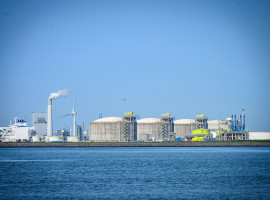
The ongoing strike action at Australian LNG facilities of Inpex is expected to disrupt operations significantly, a senior official at the Japanese energy firm told Bloomberg on Tuesday.
Workers at Inpex’s Ichthys LNG facilities last week voted to escalate the strike action at all three sites to work stoppages of up to 8 hours per day, up from 4 hours previously.
“We anticipate imminent disruption to production at both onshore and offshore Ichthys LNG facilities,” Bill Townsend, senior vice president corporate at Inpex, said in emailed comments to Bloomberg.
“In the context of current global fuel supply constraints, the disruption is expected to be significant,” the official added.
The industrial action that started on June 3 has already disrupted some LNG loadings at the Ichthys LNG project in recent days, raising market concerns that supply from Australia, currently the world’s second-largest LNG supplier with most Qatari output shut-in, could drop in the coming days and weeks.
Earlier this week, the Australian Fair Work Commission denied Inpex a request to stop the strike at the Ichthys facility that would affect production and exports at the 9.2-million-ton facility.
The disruption to global LNG supply from Australia could add to the price pain for energy importers in Asia, the world’s largest LNG market.
Benchmark gas prices in Europe and Asia slumped early this week following the announcement of a U.S.-Iran agreement, but flows from Qatar are yet to resume, pending a safe reopening of the Strait of Hormuz.
Such reopening could begin as soon as Friday, when the U.S. and Iran are expected to sign the agreement in Switzerland. But LNG supply from the Middle East would begin flowing weeks later, if the deal holds and the Strait of Hormuz opens to safe navigation.
State firm QatarEnergy, which halted LNG output in early March, has told its customers that it could restore about 50% of its production capacity within a month after safe navigation through the Strait of Hormuz is restored, sources with knowledge of the plans told Bloomberg on Tuesday. Within two months, Qatar could return 80% of its capacity, according to Bloomberg’s sources.
By Charles Kennedy for Oilprice.com
More Top Reads From Oilprice.com
- ConocoPhillips Set to Become First U.S. Major to Sign Post-War Syria Gas Deal
- Oil Prices Plunge as U.S. and Iran Reach Deal to Reopen Strait of Hormuz
- Russian Governors Rush to Deny Fuel Crisis as Rationing Spreads