European officials are wary of committing naval ships that could be placed in danger because US President Donald Trump wants to open up the Strait of Hormuz as quickly as possible.
Discussions between the US and its allies over how to clear Iranian mines from the vital waterway have become extremely complicated because of confusion about how the work would be done, according to one senior European official involved in the private talks. The strict time line that Trump has set – end of week – is causing them to waver.
Specialized vessels that can handle the demining work tend to be slow and without defensive weaponry, meaning they would be vulnerable to attack, the official said.
The US is short of demining capabilities that it can deploy to the Middle East and so it needs the help of its allies in this specific area, another European official said.
At the Group of Seven Summit, held in France, Europeans have raised a series of questions about what exactly was agreed to before committing to demining missions and patrols. So far they’ve not received many answers.
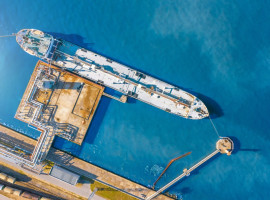
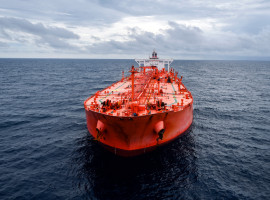
A growing number of oil tankers have recently been transiting the strait by hugging the coast of Oman, typically at night, with their signals turned off and the US providing guidance, coordination and air support. All the same, Omani officials last month warned seafarers to exercise caution after a suspected mine was spotted in its territorial waters.
Iran was the main topic of discussion at the leaders’ opening dinner on Monday night when Trump gave his counterparts an extensive rundown on the benefits of the deal, one official said, insisting there will be no fee on the strait.
The atmosphere at the dinner was described by the official as leaders talking frankly and freely about Iran without reading notes. For their part, the French are in touch with Iranians at the ministerial level to discuss details but haven’t had a clear response from them either, the official said.
One senior US official said traffic in the waterway would ramp up over time, and it could take as many as two weeks for shipping to significantly increase – and even longer for it to return to the levels seen before the US and Israel attacked Iran in February.
That was an important counterweight to Trump’s optimism about the ease with which traffic could resume as normal.
“Ships are starting to go out now, on Friday it’ll be completely opened,” Trump said Monday at the leaders summit in Evian. “They’re doing a little hunting for a couple of mines that they’ve already found, but it’s – essentially ships are starting to go out now.”
But there are mines in the strait that still need to be cleared and shippers have different risk tolerances about navigating Hormuz, one official said.
Iran would most likely have deployed a mix of mines: some that sit on the bottom, some that are moored to the bottom but float beneath the surface, and those that float on the surface.
Finding and eliminating them all is a labor-intensive process of proving a negative, said Ben Cipperley, a retired US Navy officer who worked in mine warfare and is now an executive at Havoc AI, a startup focused on networking autonomous systems.
The waterway will be divided into sections and explored with uncrewed underwater vehicles (UUVs) carrying sensors. Their data will determine what objects are mines that need to be disarmed or destroyed.
Unlike European navies, the US no longer has dedicated minesweeping ships, with its Avenger-class vessels set for retirement. Instead, Littoral Combat Ships can be fitted with a mine clearance equipment package, including UUVs.
Tools such as influence systems – which trigger mines’ magnetic detonators – can be used to destroy the weapons at a distance, Cipperley said. But others would need to be destroyed with explosive charges, either remotely or with divers.
“Minesweeping and mine hunting are very slow, meticulous operations,” he said. “Confidence that you have found and cleared mines in a given area is the top priority over speed of operations.”
How long the mission would take depends on how many mines there are, among other factors. If Iran provides information on where the weapons have been placed, it could go faster. Given the size of the strait, Cipperly said, it could take 30 days or more to confidently declare the waterway mine-free – a timeline that would stretch with any setbacks.
“You always need to assume an unplanned detonation could occur,” he said. “Even if operations are planned and executed to perfection, there is a non-zero probability that a mine was missed or buried, or a floating mine shifted in location between passes.”