This week, API launched the — a roadmap for a stronger, more flexible energy system built on secure supply, modern infrastructure and resilience. One of its key recommendations is modernizing the Strategic Petroleum Reserve to improve delivery capability, operational flexibility and emergency readiness.
America’s Strategic Petroleum Reserve
Deep underground, inside enormous salt caverns, sits a vital piece of America’s energy security toolkit. This is our Strategic Petroleum Reserve (SPR), and it is playing an important role amid disruption in the Strait of Hormuz.
Get the Latest US Focused Energy News Delivered to You! It’s FREE:
In this week’s American Energy Snapshot, we delve into the history of the SPR, how it’s used, and why it needs to be modernized.
First — what is the Strategic Petroleum Reserve?
The Strategic Petroleum Reserve was created in 1975 in the wake of the Arab oil embargo, which caused massive fuel price spikes, fuel shortages, and triggered broad economic damage. At the time, the U.S. was more dependent on foreign oil imports, and policymakers were looking for ways to prevent future energy shocks.
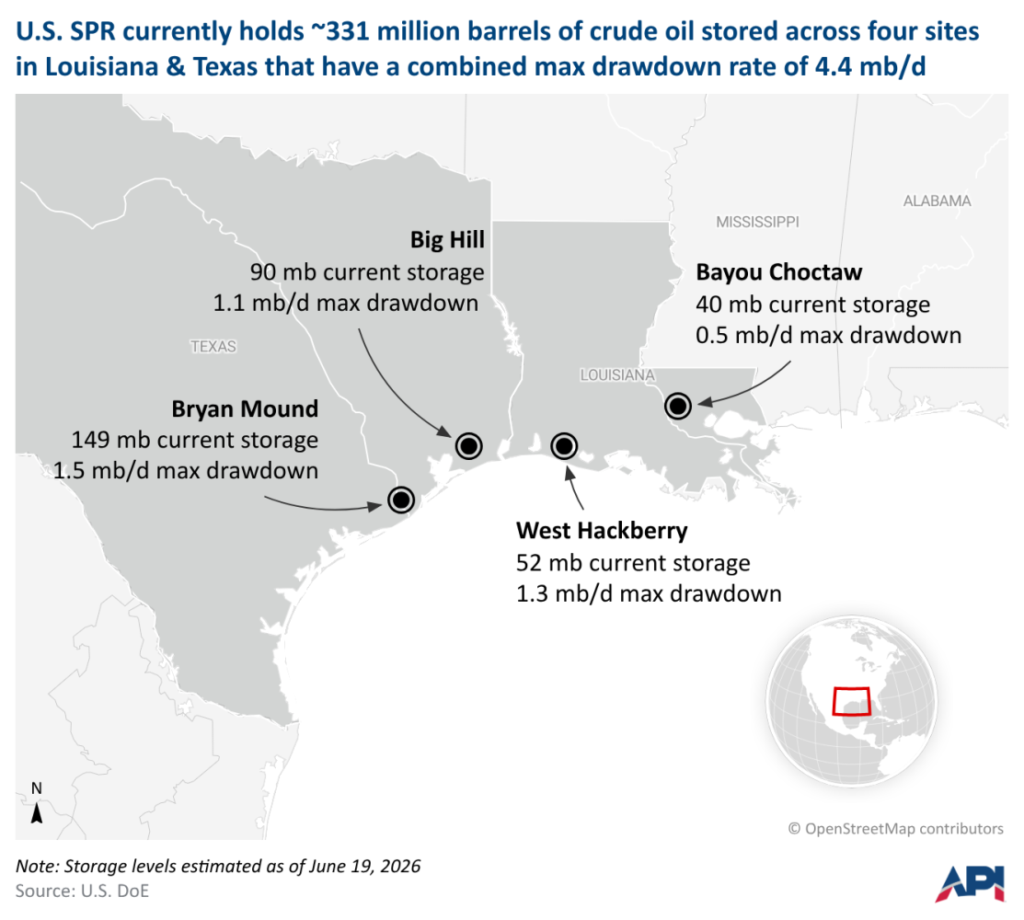
The SPR became the world’s largest publicly known emergency crude stockpile, with capacity for 714 million barrels stored across four sites on the U.S. Gulf Coast — a region central to the U.S. refining system and close to the crude oil import flows that shaped the American energy system at the time.
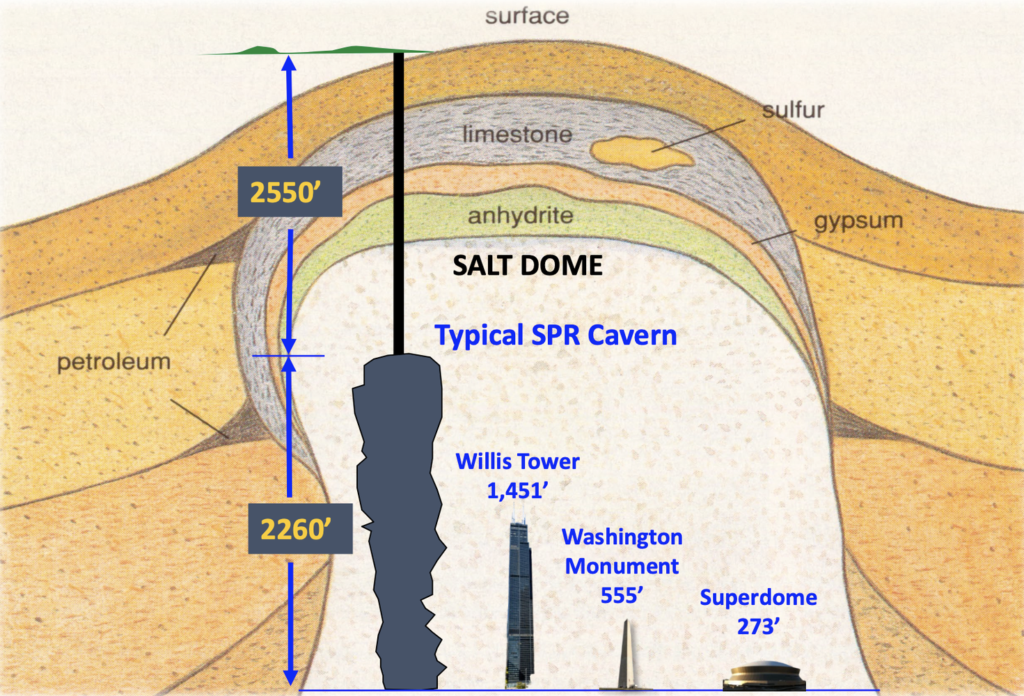
Source: U.S. DoE
Within the SPR, oil is stored deep underground in vast salt caverns. A typical SPR cavern is deeper than the Washington Monument is tall.
How is the SPR used?
The SPR is designed to provide crude oil to the market during major disruptions — such as hurricanes.
When the federal government releases oil from the SPR, crude is offered through a sale or exchange process. Physically, the oil is drawn from the underground salt caverns and delivered through pipelines or marine terminals, and ultimately to refineries where it’s turned into gasoline, diesel, jet fuel and other products.
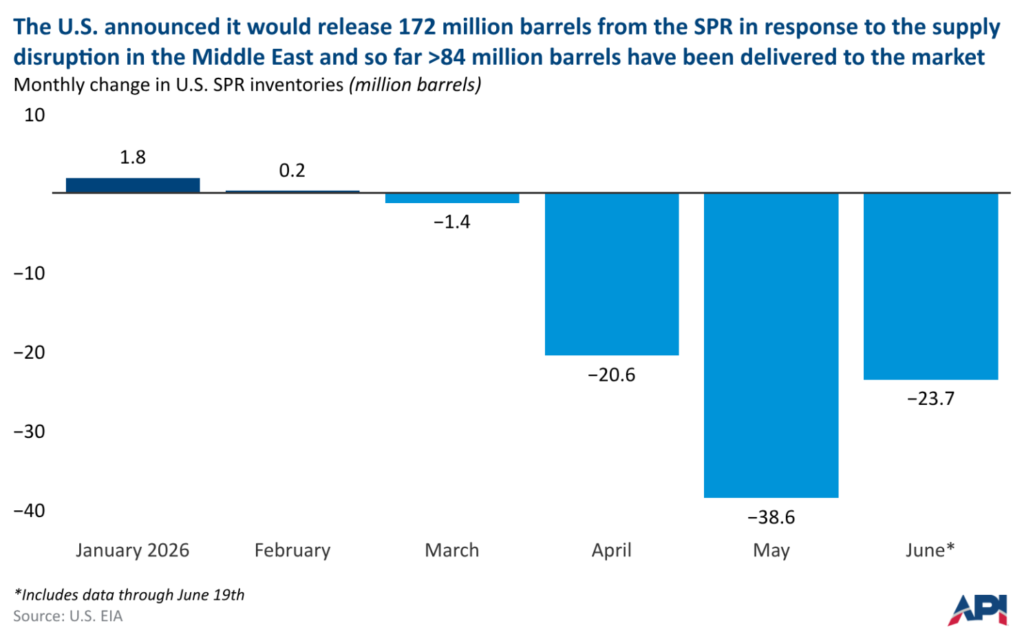
During this year’s Middle East disruption, the U.S. announced an exchange of 172 million barrels of oil from the SPR as part of a coordinated effort with other countries to help keep crude markets supplied and reduce pressure on fuel costs.
Why the SPR needs an upgrade
The SPR still holds enormous strategic value, but it was built for an era when the United States depended more on imported oil from overseas.
Today, the U.S. is the world’s largest oil producer and one of the largest exporters, but the SPR is not fully aligned with how and where crude moves through our modern energy system. Reconfiguring the SPR around today’s supply flows will require investing in stronger pipelines and marine connections to key refining hubs.
How quickly the reserve can move crude to market during a disruption is another challenge. The SPR has a stated drawdown rate of 4.4 million barrels per day, but the fastest rate actually achieved is only 1.4 million barrels per day over a full week.
Modernizing the SPR means increasing operational flexibility and improving aging infrastructure to ensure the reserve is prepared for the kinds of disruptions modern markets are most likely to face.
The takeaway
America’s energy system needs to be resilient in the face of crises, and the SPR is an important part of that. Modernizing the SPR will help ensure this critical piece of America’s energy security architecture is built for the system we have now, not the one we had 50 years ago.
Share This:
More News Articles