By
57 min ago 2 min read
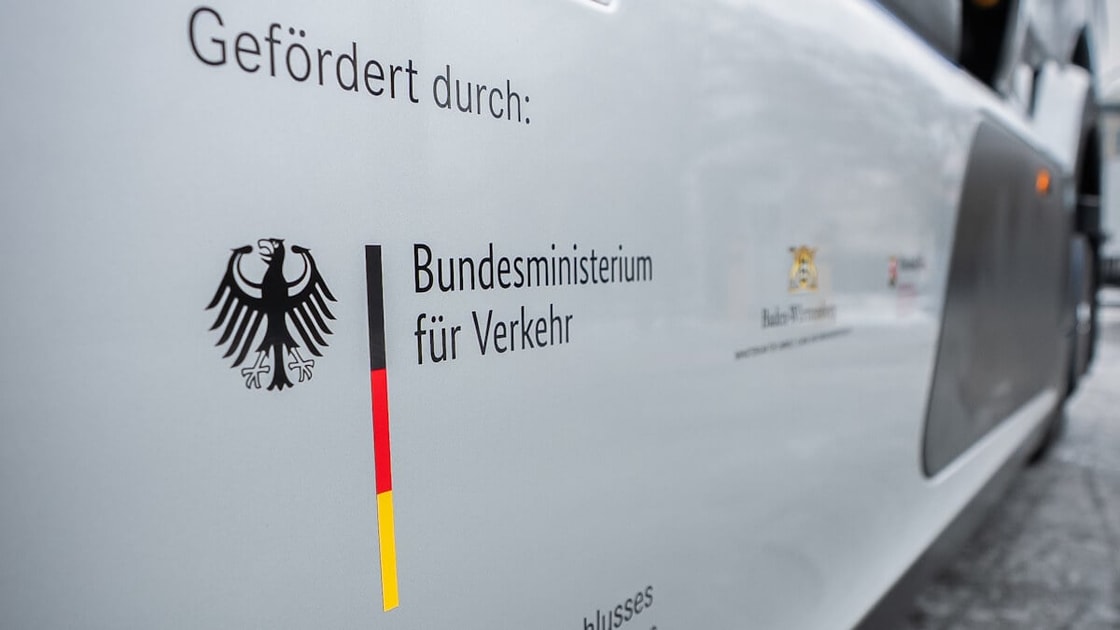
Germany’s latest hydrogen truck and refuelling funding programme has attracted more than twice the €220m ($251m) available budget, with applicants requesting €455m ($518m).
The Federal Ministry of Transport (BMV) said it had received 526 applications since opening the call at the .
The scheme aims to provide funding to deploy up to 40 hydrogen refuelling stations and up to 400 hydrogen trucks. Of the 526 applications, 71 were for refuelling stations, and 455 were for vehicles and fleets.
BMV said it would only commit the €220m originally budgeted.
Projects will now be selected through a competitive process, with successful applications expected to receive approval in the second half of this year.
Selected refuelling projects could see up to 50% of their capital costs subsidised, while trucks could have 80% of additional costs compared to diesel vehicles covered by the funding.
Transport Minister Patrick Schneider said the response showed the BMV’s approach was “perfectly timed.”
“Our combined funding of a large number of refuelling stations and vehicles will provide the crucial impetus needed to overcome the chicken-and-egg dilemma,” he said.
Hydrogen truck deployment has been constrained by the need for vehicles and refuelling infrastructure to be rolled out simultaneously.
The strong response also comes as Germany tightens policy support for hydrogen through its , which implements renewable fuel of non-biological origin (RFNBO) mandates for transport to exceed the EU’s Renewable Energy Directive III.
RFNBOs will need to account for 0.1% of transport energy demand in 2026, 1.2% in 2030, and 10% by 2040.
Additionally, under the EU’s Alternative Refuelling Infrastructure Regulation, member states will need to deploy hydrogen refuelling stations every 200km along core networks and in “every urban node” by 2030.
However, the strong interest contrasts with hydrogen’s continuing cost disadvantage.
While heavy-duty, long-haul trucking is viewed as an area where hydrogen could play a role in mobility, critics argue the molecule could lead to dramatic cost increases for fleet operators.
Hydrogen was shown to be the on a per-kilometre basis across the EU in European Commission fuel pricing data.
Across 17 member states, hydrogen ranged between €10.53 ($12.00) and €20.62 ($23.50) per 100km, compared to €2.60 ($2.96) to €11.78 ($13.42) for electric, and €6.2 ($7.06) to €10.66 ($12.15) for petrol and diesel.