Tanker traffic through the Strait of Hormuz has picked up pace in recent weeks, but oil flows are anything but smooth.
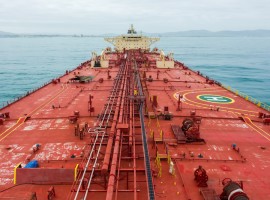
At least six tankers carrying oil or LNG moved to exit the Persian Gulf through Hormuz on a route close to Oman’s coast on Sunday, according to vessel-tracking data compiled by Bloomberg.
This comes hours after at least eight oil tankers and LNG carriers made mysterious and unexplained U-turns on Friday and Saturday while near the Omani coast, outbound from the Gulf.
Of these tankers that made U-turns, four moved north and exited the Strait of Hormuz close to Iran, in what’s likely an Iran-controlled lane. The others were sticking to the Oman coast, according to the data compiled by Bloomberg.
Iran this weekend reiterated its intention to charge for passage through the Strait of Hormuz—a move that the United States strongly opposes.
“As a country where the Hormuz is part of its territorial waters, we will definitely charge service fees,” Iran’s Ambassador to China, Abdolreza Rahmani Fazli, said this weekend, as carried by Al Jazeera.
These fees, however, will not be “tolls,” the official said, adding that China and other countries “friendly” with Iran would be given “special considerations” in the new Iranian transit regime through Hormuz.
“These new arrangements will be concerning guaranteeing the security of passage through the Straits of Hormuz, supervision of the passage of the vessels … and also guaranteeing and dealing with the environmental consequences of the massive number of ships,” Fazli was quoted as saying.
While the situation regarding passage through the Strait of Hormuz remains highly volatile and uncertain, some shipowners and operators continue to move vessels in the area with transponders switched off to avoid being detected and potentially targeted. The lack of reliable estimates of the actual volume flows through Hormuz remains a major unknown for the global oil market and supply and demand balances.
By Tsvetana Paraskova for Oilprice.com
More Top Reads From Oilprice.com
- Soaring Imports Push India’s Crude Stocks to Near 1-Year High
- Japan’s Top Oil Refiner Eyes a Post-Hormuz Future
- OPEC Oil Production Jumps, But Gulf Supply Is Still Far From Normal