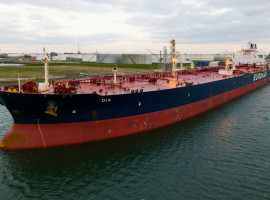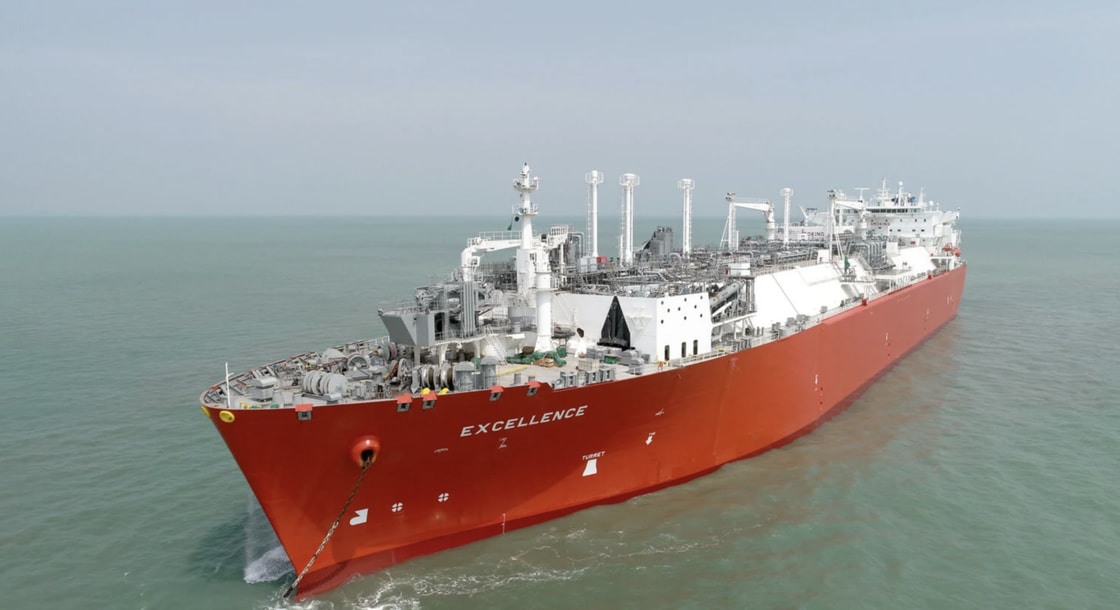
The FSRU Excellence, which is owned by Excelerate Energy ©Excelerate Energy
A technical fault at the floating liquefied natural gas (LNG) terminal operated by US-based Excelerate Energy off Moheskhali in Bangladesh has reduced gas supply to the national grid by around 450 million cubic feet per day (mmcfd).
The disruption has also reduced LNG regasification volumes from around one billion cubic feet per day to approximately 600 million cubic feet per day, according to local reports.
According to state-owned national oil and gas company Petrobangla, LNG regasification was suspended after the floating storage and regasification unit (FSRU) experienced a fault during a ship-to-ship LNG transfer operation.
Local media also reported a fire at the FSRU, although Petrobangla has not confirmed the extent of any damage or whether the reported fire was linked to the disruption.
Bangladesh has two FSRUs at Moheshkali. Moheshkhali LNG terminal is owned and operated by Excelerate Energy, using the FSRU Excellence.
The Summit LNG terminal is operated by Summit and uses the FSRU Summit LNG, which Excelerate owns and charters.
In a statement, Titas Gas Transmission and Distribution Company Limited said the incident had reduced gas supply to the national grid by around 450 mmcfd, according to Bangladeshi news outlet The Business Standard.
Petrobangla said it could take up to two days to restore operations at the terminal.
Bangladesh’s two floating LNG terminals have a combined regasification capacity of around 1,100 mmcfd, supplying imported gas alongside domestic production.
While the national grid typically receives around 2,600 mmcfd, daily demand is estimated at 3,800 to 4,000 mmcfd, meaning the outage is expected to further widen the country’s existing gas supply deficit.
The disruption comes as Bangladesh is already grappling with constrained LNG supplies following recent disruptions to global trade caused by escalating tensions in the Middle East.
Missile strikes on and further disruption in the Strait of Hormuz prompted QatarEnergy to halve scheduled LNG deliveries to Bangladesh, tightening supplies.
In 2025, Bangladesh secured around 60% of its LNG imports through long-term contracts with QatarEnergy. Reduced deliveries have increased Petrobangla’s reliance on spot market cargoes to help meet demand, often at much higher prices.