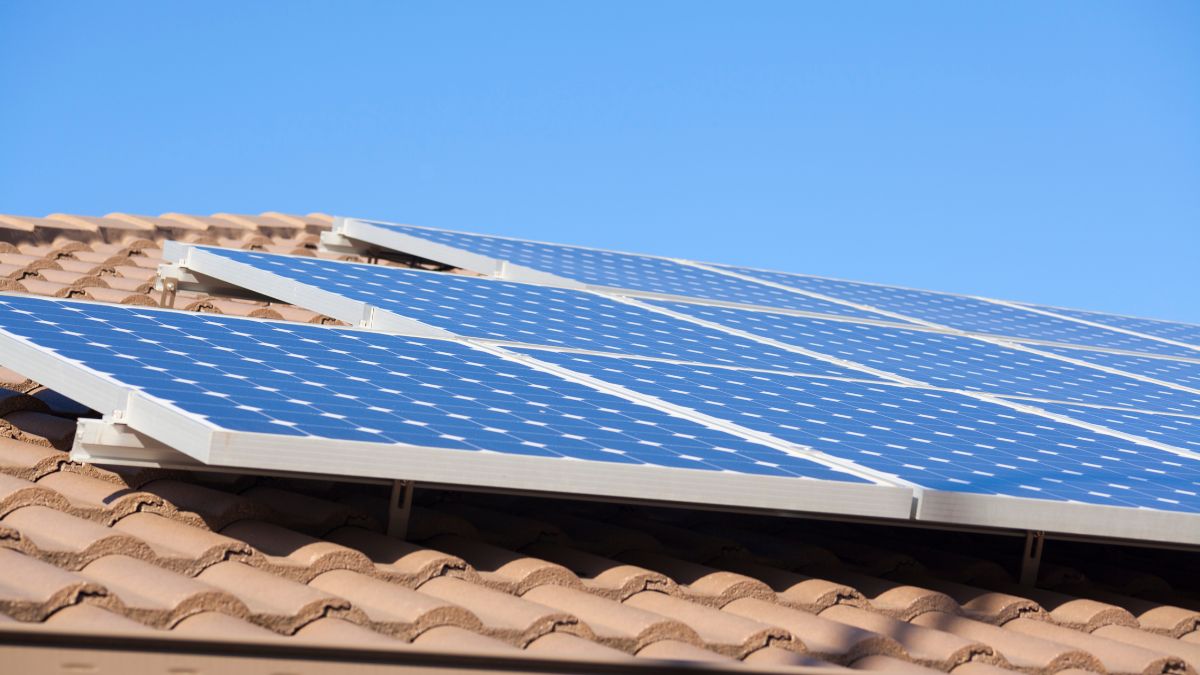
The Ministry of New and Renewable Energy (MNRE) has issued a fresh advisory to electricity distribution companies (DISCOMs) and state electricity departments to address technical issues that have been delaying rooftop solar installations under the PM Surya Ghar: Muft Bijli Yojana (PMSG: MBY). The move is expected to speed up project approvals and reduce difficulties faced by residential consumers and solar installation vendors.
Launched in February 2024, the PM Surya Ghar scheme depends on DISCOMs as the state-level implementing agencies responsible for approving rooftop solar systems and processing net-metering applications. However, the ministry recently received representations from vendors and industry associations highlighting delays caused by the rejection or return of applications due to minor differences between the direct current (DC) capacity of solar panels and the alternating current (AC) capacity of inverters.
According to the industry, many applications were being held up because the installed solar panel capacity did not exactly match the inverter capacity. For instance, systems using 3.24 kW DC solar panels with a standard 3.0 kW AC inverter were being rejected despite being technically suitable, resulting in unnecessary delays in project commissioning.
After reviewing the issue, the MNRE observed that achieving an exact match between the DC capacity of solar modules and the permitted AC inverter capacity is often impractical. Solar panels are available in different wattages depending on the manufacturer, making precise alignment difficult during installation.
To resolve this problem, the ministry has advised all DISCOMs and electricity departments to allow a tolerance of up to 10% in the applied DC system capacity. Under the revised guidance, consumers will be permitted to install solar panels with a total DC capacity that is up to 10% higher or lower than the intended system capacity, provided the AC capacity of the inverter remains within the sanctioned load or the maximum capacity allowed under local regulations.
The advisory also provides examples to clarify the new approach. A consumer planning a 5 kW rooftop solar system using 540 Wp modules can install either nine modules, totaling 4.86 kW DC, or ten modules, totaling 5.4 kW DC, while keeping the inverter capacity at 5 kW. Similarly, for a 10 kW system, consumers may install 18 modules with a combined capacity of 9.72 kW DC or 19 modules totaling 10.26 kW DC, with the inverter capacity remaining limited to 10 kW.
The circular, issued by Scientist-D Anubhav Uppal with official approval, has been circulated to DISCOM heads, state electricity regulatory commissions, energy secretaries, and programme coordinators, with the objective of ensuring uniform implementation and faster approval of residential rooftop solar projects across the country.
Subscribe to get the latest posts sent to your email.