By
25 min ago 3 min read
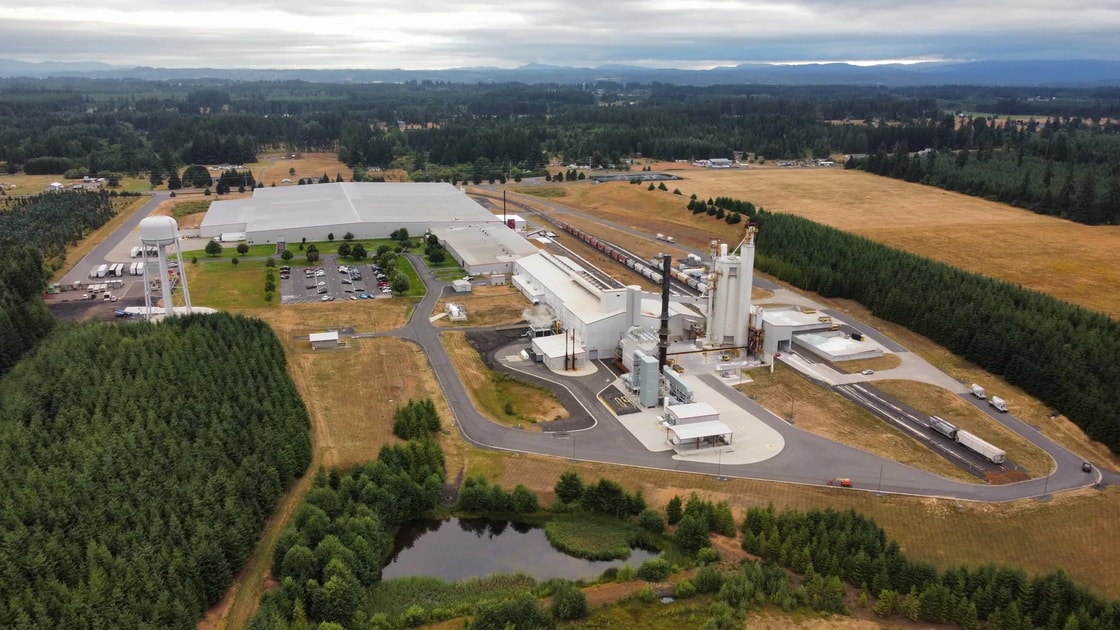
Minnesota-headquartered glass manufacturing company Cardinal Glass Industries (Cardinal) plans to capture around 130,000 metric tonnes of carbon dioxide (CO2) each year through a carbon capture installation at its operating float glass facility in Winlock, Washington.
System operation is expected in Q1 2029, which Cardinal says will represent the world’s first float glass carbon capture installation.
The system is designed to remove up to 95% of CO2 from float glass manufacturing process streams.
Float glass manufacturing produces CO2 from the energy used to melt glass and from glassmaking raw materials.
Cardinal says its system will address both sources with targeted process streams, with a view to meeting lower embodied carbon project requirements and to explore potential future markets for captured CO2.
In collaboration with Italian carbon capture system specialist K2-CO2, the feasibility, design, and engineering phases of the Winlock float glass carbon capture project have been completed.
K2-CO2 will now assist with the integration of the carbon capture system at the Winlock float glass facility.
Alessandro Monteforte, CEO of K2-CO2, said, “This programme builds on years of work between Cardinal and K2-CO2 to evaluate, engineer and adapt carbon capture technology for float glass manufacturing.”
“The Winlock installation will be an important demonstration of how carbon capture can be integrated into one of the most demanding industrial manufacturing environments,” he added.
In partnership with K-CO2, the company has also patented a system that uses the additional gases from the resulting flue gas of float glass manufacturing operations.
Float glass manufacturing
A commercial float glass manufacturing line comprises a that begin when a mixture of fine-grained ingredients, typically sand, soda ash, limestone, dolomite, and some other minor elements, are combined and melted to form molten glass in furnace at temperatures reaching 1,500°C.
The float glass segment produces windows for residential and commercial construction, automobile windshields, mirrors, instrumentation gauges, and furniture, such as tabletops and cabinet doors.
Alongside glass for packaging, float glass accounts for one of the biggest single usages of glass globally.
Playing a key role in this high-tech production of float glass are an array of with high levels of purity and extremely precise accuracies corresponding exactly to the application.
According to the Washington-based research organisation Clean Energy Transition Institute, three major glass manufacturing facilities in the state emitted around 180,000 metric tonnes of CO2 equivalent in 2019 alone.
More widely, market research projects the US glass manufacturing industry will be valued at around $38.4bn by 2033.