Tata Power Delhi Distribution Limited (Tata Power-DDL) has witnessed a significant rise in digital payment and self-service adoption, reflecting changing consumer preferences and the utility’s focus on technology-enabled customer services.
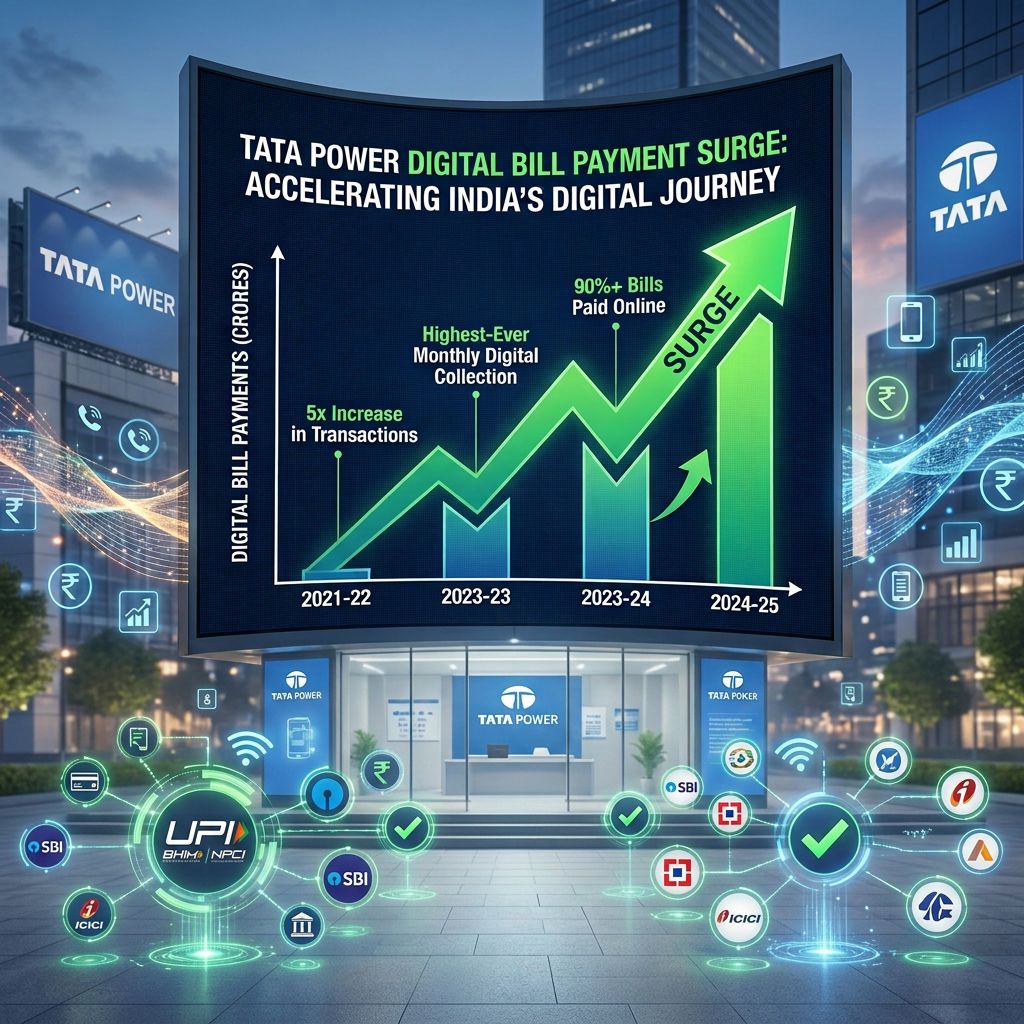
More than 95% of Tata Power-DDL consumers used digital channels to pay at least one electricity bill during FY 2025-26. The share of digital bill payment transactions increased to 93% in FY 2025-26 from 83.4% in FY 2021-22. Digital payment transactions rose from 74.3 lakh to more than 1.11 crore during the period, while non-digital transactions declined by over 43%, from 14.81 lakh to 8.46 lakh.
The utility has also expanded the use of digital self-service platforms. Nearly 70% of customer requests are now handled through channels including the Tata Power app, website, WhatsApp, chatbot, IVR, email and social media. These platforms enable consumers to register complaints, track requests, receive alerts and access billing information without visiting customer care centres.
During FY 2025-26, Tata Power-DDL recorded more than 24.05 crore digital interactions. SMS accounted for 16.5 crore interactions, followed by WhatsApp with 3.56 crore and the mobile app with 1.9 crore.
The company has expanded payment options through its website, mobile application and platforms such as PhonePe, Paytm and Mobikwik. Other initiatives include UPI-enabled QR payments, the Bharat Bill Payment System (BBPS), cashback and referral programmes, and zero-convenience-fee payment options.
Digital adoption has also increased in suburban areas such as Narela and Bawana. The share of digital consumers in these areas rose to more than 88% in FY 2025-26 from around 44% in FY 2021-22. The growing adoption has contributed to more than a 44% reduction in customer footfall at payment collection centres over the past five years.
Tata Power-DDL is now focusing on predictive and personalised services. More than six lakh smart meters have been installed, enabling the utility to use real-time consumption data for behavioural demand response, AI-based consumption analytics, predictive outage notifications and personalised energy insights.
Its Behavioural Demand Response programme has enrolled more than 2.1 lakh consumers, resulting in cumulative load curtailment of over 1,710 MW and energy savings of more than 33.2 lakh units over the last five years.
The utility said it will continue investing in digital technologies, including emerging solutions such as peer-to-peer energy trading, to improve customer experience, operational efficiency and support Delhi’s transition towards a smarter and more sustainable energy system.
Subscribe to get the latest posts sent to your email.