India paid $24.4 billion more on crude oil purchases between April and August compared to a year earlier as the spikes in international oil prices raised the import bill by 48% despite a 0.4% decline in volumes, government data showed on Tuesday.
The oil price surge amid the war and the uneven flows from the Middle East hiked India’s crude oil import bill to $74.8 billion in April-August, up by 48.4% from the same period last year, per data from the Oil Ministry’s Petroleum Planning and Analysis Cell (PPAC) cited by Indian outlet Business Standard.
Total crude oil imports remained basically flat between April and August, slightly dropping by 0.4% to a total of 100.7 million metric tons of crude for the five-month period, down from 101.1 million tons for the same period in 2025, the data showed.
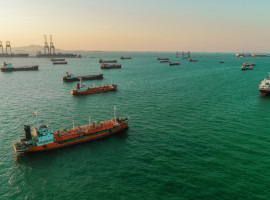
India’s crude oil import bill has soared in recent months, due to the reduced oil flows from the Middle East and the high risks to shipping in the Strait of Hormuz.
The freight rates on the key route from Ras Tanura on Saudi Arabia’s Persian Gulf to India have soared by more than 400% since February 28, when the war began and Iran closed off the Strait of Hormuz.
India paid 60% more for crude oil imports in the April-June quarter compared to the same period last year, as the surge in oil prices couldn’t offset slightly lower import volumes.
India’s import costs for September are set to be even higher, as international prices hit $100 per barrel for Brent again, and the Indian crude import price has averaged $114.80 a barrel so far this month, according to government data.
The Indian basket of crude oil is the average of a derived basket comprising a sweet-grade benchmark, Dated Brent, and the sour-grade benchmark of the Oman and Dubai average imported by Indian refineries during each month.
By Tsvetana Paraskova for Oilprice.com
More Top Reads From Oilprice.com
- U.S. Threatens to Ground Iranian Airlines Worldwide
- Oil Prices Reverse Course as Traders Watch US-Iran Diplomacy
- Norway’s Arctic Oil Pitch Falls Flat in Brussels