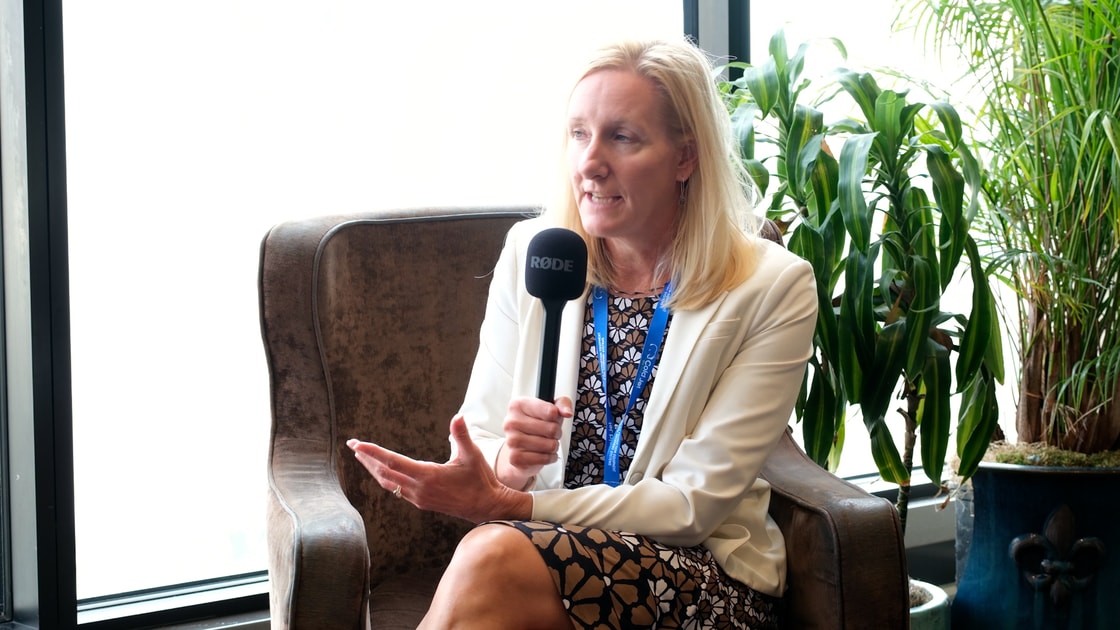
Tunisia’s solar market is entering a more mature phase, with developers and investors increasingly looking beyond upfront module prices to consider energy yield, reliability, degradation and long-term returns. In this exclusive interview with SolarQuarter, Farah Khalfaoui, Sales Manager – Tunisia & Algeria at JinkoSolar, shares her perspective on the opportunities emerging across utility-scale, commercial and industrial, and self-consumption segments. She also discusses the growing importance of high-efficiency solar technologies, JinkoSolar’s approach to addressing local market requirements, and how solutions such as Tiger Neo 3.0 can support stronger performance and project economics under Tunisia’s demanding climatic conditions.
1. How do you assess Tunisia’s solar market today, and where do you see the strongest opportunities for growth?
Tunisia’s solar market is entering an important phase of development. The country has excellent solar resources, a growing need for energy independence, and increasing awareness among businesses and investors of the long-term value of renewable energy.
I see strong opportunities across several segments. Utility-scale projects will continue to play an important role as Tunisia advances its renewable energy ambitions. At the same time, the commercial and industrial sector and self-consumption are becoming increasingly attractive, particularly for companies looking to reduce electricity costs and improve their energy resilience.
Another important evolution is the increasing maturity of customers. The discussion is gradually moving beyond the initial module price. Developers and investors are looking more closely at energy yield, reliability, degradation, BOS costs and the overall return on investment.
For me, this is a positive development because it creates an opportunity for the industry to focus more on quality and long-term project value.
2. How is JinkoSolar positioning itself to meet the growing demand for reliable, high-efficiency solar solutions in the region?
At JinkoSolar, our approach combines technological innovation, global experience and strong local customer engagement.
JinkoSolar has continued to invest significantly in N-type TOPCon technology, with a focus not only on increasing module power and efficiency, but also on improving reliability, energy yield and long-term performance.
In Tunisia, we believe that being close to the market is equally important. We work closely with developers, EPCs, distributors and installers to understand their technical and commercial requirements and provide solutions adapted to the realities of each project.
Our objective is not simply to supply a high-power module. It is to provide a technology that gives customers confidence throughout the entire project lifecycle.
3. What makes Tiger Neo 3.0 particularly suitable for hot climates and demanding solar project conditions?
Tunisia is a very relevant market for technologies designed to perform under challenging environmental conditions. High solar irradiation and elevated temperatures mean that module performance under real operating conditions is extremely important.
Tiger Neo 3.0 has been developed with these requirements in mind. It offers power outputs of up to 670 Wp, module efficiency of up to 24.8%, and bifaciality of 85±5%.
One of its important characteristics for hot climates is its temperature coefficient of up to -0.26%/°C, which helps limit power losses as module temperatures increase.
The combination of high efficiency, strong bifacial performance, temperature performance and optimized degradation allows Tiger Neo 3.0 to maintain strong energy generation under demanding operating conditions.
For Tunisia, this is particularly relevant because we need solutions that perform not only under ideal laboratory conditions, but also in the real environment where projects operate for decades.
4. How can Tiger Neo 3.0 help developers improve energy yield and overall project economics?
The key is to look beyond the initial module price and evaluate the total economics of the project over its lifetime.
With up to 24.8% efficiency and 670 Wp output, Tiger Neo 3.0 provides high power density, which can help developers make more efficient use of available land and potentially optimize certain balance-of-system components.
Its 85±5% bifaciality allows the module to capture additional energy from the rear side, depending on project design and site conditions. At the same time, the low temperature coefficient helps maintain performance during periods of high temperatures.
When these characteristics are combined with strong low-light performance and optimized degradation, the result is a technology focused on maximizing lifetime energy generation.
Ultimately, developers should not only ask, “What is the price per watt?” They should also ask, “How much energy and value will this module generate throughout the lifetime of my project?”
That is where high-efficiency technologies such as Tiger Neo 3.0 can make a meaningful difference to project economics.
5. Looking ahead, What will be most important for Tunisia’s solar industry?
I believe the next stage of Tunisia’s solar development will be about moving from simply adding solar capacity to building projects that deliver strong value over their entire lifetime.
As the market becomes more mature, customers are becoming more informed. They are asking not only about module price and power, but also about energy yield, reliability, degradation, performance under real operating conditions and, ultimately, return on investment.
This is also what makes my role at JinkoSolar particularly exciting. Being close to the Tunisian market allows me to understand what developers, EPCs and partners really need and to connect those needs with JinkoSolar’s global technology and experience.
For me, solar is not only about selling a product. It is about building confidence in a technology and creating long-term partnerships.
Tunisia has the solar resources, the market potential and the ambition to accelerate its energy transition. Our role is to contribute with reliable technology, strong local engagement and solutions that create measurable value for our customers.
And perhaps the most exciting part is that we are still at the beginning of this journey.
Subscribe to get the latest posts sent to your email.