By
1 hour ago 3 min read
Netherlands-based Methaplanet has raised €6m ($6.8m) to scale up its technology, which it says can triple biogas production from agricultural waste by converting difficult-to-digest feedstocks into energy-dense pellets.
The funding round was led by Dutch pension fund ABP, with participation from EIT InnoEnergy and others.
Methaplanet has developed technology which converts difficult-to-digest agricultural residues, including straw-based manure, into energy-dense pellets for use in biogas plants.
The process is designed to improve the digestibility of organic feedstocks, allowing biogas operators to increase production without expanding their existing facilities.
Straw-based manure is particularly challenging for conventional anaerobic digestion due to its high lignin content, which makes it difficult for microorganisms to break down.
The technology uses pre-treatment to break down these complex structures, producing pellets that can be digested more efficiently. According to the company, the process can triple biogas output while reducing the digestion time to one-third of that required by conventional methods.
The pellets can also be stored and transported more easily than untreated agricultural waste, potentially allowing biogas operators to make better use of locally available feedstocks.
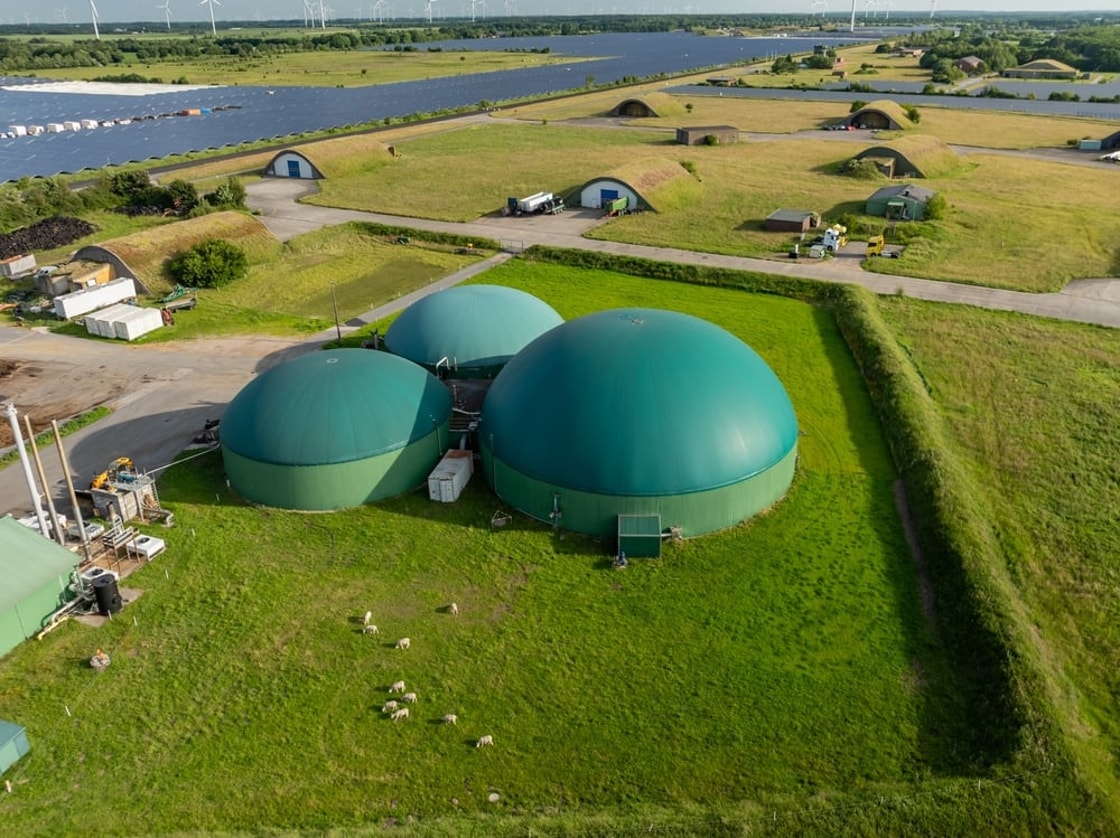
Alongside its pellet production technology, Methaplanet operates its own biogas facilities, where it processes straw-based horse manure sourced from local suppliers.
The company also upgrades the resulting biogas into biomethane for injection into the natural gas grid, while capturing the separated biogenic CO2 for use in nearby greenhouses.
By supplying the captured CO2 to greenhouse operators, Methaplanet aims to create an additional revenue stream while making use of a by-product that would otherwise be released during biogas upgrading.
Methaplanet’s approach is intended to address two challenges including the availability of suitable feedstocks and the efficiency with which existing plants convert them into renewable gas.
The company has a production facility in France and a demonstration facility in Spain, alongside its operations in the Netherlands.
The latest funding will support further research and development, the expansion of its activities in the Netherlands and the development of partnerships with customers and suppliers.
The investment also comes as the EU seeks to increase biomethane production to 35 billion cubic metres annually by 2030, a target that will require both additional production capacity and more efficient use of available feedstocks.