President Trump’s announcement of an energy ceasefire between Russia and Ukraine appears to be considerably narrower than initially suggested, with a White House official telling Axios that the proposal only covers attacks on oil refineries and with no official confirmation from Moscow as of yet.
Trump announced the apparent breakthrough on social media on Sunday, describing it broadly as an energy ceasefire and claiming the agreement was to go into effect immediately.
Zelensky cast doubt on the deal, saying he was unaware of the agreement before adding that Kyiv was prepared to accept a reciprocal energy ceasefire.
In a subsequent Axios report, a White House official was reported as describing the proposal as “refinery for refinery,” meaning both sides would stop attacking each other’s oil refineries rather than energy infrastructure. The official added that a broader agreement covering power plants and electricity grids could follow.
The same official then indicated that Russia was still considering the proposal, directly contradicting Trump’s social media post that both sides had already agreed.
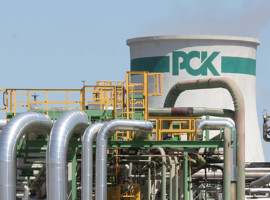
For Ukraine, the distinction between a refinery ceasefire and an energy infrastructure ceasefire is a big one. While Ukraine has just one oil refinery (which has been repeatedly attacked and is not fully operational), Russia operates an extensive network of refineries that have become an increasingly important target for Ukrainian drones.
At the time of writing, Kyiv has made it clear that any agreement must also protect its electricity infrastructure, while Russia is yet to comment on the deal at all.
According to Zelensky, Russian attacks on Ukrainian energy infrastructure continued after Trump’s announcement, with attacks on a heat and power plant in Kharkiv.
While those strikes would not violate a refinery-only ceasefire, they add to evidence that there is no comprehensive energy ceasefire in place.
For Trump, the incentive for a refinery ceasefire is clear, with global diesel prices continuing to climb ahead of the U.S. midterm elections. Already, the U.S. President has come under fire for his diesel supply agreement with Putin, which was followed by the U.S. Treasury easing restrictions on transactions involving Russian diesel.
Whether this latest attempt at diplomacy will lead to an agreement remains to be seen, but as of yet there is little hard evidence that progress toward an energy ceasefire is underway.
By Josh Owens for Oilprice.com
More Top Reads From Oilprice.com
- Asian Refiners Ditch U.S. Oil as Supertanker Rates Hit $82 Million
- Crude Oil is Underpriced, Energy Aspects Says
- Petronas to Raise Malaysia Dividend 19% to $7.8 Billion for 2027