By
23 min ago 4 min read
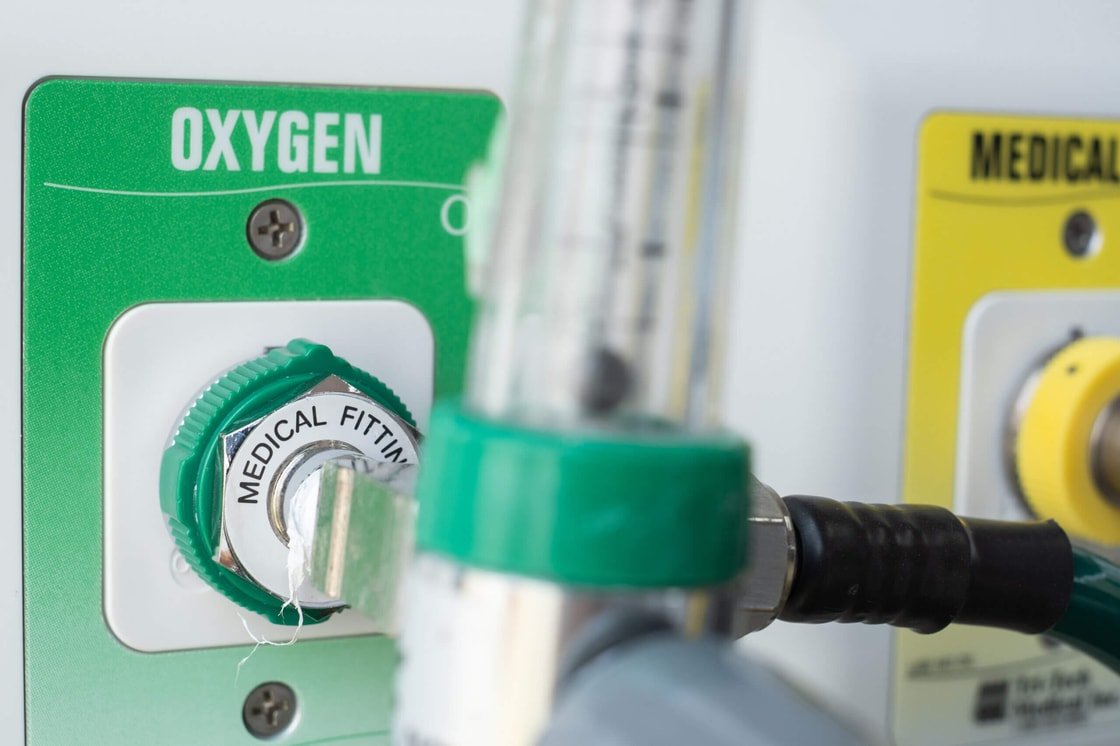
Three regional referral hospitals in Uganda are grappling with non-functional medical oxygen generation plants, raising fresh concerns over the reliability of the country’s healthcare infrastructure.
A report from Uganda’s Committee on Public Accounts (Central Government), presented to Parliament last week, found that oxygen plants worth a combined Shs7.7bn ($2.1m) at Moroto, Yumbe and Soroti Regional Referral Hospitals have produced little or no oxygen.
According to the report, two oxygen plants at Moroto Hospital, valued at Shs3.72bn ($912k), have remained non-functional for three years because of an unfinished and locked plant house.
The Ministry of Health (MOH) handed responsibility for completing the facility to the Uganda People’s Defence Forces (UPDF) Engineering Brigade on 30 July 2022, with a six-month completion deadline.
However, the project remains unfinished more than three years later.
At Yumbe Regional Referral Hospital, an oxygen plant is also incomplete, with the site reportedly abandoned and a breaker damaged during transit.
In Soroti, two of the hospital’s three oxygen plants are not operational. One was never formally handed over by the UPDF and MOH, while another has not been serviced because its maintenance contract is managed centrally.
“The committee observed that oxygen plants worth Shs7.7bn in underserved regions have produced little or no oxygen,” the report stated, adding that the failure to complete and hand over a six-month contract after more than three years reflected serious contract management failures.
The committee recommended that the Permanent Secretary and Secretary to the Treasury at the Ministry of Finance hold the Ministry of Health and UPDF Engineering Brigade accountable for the delays.
It also called for the completion and handover of the Moroto, Yumbe and Soroti facilities, alongside servicing of the two affected plants in Soroti, within 60 days of the report’s adoption.
The findings add to wider concerns over the sustainability of medical oxygen infrastructure in Uganda, where investment in generation capacity has not always translated into reliable supplies for hospitals.
In a recent interview with gasworld, Steffi Van Uytfanghe, who works on medical oxygen access at the Access to Medicine Foundation, described Uganda as facing a major oxygen crisis, with plants breaking down and replacement parts sometimes taking months to arrive.
“Sometimes there are delays of six months,” she said. “If you have a delay for six months to repair an oxygen plant, there’s no oxygen in that hospital for six months.”
Read more:
Van Uytfanghe identified maintenance capacity, access to spare parts and shortages of trained technical personnel as persistent barriers to keeping medical oxygen systems operational across low- and middle-income countries.
Uganda is particularly reliant on pressure swing adsorption technology, making the operational performance of its installed oxygen generation infrastructure especially important.
She also highlighted the difficulties associated with maintaining plants where spare parts must be sourced through intermediaries, with the Foundation working to bring manufacturers and health ministries together to explore more direct procurement arrangements.
The Ugandan parliamentary report also highlighted wider weaknesses in the country’s medical supply chain, including delayed deliveries by National Medical Stores (NMS) and prolonged medicine stock-outs at several regional hospitals.
The committee found that deliveries to hospitals in Fort Portal, Gulu, Hoima, Kayunga and Soroti had been delayed by between 27 and 136 days.
It called on NMS to report its delivery performance to Parliament within 60 days of the report’s adoption, while recommending improved monitoring and redistribution of medicines approaching their expiry dates.
Steffi Van Uytfanghe will be speaking at the gasworld Global Industrial Gas Conference 2026 in Budapest, Hungary, from 1 to 3 December.
Her presentation, ‘Investing in Medical Oxygen Supply & Ecosystems’, will explore the challenges and opportunities surrounding medical oxygen access, infrastructure and the development of sustainable oxygen supply systems.
Find out more