Tuesday, 18 February 2025
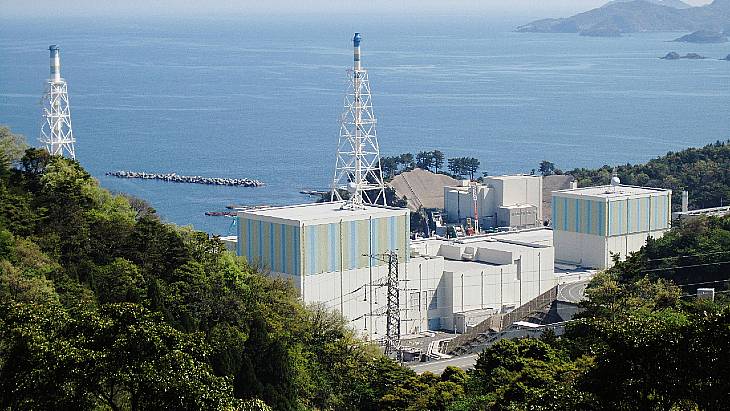
The Japanese government revises its energy plan about every three years. The plan is formulated based on the Basic Energy Policy Law enacted in June 2002. The latest plan, like its predecessors, recognises the necessity of energy security for the country, which is poor in fossil fuel resources. The policy includes commitments to “clean energy” initiatives but places emphasis on ensuring stable and secure energy supplies. The Advisory Committee for Natural Resources and Energy started discussions on the 7th Basic Energy Plan in May 2024 and presented the draft version of the plan in December. It has since gone through a public comment procedure and other processes.
Adopted on Tuesday by the cabinet, the 7th Basic Energy Plan calls for nuclear electricity generation to increase from 8.5% in fiscal 2023 to about 20% in fiscal 2040. Renewable energy’s share of total electricity production, meanwhile, is expected to increase from 22.9% to 40%-50%, with fossil fuels’ share dropping from almost 69% to 30%-40%.
Prior to the March 2011 accident at the Fukushima Daiichi plant, Japan’s 54 reactors had provided around 30% of the country’s electricity. However, within 14 months of the accident, the country’s nuclear generation had been brought to a standstill pending regulatory change.
Since then, 14 reactors have gradually resumed operation. The country’s policy since 2014 has been to reduce its dependence on nuclear power as much as possible.
To achieve a 20% share for nuclear by fiscal 2040, the majority of Japan’s 36 operable nuclear reactors – including those currently under construction – will have to be operational.
“At present, in the Kyushu and Kansai areas where nuclear power plants are being restarted, the proportion of decarbonised energy sources is high, and electricity prices are up to 30% lower than in other areas,” the plan notes. “In addition, the benefits of restarting nuclear power plants are being passed on to consumers in the form of lower electricity prices, etc.”
In February 2023, Japan’s Cabinet approved a policy to allow new nuclear power reactors to be constructed and the operation of existing reactors to be extended from 40 to 60 years.
“Before 2040, more than 3 million kW of existing reactors will reach 60 years of operation, and after that, the supply capacity of existing reactors as decarbonised power sources will be significantly lost,” the plan says. “In order to secure the decarbonised power sources necessary for economic growth and improvement of the people’s lives in 2040 and beyond, it is necessary to take into account the fact that a fairly long lead time of about 10 to 20 years is necessary.
“In order to utilise nuclear power as a decarbonised power source, we will work on the development and installation of next-generation innovative reactors that incorporate new safety mechanisms, aiming to improve the safety of nuclear power.”
The government said it will proceed with the “concrete implementation of next-generation innovative reactors” on the sites of operators who have decided to decommission nuclear power plants, “only if they contribute to the maintenance and development of local industries and employment and can obtain the understanding of the local community”.
It added: “In addition, we will continue to work on technological development toward the practical application of other next-generation innovative reactors, such as fast reactors, high-temperature gas reactors, and fusion energy.”