*Changing refinery setup can be a lengthy and expensive process
*Running different crude types impacts refinery yields, margin
By Arathy Somasekhar
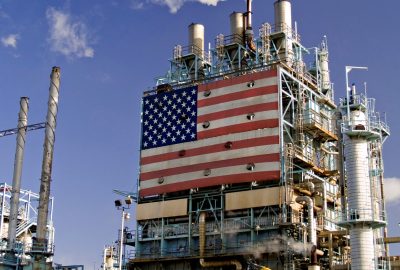
U.S. refiners are not planning to make big-ticket investments to process more domestic crude and less oil from top suppliers Canada and Mexico, industry sources and analysts said, an obstacle to President Trump’s plan to boost oil output.
Trump’s pledge to unleash U.S. energy production and lower prices for consumers has focused on increasing domestic oil drilling. At the same time, his tariff threats have cut imports of crude from Canada and Mexico, which account for around a quarter of the oil U.S. refiners process, even though in the end he decided to exempt energy imports.
Uncertainty over future trade policy may make processing more domestic crude more attractive to U.S. refiners, but the switch is not simple.
The U.S. produces mainly light shale crude, which ideally requires a different configuration at refineries than denser, heavier Canadian and Mexican crude. More than 70% of U.S. processing capacity is configured to run heavier grades, and changing the setup can be a lengthy, expensive process.
Reuters spoke to ten industry sources, including refinery staff, executives and analysts, for this story, and all but one agreed that refineries were unlikely to make these large investments.
The one refinery source, who declined to be named, said that all companies would explore the option of boosting incremental light crude processing capacity, adding that it would also take a couple of years and cost hundreds of millions.
“Nobody is making these investment decisions based on very short-term market fluctuations,” Barbara Harrison, Chevron’s vice president of crude supply and trading, told Reuters. She added that the sixth-largest U.S. refiner by capacity was currently satisfied with its refinery processing capacity.
“These investments do not happen overnight, the construction doesn’t happen, the permitting doesn’t happen overnight. So you really need to make sure your investment is aligned with long-term market fundamentals,” she said.
Slowing gasoline demand due to the growth in electric vehicles, combined with increased competition from refineries in other countries, is already leading some U.S. refiners to shut down, rather than invest in reconfiguration.
Independent refiner Phillips 66 in January forecast 2025 gasoline demand to rise 0.8% globally, and 0.2% in the U.S. The No. 4 U.S. refiner plans to cease operations at its 139,000 barrel-per-day (bpd) Los Angeles-area plant later in 2025.
LyondellBasell Industries started to permanently shutter its 263,776 bpd Houston oil refinery earlier this year.
U.S. net crude oil imports will fall by 20% in 2025 to 1.9 million bpd, their lowest since 1971, the Energy Information Administration forecast in March, pointing to higher U.S. production and lower refinery demand.
However, U.S. oil output is expected to plateau by the end of this decade despite Trump’s plans, which is a longer-term disincentive for refiners to build or modify units.
“Our view is light shale oil production in the U.S. will peak sometime in the first half of the 2030s,” said John Auers, managing director at Refined Fuels Analytics. “In contrast, we expect (global) heavy crude production to continue to grow into the 2040s. So I wouldn’t advise refiners to convert.”
BIG COSTS IN TIME AND MONEY
Increasing capacity to run lighter crudes at a medium-sized refinery can take years and cost up to hundreds of millions of dollars, Auers and other industry sources said.
Top U.S. oil producer Exxon Mobil paid $2 billion to add a 250,000-bpd crude distillation unit that runs light Permian shale oil at its Beaumont, Texas, refinery in 2023. The upgrade took four years.
No.2 oil producer Chevron also completed a retrofit of its refinery in Pasadena, Texas, at the end of 2024 to expand the processing capacity of lighter crudes by nearly 15% to 125,000 bpd. That cost about $475 million, said Hillary Stevenson, a senior director at market intelligence firm IIR Energy. Chevron declined to comment on the investment.
As shale fields in North Dakota’s Bakken basin and the Permian basin in West Texas and New Mexico produced a flood of lighter crude, refiners have already blended more of it with the imported heavy crude their facilities were built to handle.
They are, however, close to their limit in terms of how much more crude they can blend, multiple sources said.
Some independent refiners without upstream production, like top refiner Marathon Petroleum and HF Sinclair, said in February amid the tariff threats that they could pivot from heavier crude to lighter alternatives, but warned that it may impact refinery utilization and yield.
Lighter crude tends to produce higher volumes of petrochemical feedstock naphtha and less of the more profitable diesel and jet fuel, and could force operators to reduce the amount of crude they run overall.
“There is a point where if heavy feedstocks become limited, it affects rate and production of clean products, certainly from our assets, and we’d expect industry-wide,” Valero Chief Operating Officer Gary Simmons said in February.
If tariffs cut supplies of Mexican and Canadian crude, refiners are more likely to turn to other suppliers of similar oil, such as Colombia, industry sources said.
“Companies would need to have some certainty on policy and long-standing regulations to make these large investments,” said IIR’s Stevenson.
“Four years is not enough to make that kind of capital expenditure and investment,” she added, referring to the length of a U.S. presidential term.
(Reporting by Arathy Somasekhar in Houston; editing by Peter Henderson, Simon Webb and Marguerita Choy)
Share This:
More News Articles