By
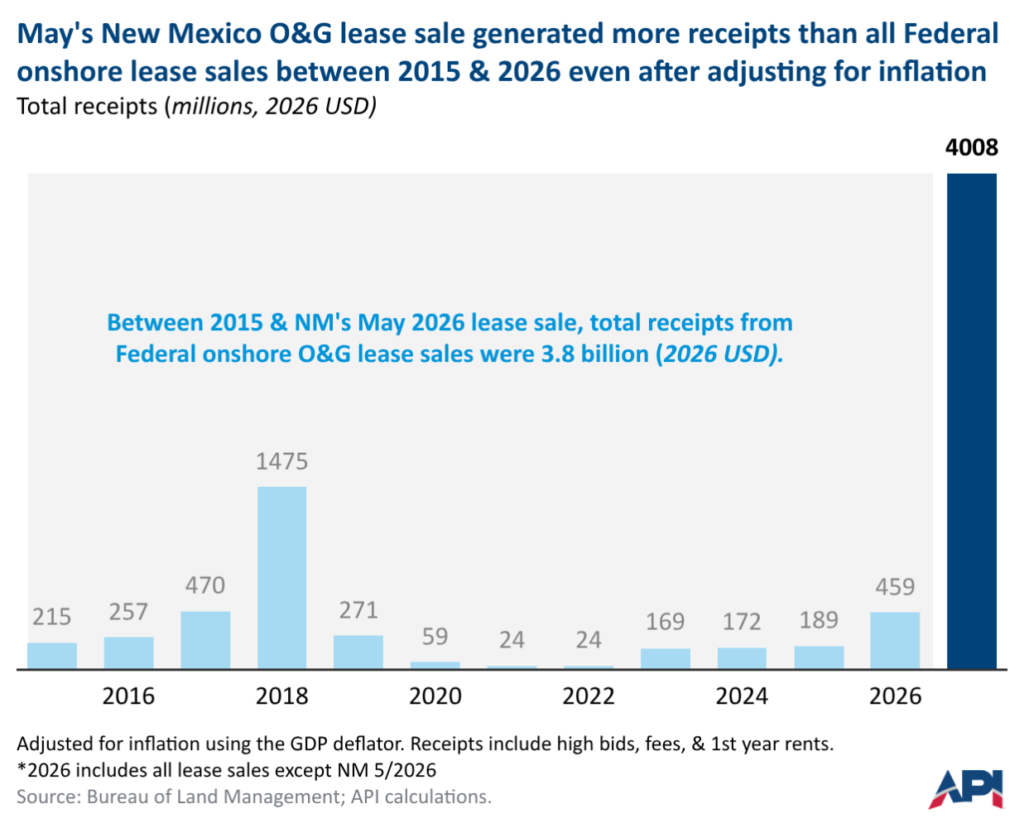
Last week, something big happened in the U.S. oil and gas industry. In southeastern New Mexico, the federal government held the largest onshore oil and natural gas lease sale in American history. It generated more than $4 billion — more than four times the previous record.
Get the Latest US Focused Energy News Delivered to You! It’s FREE:
In this edition of American Energy Snapshot, we answer: Why did this lease sale draw more interest and raise more money than any before it?
First, what is a lease sale?
A lease sale is how the federal government rents out the right to explore and drill for oil and natural gas beneath public land.
In a lease sale, the government auctions off leases for parcels of land to energy companies. The winning bidder pays an upfront amount for the lease, and then — if they successfully find and produce oil or gas — they pay the government an ongoing percentage of the value (royalty) of everything they produce. Land is temporarily leased, not sold, during a lease sale. The government retains ownership of the land.
Why was last week’s lease sale in New Mexico such a big deal?
Last week’s lease sale in southeastern New Mexico shattered records. It raised about $4 billion. That’s more than four times the amount of the previous record for an onshore sale.
The sale also broke the record for the highest bid for a single lease — $405.8 million for just one lease in Lea County.
What changed that made this lease sale so big?
A key federal policy change included in last year’s One Big Beautiful Bill (OBBB) Act was the difference-maker. This policy change improved the quality of the land offered for leasing.
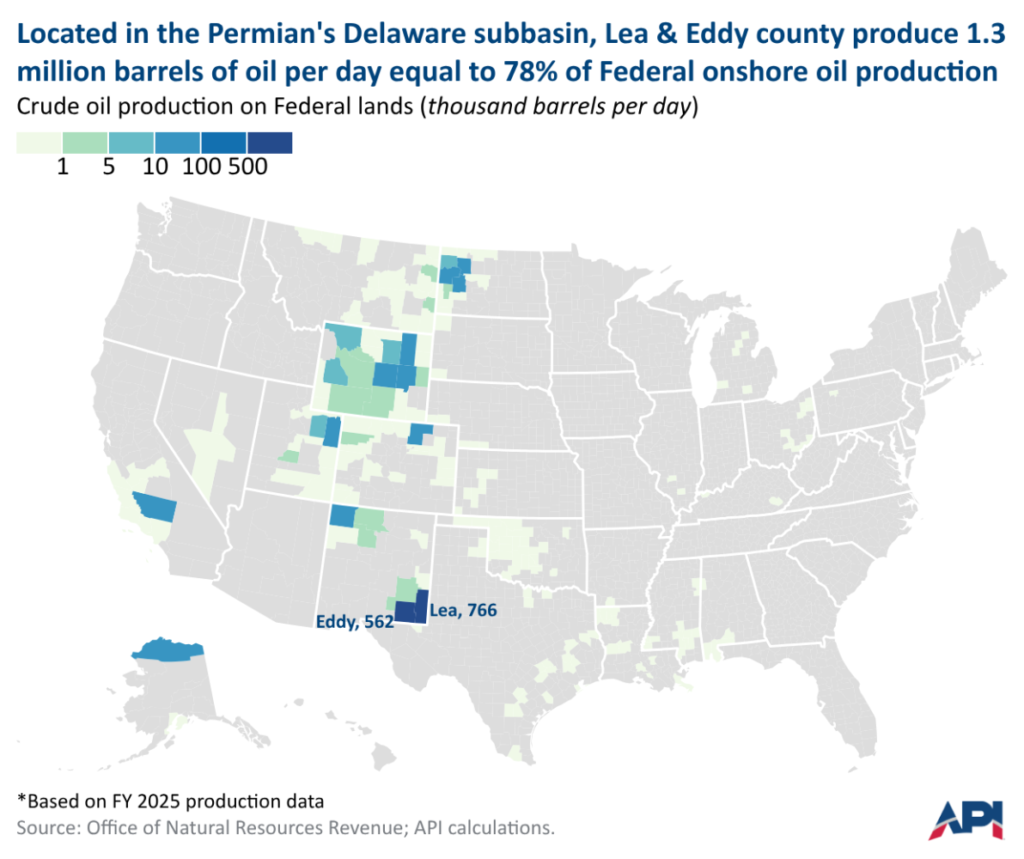
The acreage in this sale sits in southeastern New Mexico, over both the Delaware Basin and the Permian Basin (big shale formations that are known to produce oil and gas). The government had designated the land eligible for oil and gas leasing years ago, but it hadn’t been included in previous lease sales. There was a disconnect between where industry geologists believed oil and gas would be best produced, and which parcels the government chose to offer.
But the OBBB Act changed how the government selects parcels of land for leasing. It stipulated that at least 50% of the parcels of land offered in lease sales must be lands that were actually nominated by interested companies.
So why did bidding climb so high? Drilling on neighboring land had already shown that the area was highly likely to produce oil and gas. Producers nominated these parcels for the lease sale because they had high confidence in their potential to produce. And because of the policy change in the OBBB Act, those high-confidence parcels of land were certain to be included in the auction.
The policy change meant that this was some of the lowest-risk acreage the industry had seen in years.
What does this historic lease sale say about the future of energy demand?
For any investment, demand matters. And when it comes to energy, demand is projected to grow.
Global energy markets remain tight following disruption in the Strait of Hormuz. At the same time, new technologies like artificial intelligence, data centers, advanced manufacturing and rising global living standards will require more energy, not less, and oil and natural gas will play a critical role in supplying it.
Why should Americans care about lease sales?
The money raised by lease sales flows back to taxpayers. In 2025, energy production on federal and tribal onshore lands, and federal offshore areas generated a whopping $14.6 billion in revenue.
For onshore leases, revenue is split between the federal government and the state where the land sits. In the case of last week’s sale, New Mexico. The rest goes to the U.S. Treasury and a federal fund for Western water projects.
In New Mexico, the money raised by federal and state leases is a big piece of the state’s budget — it pays for things like public schools, healthcare and infrastructure without raising taxes. Oil and gas revenue underwrites the state’s Early Childhood Education and Care Fund, which makes childcare free for New Mexico families.
The key takeaway
The broader lesson is that policy matters. In this case, a seemingly small policy change created big benefits for the country in the form of revenue, jobs and energy security.
Amid the current global energy disruption and looking at long-term rising energy demand, federal and state policy has an outsized impact in determining whether the United States will be able to deliver the energy we need to build our future. And as last week’s lease sale demonstrated, even relatively small changes can create big benefits.
Share This:
More News Articles