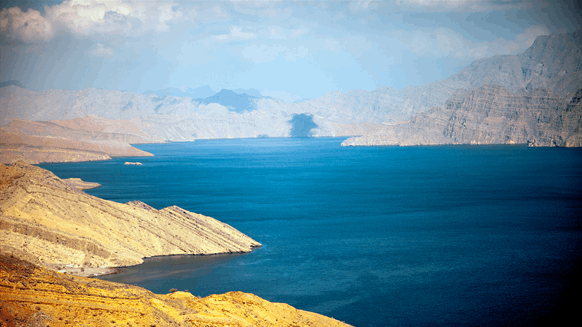
What is ship traffic through the Strait of Hormuz like currently? What type of ships are getting through and what type of ships aren’t? And is the petrochemical industry being affected by the current situation in the Strait?
These were some of the questions Rigzone posed to analysts from Hartree Partners and Energy Aspects recently, in an effort to get a better understanding of exactly what is happening right now in an area the U.S. Energy Information Administration (EIA) described as “one of the world’s most important oil chokepoints” in a 2025 analysis piece.
“There … [are] a range of estimates on how much shipping traffic there currently is through the Strait of Hormuz,” Ed Morse, Commodities Strategist at Hartree Partners, and previously the Global Head of Commodity Research at Citi Group, told Rigzone.
“Without making attributions to specific company reports … [Tuesday] saw a slight recovery of ships transiting the Strait to around three dozen,” he added.
“That was the highest level since before the weekend tit-for-tat actions taken by the U.S. and Iran against each other, or against Gulf countries by Iran where significant U.S. assets have been in place,” he continued.
Morse noted, however, that the lion’s share of the transits, “a good two-thirds”, have been going to or from Iran.
“With … [Tuesday’s] U.S. decision to renew its blockage of such shipments, it is likely that … [Wednesday’s] data will show a further decrease of shipping,” Morse said.
The Hartree Partners representative revealed that the last three weeks of transits in the Strait have been in the range of 20 to 50, with two days at 80 or above.
“That’s far greater than the higher limit of 20 vessels a day between early March and mid-June, but far from the normal 120-140 vessels a day in normal times,” he pointed out.
Morse told Rigzone that the bulk of the shipping, “about one third” has been carrying oil in VLCC’s, Suezmax, or Aframax tankers, and said that about four to six a day have been carrying products rather than crude and about one carrier a day has been carrying LPG.
“Three to seven a day include bulk carriers and three to five have been container ships, while ‘other’ vessels have been in the four to 11 range of transits,” Morse told Rigzone.
“An important note is that outbound vessels have been greater than inbound vessels, given that many of the outbound vessels have been laden with crude or products and unable to transit since the Strait was effectively closed on February 28,” he added.
“Many of the outbound vessels, especially the VLCCs (which have reached nine to 10 vessels on some days) are shuttles, bringing large amounts of crude for ship-to-ship transfers, then reversing to return for more oil to be shuttled out,” he said.
“These are largely owned by, or leased by, state-owned enterprises, willing to take the risks of having their tankers leave the Gulf for a few days, able to return outbound for additional ship-to-ship transfers to vessels owned by shipowners refusing to take the risk of attack,” he continued.
Morse went on to tell Rigzone that the petrochemical industry has definitely been affected by the situation in the Strait.
“Before the closure of the Strait, some five to 10 vessels leaving the area have been LPG carriers heading for other areas, largely in the Pacific Basin,” he pointed out.
“During the recent re-opening of the Strait many days have seen no LPG carriers leaving the area, while some days have seen only one leaving with only two days seeing three or four,” he added.
“Hence the petrochemical feedstock supply from the Gulf has trickled higher but is again being cut off,” he warned.
Christopher Haines, Global Head of Oil at Energy Aspects, told Rigzone that ship traffic through Hormuz has been extremely volatile since May. He noted that flows are continuing but pointed out that they had slowed “substantially” after recent attacks.
Haines said Energy Aspects had seen nearly all of the previously stranded tankers exit Hormuz. He added that, recently, the focus had been on prioritizing VLCCs through the U.S. guided Omani southern route and warned that the Northern route had been “more mixed”.
Haines also told Rigzone that the drop and inconsistent flow of naphtha and LPG has made it difficult for crackers in Asia to plan, “with most alternatives sourced at a longer shipping distance from the United States”.
In a market update sent to Rigzone on Wednesday by the Rystad Energy team, Rystad noted that west to east transits through the Strait had largely stalled following strikes on commodity carriers over the past week as hostilities resumed between the U.S. and Iran.
Lu Ming Pang, Vice President, Gas and LNG Research at Rystad Energy, said, “following the escalation in hostilities between the U.S. and Iran, transits through the Strait of Hormuz will come under even greater scrutiny”.
“The attack on Qatar’s Al Rekayyat Q-Flex LNG carrier on 7 July despite its AIS being disabled, followed by strikes on two UAE-linked VLCCs on 14 July, demonstrates that even low-profile transits are no longer insulated from risk,” Pang warned.
Pang went on to outline that, based on Rystad’s satellite tracking as of Wednesday morning, only one UAE LNG vessel had completed the transit since the Al Rekayyat incident, “while Qatar has not dispatched another vessel”.
“Markets had initially expected flows to normalize following the U.S.-Iran memorandum of understanding signed on 17 June, with a noticeable build-up of ballast LNG carriers entering the Persian Gulf in anticipation of stronger exports,” Pang said.
“However, those expectations have failed to materialize, and the latest escalation has further reduced the likelihood of a near-term recovery,” Pang warned.
“As confidence in the security of the Strait continues to erode, markets will increasingly need to price in the prospect of more prolonged supply disruptions, a shift that has already contributed to firmer global gas prices over the past week,” Pang went on to state.
To contact the author, email