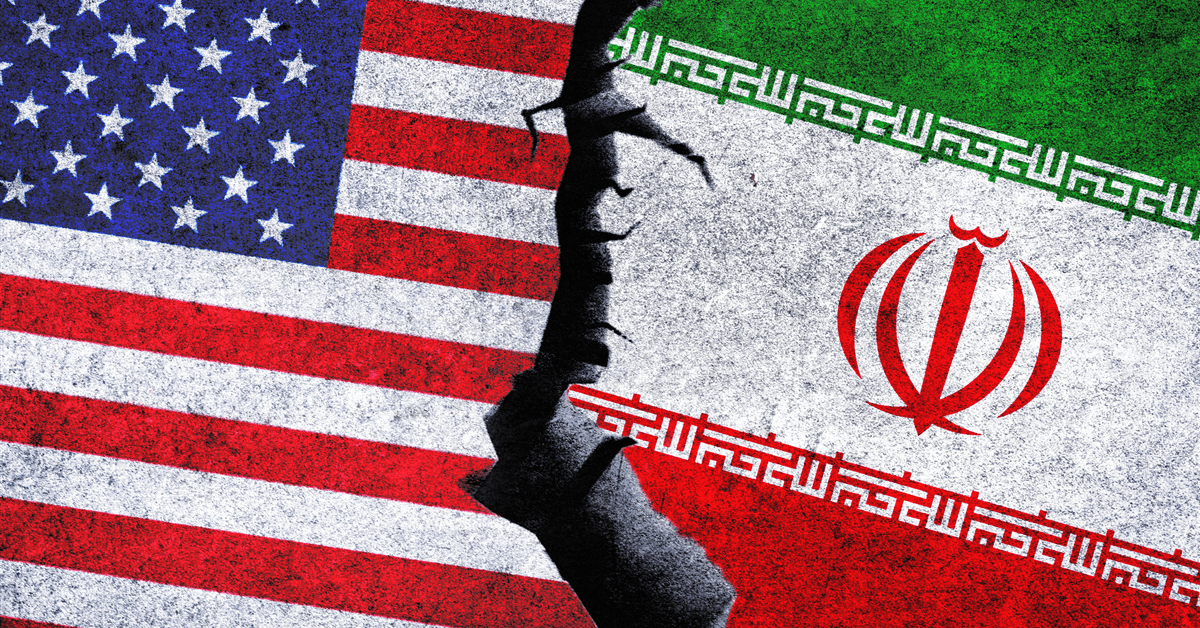
Analysts at Rystad Energy and Skandinaviska Enskilda Banken AB (SEB) have examined the U.S. administration’s latest measures against Iran, which aim for the “total isolation of the Iranian regime”, according to a release posted on the White House website on Monday.
Operation Economic Outcast was described in the White House release as an “unprecedented campaign to sever every remaining economic lifeline sustaining the Islamic Republic of Iran”.
“America is entering the endgame with the single greatest financial offensive ever mounted against an adversary,” the release added.
Seyed Abbas Araghchi, Foreign Minister of the Islamic Republic of Iran, outlined in a statement posted on his X page on Friday that the latest U.S. measures are “bound to fail”.
In a market update sent to Rigzone late Monday, Rystad highlighted that the U.S. administration’s latest measures against Iran come as a 60-day memorandum of understanding expired on 16 August “with no deal or follow-through negotiations planned between the two parties, and as the current naval blockade and threats from both sides of further step-up in attacks gain more traction”.
Rystad revealed in its update that, “as the chances for a diplomatic breakthrough become increasingly remote”, the company has changed how it frames the outlook of the conflict. According to the update, Rystad now sees a protracted stalemate as the most likely path over the coming months, “with traffic through the Strait of Hormuz remaining near current depressed levels before beginning a gradual recovery”.
“The starting point in our latest Base Case is close to the current operating environment where traffic through Hormuz settles around three million barrels per day (bpd), substantially below pre-conflict levels, while producers increase the use of alternative export routes,” Rystad noted.
Jorge Leon, Senior Vice President and Head of Geopolitical Analysis at Rystad Energy, pointed out in the update that “the U.S. has branded this an ‘economic D-Day’”, but said “the immediate measures look less dramatic than the rhetoric”.
“The real question now is how aggressively Washington is prepared to enforce secondary sanctions against Iran’s remaining trading partners,” Leon highlighted.
Leon also noted that China is “the key”.
“Iranian crude exports have already fallen sharply because of the blockade, and Beijing is essentially the only significant buyer left,” he said.
“Unless China materially reduces purchases further, the additional impact on Iranian oil revenues could be relatively limited,” he added.
Leon said Washington is trying to turn the military blockade into a much broader economic blockade. He highlighted, however, that, “after decades of sanctions, Iran has developed a highly resilient survival economy”.
“More economic pain does not necessarily translate into political capitulation,” he warned.
The Rystad representative went on to warn that the biggest oil market risk may not be the sanctions themselves, but Iran’s response to them.
“Tehran has threatened to treat countries supporting the U.S. campaign as participants in the war and has again raised the prospect of preventing oil from leaving the Persian Gulf,” he said.
“This creates an important asymmetry for the oil market: there may be relatively little additional Iranian oil left for sanctions to remove, but Iran still has considerable capacity to disrupt everybody else’s exports,” he added.
“The relatively muted oil price reaction so far suggests the market is making the same distinction. What matters now is not the announcement itself, but whether China complies and whether Iran retaliates,” he continued.
“The actual announcement came across as much less dramatic than anticipated, with a wide gap between the rhetoric and the substance, at least going by the initial comments,” Leon went on to state.
“What we have seen so far looks much more like an expansion of the existing sanctions regime than a fundamentally new economic weapon,” he outlined.
In a report sent to Rigzone on Tuesday morning, SEB Chief Commodities Analyst Bjarne Schieldrop said China is standing in the way for U.S. sanctions towards Iran.
“The U.S. is threatening Iran with economic destruction via sanctions,” Schieldrop highlighted in the report.
“But China is normally buying 90 percent of Iran’s crude and is strongly opposed to sanctions arguing that they don’t work. China cannot allow the U.S. to dictate from whom it can buy crude oil or not,” he added.
“Xi Jinping is set to meet Trump in the U.S. in a couple of weeks from now. There is no chance that the U.S. will hit secondary sanctions on Chinese entities dealing in Iranian oil,” he warned.
“How to make economic sanctions against Iran work when China is not a part of it is Trump’s big headache,” he continued.
To contact the author, email