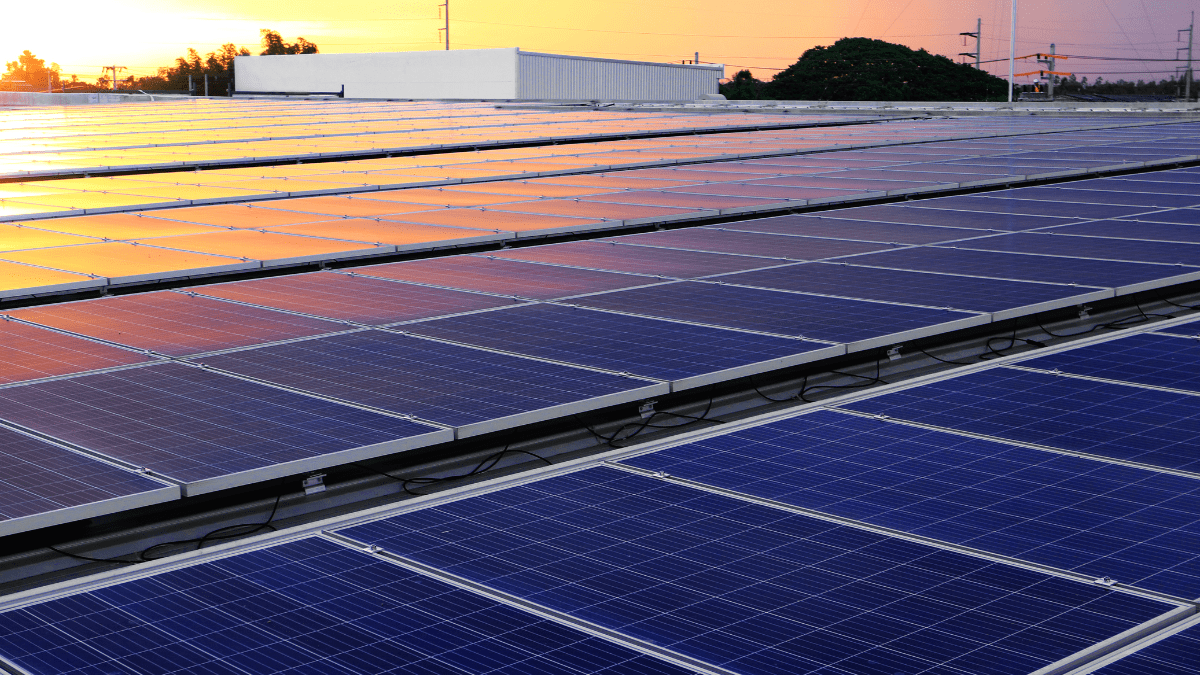
The Andhra Pradesh Electricity Regulatory Commission has issued a revised draft of the first amendment to the Grid-Interactive Solar Rooftop Photovoltaic Systems under Net and Gross Metering Regulation, 2023. The original regulation was published on 24 February 2024, soon after the Government of Andhra Pradesh announced its Integrated Clean Energy Policy on 16 October 2024. The policy aims to make the state a leader in clean energy by achieving 50% of its total power capacity from non-fossil fuel sources by 2030 and moving towards net-zero emissions by 2047. It also seeks to attract investments worth nearly ₹10 lakh crore and generate about 7.5 lakh jobs. The policy emphasizes renewable energy manufacturing, promoting solar, wind, hybrid, and pumped storage projects, advancing green hydrogen production, and developing renewable economic zones.
In line with this policy, the state government, through its Energy Department, asked the Commission to amend the existing solar rooftop regulations to support new mechanisms such as distributed energy resource aggregators. After publishing a draft amendment on 26 March 2025 and seeking public feedback, the Commission has now released a revised draft dated 19 August 2025. The amendments introduce several important provisions. Distributed Energy Resource Aggregators will now be allowed to work with DISCOMs under commercial agreements to support rooftop solar adoption. These aggregators will manage generation, metering, settlement, and subsidy disbursement, and will also empanel vendors for installation.
The amendment also revises the definitions of Virtual Net Metering and Group Net Metering. Virtual Net Metering will allow energy generated by a rooftop system of a group or society to be shared among its members through the grid, with adjustments made according to their respective shares. Group Net Metering will allow energy generated by an individual prosumer’s rooftop system at one or more points to be adjusted across multiple service connections of the same consumer. In both cases, net imported energy will be billed at the retail tariff, while net exported energy will be paid at the Feed-in Tariff set by the Commission. Adjustments will also account for time-of-day tariff slots and applicable transmission and distribution losses. However, distribution and wheeling charges will be waived if injection and withdrawal occur at the same voltage levels, and they will also be waived for projects fully sponsored by the state government.
The revised amendment further specifies application procedures and fees. Applications can be submitted through DISCOM websites, Mee Seva centers, or the National Portal for Solar Rooftop. The fee structure is nil for systems up to 5 kWp, ₹1,000 for 5–100 kWp, ₹10,000 for 100–1000 kWp, and ₹25,000 per MWp for capacities above 1 MWp. Consumers must submit agreements within four months of receiving technical feasibility, failing which the application will be cancelled. For rooftop systems installed behind the consumer’s meter without feeding into the grid, no capacity limit applies, but prior intimation to the DISCOM is required, along with compliance with technical standards.
These changes underline Andhra Pradesh’s push to strengthen rooftop solar adoption, integrate new energy mechanisms, and align state-level regulations with national renewable energy goals. The revised draft shows a clear effort to balance consumer participation, policy targets, and DISCOM requirements in shaping a sustainable energy future.
Subscribe to get the latest posts sent to your email.