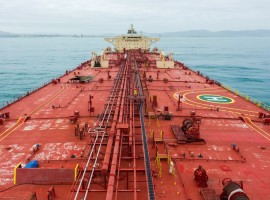
Some Asian refiners have recently offered Middle Eastern cargoes to the U.S. West Coast as supply from the Persian Gulf rises with the reopening of the Strait of Hormuz, while Asian buyers are well-supplied for the next two months.
Refiners in Asia have spent the better part of the past four months scrambling to procure crude for the summer from producers outside the Middle East. Buyers now have enough non-Middle Eastern crude lined up to arrive over the next two months, meaning that spot purchases from the Middle East aren’t really an immediate necessity, amid still uncertain developments about how open the Strait of Hormuz really is.
As a result, some of the Asian buyers are looking to offer now-available crude from the Middle East to U.S. states, including California and Hawaii, traders with knowledge of the offers told Bloomberg on Tuesday.
Hawaii hasn’t imported any crude from the Middle East since 2018, while California hasn’t received Middle East crude since the end of 2025, according to estimates by Bloomberg.
Ironically, Asian refiners picked up a lot of U.S. crude between March and May to offset the lost supply from the Middle East.
Now that the flows from the Strait of Hormuz have tentatively started to recover, some Asian refiners are offering excess supply to the United States, where inventories at Cushing, Oklahoma, and in the Strategic Petroleum Reserve (SPR) have dropped to multi-decade lows.
Asia is also slowing the buying of U.S. cargoes for July, amid rising supply from the Middle East and the U.S. benchmark WTI becoming more expensive than key Middle Eastern grades, including Abu Dhabi’s Murban.
Crude oil production in the Middle East is estimated to have rebounded to between 14.6 million barrels per day (bpd) and 15 million bpd earlier this month amid the ceasefire between Iran and the United States.
Saudi Arabia, the United Arab Emirates, and Qatar continue loading oil and LNG onto vessels at their Persian Gulf ports, despite this weekend’s flare-up in the region, while Iran has renewed loadings from Kharg Island, its key oil export port in the Gulf, after the U.S. waived the sanctions on Iranian oil sales, including in U.S. dollars, until August 21.
By Tsvetana Paraskova for Oilprice.com
More Top Reads From Oilprice.com
- Pakistan Pays Premium for Urgent LNG Cargo
- VLCC Earnings Near $470,000 a Day as Hormuz Hopes Drive Tanker Frenzy
- Gulf Producers Race to Load Oil and LNG as Hormuz Stays Open