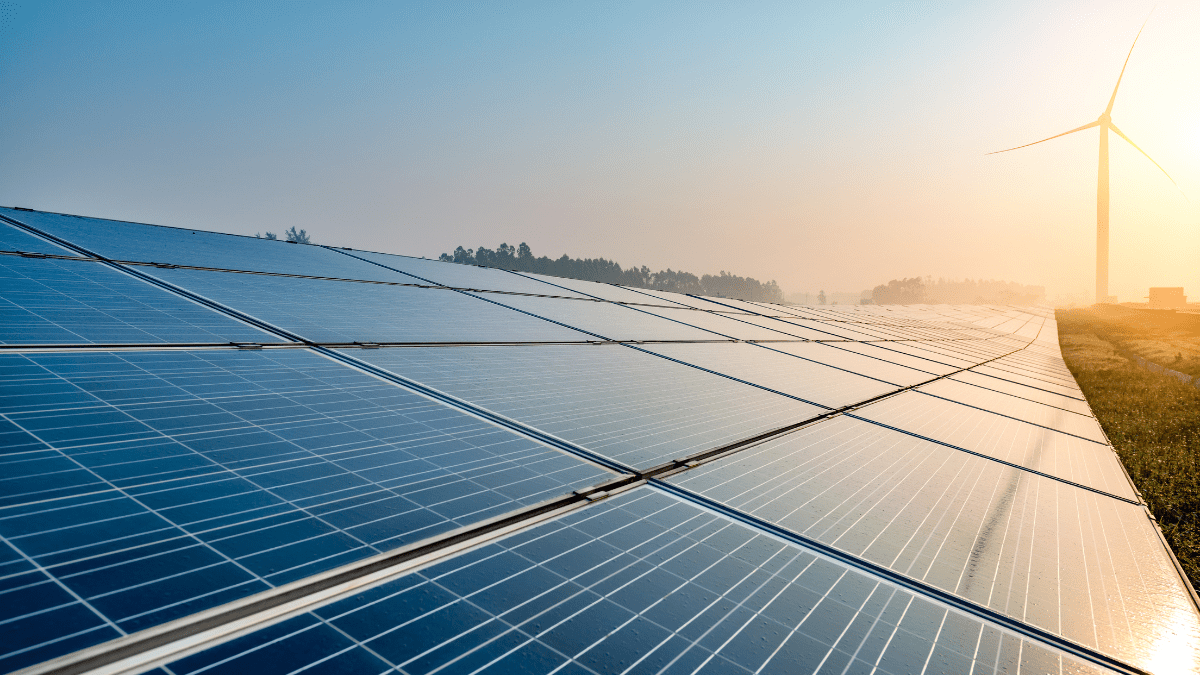
The Central Electricity Regulatory Commission has issued an important order that directly affects renewable energy projects across the country. The order was passed after the government reduced the Goods and Services Tax on renewable energy devices and their manufacturing parts. The GST rate was earlier 12 percent, but the Ministry of Finance cut it to 5 percent through a notification issued on 22 September 2025. The Commission took suo motu cognizance of this policy change because it has a clear impact on the cost of goods used in renewable energy generation.
The Commission’s role is to regulate tariffs for central generating companies and those that operate across multiple states. Under the Electricity Act, 2003, it is responsible for protecting consumer interests while ensuring that generating companies recover their costs reasonably. Since the change in GST affects the cost of equipment used in solar, wind, biogas, and other renewable energy systems, the Commission has decided that this benefit must be passed on to consumers through a corresponding reduction in tariff.
In earlier years, the introduction of the GST regime in 2017 had replaced previous exemptions and brought solar project goods and services under tax slabs ranging from 5 to 28 percent. Later, in 2021, the tax on renewable energy devices was increased from 5 percent to 12 percent. At that time, the Commission had ruled that the increase was a ‘Change in Law’ under the Power Purchase Agreements that govern tariff terms. Now the GST rate has once again been brought down, returning to an effective total of 5 percent, which includes 2.5 percent Central Tax. This new rate cancels out the earlier tax structure for these devices.
The Commission noted the types of equipment affected by this change. These include solar power-based devices, solar power generating systems, wind mills, biogas plants, and photovoltaic cells. It also explained that the timing of the tax depends on when the invoice is raised or when payment is received, whichever occurs first. For projects where goods and services are supplied together, the law treats 70 percent of the invoice value as goods and the remaining 30 percent as services. The goods portion gets the lower GST rate, while the services portion attracts the standard rate. When GST was raised in 2021, the effective tax on composite supplies had increased. With this reduction, the effective tax burden is now expected to fall.
The Commission also referred to the anti-profiteering rule under the CGST Act. This rule says that when a tax rate is reduced, the seller must pass on the benefit to the recipient by reducing prices accordingly. Because of this, renewable energy developers must ensure that the savings from the GST reduction are transparently transferred to distribution companies and, ultimately, to consumers.
To implement this, the Commission has directed that the revised 5 percent GST rate will apply to all renewable energy projects where the bid submission happened before 22 September 2025, but the invoice or payment took place on or after that date. This applies even if the payment was only partial. Generating companies are now required to adjust or refund monthly tariffs or charges wherever necessary. They must first reconcile the GST impact with the concerned distribution companies. For this purpose, they must share all relevant documents, certified by an auditor, to show clear evidence linking the invoices with the specific projects. Only after this reconciliation can they approach the Commission for tariff determination under the ‘Change in Law’ provisions. This process aims to make sure that the government’s tax reduction directly results in lower costs for electricity consumers.
Subscribe to get the latest posts sent to your email.