By Irina Slav
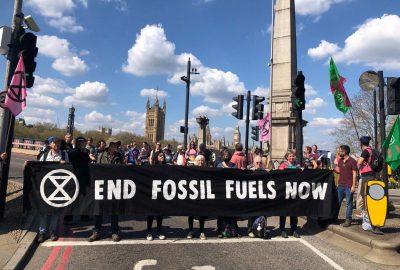
In 2016, several environmentalist organisations ignited a massive protest against a pipeline project in North Dakota. Some 100,000 people descended on a tiny town in the state, overran it and left it with a bill of for policing the protests and cleanup. Because they’re environmentalists, you see, and when environmentalists litter, it doesn’t count. Only it turns out it does.
A North Dakota court just ordered Greenpeace to pay over $660 million to Energy Transfer, the operator of the Dakota Access, for defamation, conspiracy, and physical damage to the pipeline — which Greenpeacers were protesting for being dangerous by being a pipeline. Greenpeace, in other words and courtesy of Energy Transfer’s stubbornness in pursuing justice, got a reminder of a painful truth. Actions have consequences.
The activism industry is unaccustomed to such reminders, far more unaccustomed than the energy industry. BP also got a reminder of that truth in 2011, and it was a dramatic one. Mistakes were made. Lessons were learned. Bills are still being paid. Because regulators and courts were really fast with the punishment. This has not been the case with activists. Activists got used to extreme leniency over the past decade and now they seem to be in for a really rude awakening.
In , “Big Oil Bullies around the world will continue to try to silence free speech and peaceful protest, but the fight against Energy Transfer’s meritless SLAPP lawsuit is not over.” I’m not sure how exactly violent protests against an energy infrastructure project count as free speech but it appears Greenpeace has chosen that as its new go-to defence. Me, I remember the pictures of the Dakota Access protest camp when the police finally kicked the protesters out. Those pictures weren’t very environmentally friendly.
The activism company’s big problem now is that the $667-million damages bill could bankrupt them. Oh, and they deny any involvement in the organisation of the protests because of course local communities can totally stage such a massive protest without expert help, it happens all the time, everywhere. Double oh as, while the U.S. jury handed the verdict for the Dakota Access protests, Greenpeace is suing the Norwegian government, the immediate suspension of activity at three oil and gas fields.
In a hypothetical scenario where they get their way, it won’t be long before they start protesting higher costs of living — especially if donations begin to dry out because, well, higher costs of living. Actions have consequences and they are often not the kind of consequences the action-takers would like to see. But at least it’s entertaining.
While Greenpeace appeals the North Dakota court verdict, fellow activism enterprise Follow This is demanding the removal of BP’s board chair, “claiming he should have offered investors a say on scrapping energy transition targets,” per . Because, you know, it wasn’t an investor that demanded these targets were scrapped. A big investor. An investor that descended on BP like the embodiment of actions have consequences, in this case a disastrous share performance and a media campaign aimed at making that share performance even more disastrous by telling the world on a daily basis what an utter failure BP is. There’s a certain sense of concertedness in these reports but I’m sure it’s just a coincidence.
In another action-packed sequence, major asset managers are channeling their inner grannies, buying wind, solar, batteries and everything you can label transitiony on the cheap. Because it’s there. Also because “Stock prices haven’t done well over last few years, but in the real economy clean is booming,” in the words of the head of sustainability and transition strategy at Jefferies. The same lady produced the remarkable that “When sentiment around something is low, it’s a good time to be a buyer.”
True as this may be often enough, it’s worth remembering that sometimes sentiment around something is low because that something is doomed but the granny mentality tends to ignore that. You see a bargain, you grab it, that mentality says, whether it’s a good bargain or a waste of money. It appears that those enthusiastic buyers are all betting on the long-term prospects of wind, solar, and battery storage, which, to them, remain robust and make them feel very smart and far-sighted.
In fact, what they are, besides grannies, is cats in the vicinity of a box. You see a box, you sit in it because the box is there. Of course, the marked difference between your average cat with a box and an asset manager with a flair for sustainability is that for the asset manager the box costs money — and it doesn’t make any once you sit in it.
Hopes appear to be pinned on a change in U.S. government in four years, which, the hopes go, would result in a 180-degree policy change back to the Biden times and never mind that the transition industry’s troubles began during Biden’s time and have been growing in Europe despite local leadership throwing everything it has into said industry.
Sad as it may be, it seems even some of the world’s biggest money handlers have forgotten that actions have consequences and are positioning themselves to learn that lesson the hard way. Happily, I might add. But you can’t really blame them for all of it, not when you’ve got stating that “Over 50% of Europe’s power is now supplied from renewable resources,” as if it’s a hard fact, which it isn’t. It is understandable how one might get confused about what’s fact and what isn’t but as one accountant told me a long time ago, ignorance of the law is no excuse for breaking it.
It’s the same with facts and the law that actions have consequences, and these consequences are often of an undesirable nature if you only pay attention to the factors that support your action. Confirmation bias can be a female dog — and an unfriendly one.
Share This:
More News Articles