COMMENTARY: Trump’s Embrace of Oil Industry is Turning Into an Awkward Grip

Oil-rich shale region of the Permian Basin in Texas
A drone view of a drilling rig south of Midland, Texas, U.S. June 11, 2025. REUTERS/Eli Hartman/File Phot

(Reuters) – President Donald Trump has lavished the U.S. oil industry with favourable policies since returning to the White House, but his twin demands for cheap oil and “energy dominance” are increasingly colliding with companies’ bottom lines.

Over the past year, the Republican president has rolled out numerous pro‑fossil fuel measures and offered strong support for U.S. oil firms abroad, a sharp departure from his Democratic predecessor Joe Biden’s focus on combating climate change.

Within hours of taking office, Trump declared a national energy emergency, opening the way to relaxed environmental rules and expanded drilling permits on federal land and in Alaska. He also quickly lifted Biden’s freeze on permitting new liquefied natural gas (LNG) terminals and sped up project approvals.


Get the Latest US Focused Energy News Delivered to You! It’s FREE:


The policies are set to reinforce America’s status as the world’s largest oil and gas producer. U.S. crude oil and liquids production is projected to hit a record of nearly 24 million barrels per day in 2026, accounting for 22% of global supply, according to the Energy Information Administration.

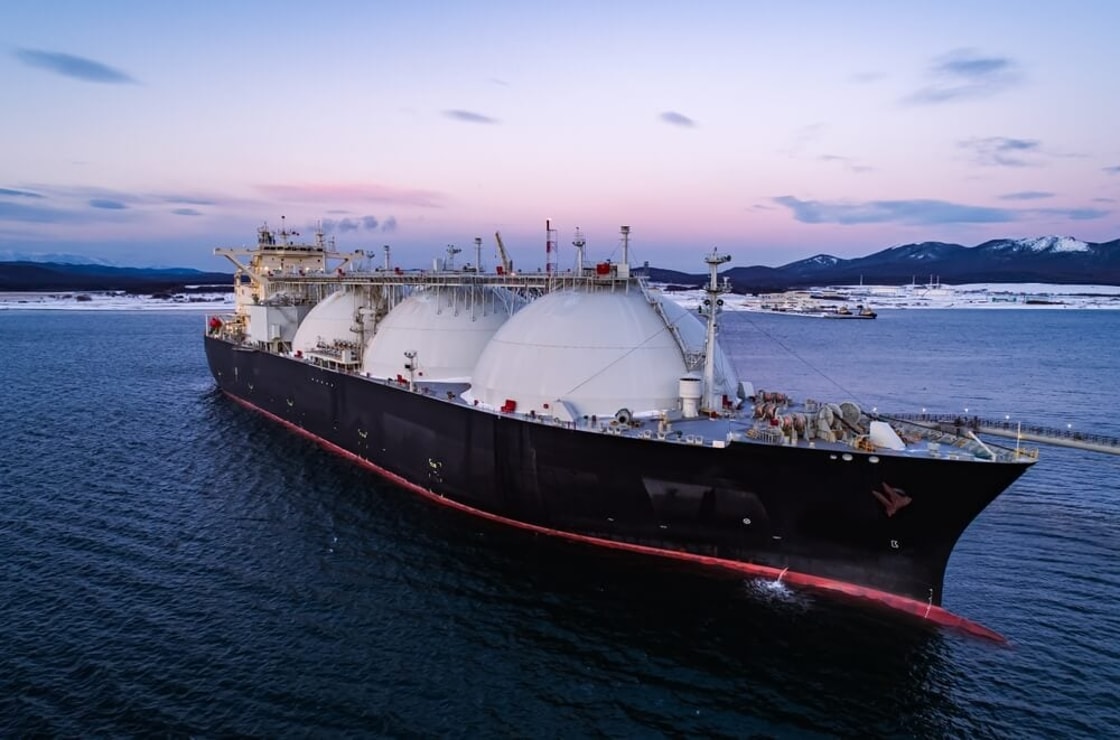
What’s more, the U.S. in 2025 became the first country to export more than 100 million metric tons of LNG in a single year, powered by production from new plants.

But the industry’s early enthusiasm for Trump’s “drill, baby, drill!” ethos has been tempered by his push for low energy prices and his appeals to the Organization of the Petroleum Exporting Countries to increase output. OPEC+, which includes Russia, sharply raised production targets throughout the year, sending U.S. benchmark crude to a near five‑year low of $55 a barrel in mid‑December.

The price drop, and expectations of a future global supply glut, pushed U.S. drillers to scale back operations, with the domestic oil rig count falling 15% over the past year, according to energy service provider Baker Hughes. That pullback is set to slow the pace of U.S. output growth this year and next.

Oil production
Oil production

ENERGY DOMINO

At the same time, Trump has used America’s oil and gas strength to advance his “energy dominance” agenda and the so‑called Donroe doctrine, his rebranding of a 19th‑century principle asserting U.S. influence over the Americas.

The administration has wielded its oil and LNG wealth in negotiations intended to narrow trade imbalances with dozens of countries. Some counterparties, such as the European Union, have agreed to aggressive and unrealistic supply commitments that risk making buyers wary of depending heavily on the U.S. for vital energy.

The centrality of oil in Trump’s strategy was made crystal clear when U.S. forces captured Venezuelan President Nicolas Maduro in early January on drug trafficking charges, prompting Trump to quickly announce that Washington would indefinitely take control of the oil riches of a country home to the world’s largest proven reserves – some 300 billion barrels.

In a televised White House meeting with oil executives on January 9, Trump declared that his administration would soon name the companies that will be asked to invest a combined $100 billion to rebuild Venezuela’s derelict oil industry.

But it is far from clear if top companies such as Exxon Mobilor Chevron  would commit to investing heavily in the Latin American country, given immense political and economic risks and long‑standing doubts about the attractiveness of developing its oil resources.

Exxon CEO Darren Woods underscored this at the White House meeting, calling Venezuela “un-investable” and citing the company’s history of being forced out of the country twice in recent decades.

Trump bristled at Woods’s remarks, calling them “too cute,” adding later that he was inclined to keep Exxon out of the country.

Defying Trump therefore risks meaningful backlash.

LNG exports
LNG exports

THE BEAR HUG

Venezuela may become a template for Trump’s broader use of U.S. oil companies as geopolitical instruments.

He could, for example, attempt to draw them into Russia as part of a sweeping deal to end Moscow’s nearly four‑year-long full‑scale invasion of Ukraine.

But deeper government involvement in commercial decision‑making carries major risks for the financial integrity of these firms.

More broadly, the growing volatility of U.S. politics – under both Democrats and Republicans – poses increasing risks for the industry, as successive administrations reverse or discard their predecessors’ policies, particularly those enacted through executive orders rather than legislation.

In short, the more friendly Trump’s policies are towards the oil sector today, the greater risk there is of significant whiplash if an environmentally focused administration comes into office.

Trump’s embrace of the oil industry was widely welcomed after what many companies viewed as Biden’s relative hostility. But his strongman style risks turning that warm embrace into a bear hug.

Want to receive my column in your inbox every Monday and Thursday, along with additional energy insights and links to trending stories? Sign up for my Power Up newsletter .

Ron Bousso Editing by Marguerita Choy

Share This:


More News Articles

 

  • Related Posts

    Top US Refiners See Profits Soar, Step Up Investor Rewards

    By Nicole Jao Top refiners post combined second-quarter profit of $12.6 billion Capital returns to shareholders hit $6.3 billion in second quarter TD Cowen sees Marathon and Valero each repurchasing…

    BofA to Plow $250 Billion Into Critical Infrastructure Projects

    By Paula Seligson and Katherine Doherty Bank of America Corp. unveiled a $250 billion initiative to invest in critical infrastructure across the US over the next year, joining its peers…

    Have You Seen?

    South Korea set to invest $54bn in Alaska LNG in the US

    • September 30, 2026
    South Korea set to invest $54bn in Alaska LNG in the US

    Iran conflict and LNG disruption unlikely to end before 2027, warns risk expert

    • September 30, 2026
    Iran conflict and LNG disruption unlikely to end before 2027, warns risk expert

    U.S. Taps Strategic Oil Reserve Again as Diesel Tops $6

    • September 30, 2026
    U.S. Taps Strategic Oil Reserve Again as Diesel Tops $6

    US Distillate Stocks Continue to Fall As Crude Inventories Build

    • September 30, 2026
    US Distillate Stocks Continue to Fall As Crude Inventories Build

    Air Liquide to invest €170m in Japan semiconductor gases

    • September 30, 2026
    Air Liquide to invest €170m in Japan semiconductor gases

    German SOFC start-up eyes 250MW factory after $175m capital raise

    • September 30, 2026
    German SOFC start-up eyes 250MW factory after $175m capital raise

    EU Weighs One-Year Delay to Methane Rules as Winter Energy Risks Rise

    • September 30, 2026
    EU Weighs One-Year Delay to Methane Rules as Winter Energy Risks Rise

    Dangote Targets 10 Million Investors in Africa’s Biggest IPO

    • September 29, 2026
    Dangote Targets 10 Million Investors in Africa’s Biggest IPO

    Three EU Nations Call for New 2040 Renewable Energy Goal

    • September 29, 2026
    Three EU Nations Call for New 2040 Renewable Energy Goal

    Saudi Arabia Restarts Red Sea Crude Oil Loadings

    • September 29, 2026
    Saudi Arabia Restarts Red Sea Crude Oil Loadings