By
50 min ago 2 min read
Electrochemical manufacturing firm Dioxycle is targeting first commercial production from 2028.
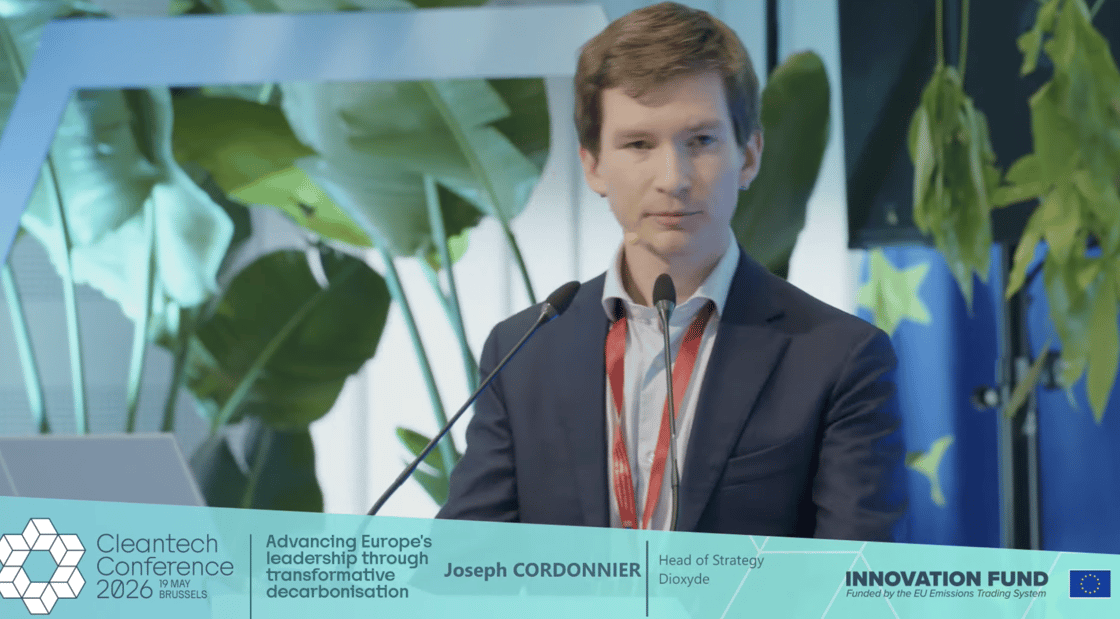
Addressing the Cleantech Conference 2026, Joseph Cordonnier, Head of Strategy, said, “We still have a few steps this year which are quite critical – firstly, select the sites where we can co-locate our electrolysers and given the development time, we need to then connect the grids, and set up the engineering work on the integration.”
Its first commercial scale ‘kit’ is also due to be launched in France this year.
“The goal is to have a mobile unit that will be a demonstrator, that can be installed in multiple sites to test the integration of different chemicals, to produce ethylene or formic acid,” he said.
He added that it has produced cells at scale so when it moves to commercial projects, further scale up is not needed. The mobile industrial demonstrator would just be “replicated to increase the volumes”.
“We will target sites where we have cheap low-carbon electricity – which is our first or second single largest cost item – and infrastructure availability,” he said. “The goal is to produce where the chemicals are consumed as much as possible, and therefore also optimise the logistics. Luckily a number of countries in Europe have these advantages.”
Speaking to gasworld , CEO and Co-Founder Sarah Lamaison explained how its technology works.
“The premise is that we start with recycled carbon monoxide or carbon dioxide, sourced from industrial emissions like cement, steel or chemical plants. So the carbon molecule becomes our feedstock, rather than going into the atmosphere,” she said.
The captured CO2 is fed into the company’s proprietary electrochemical cell – an electrolyser – along with water.
When an electric current passes through the cell, the CO2 molecules are split and recombined on a specialised catalytic surface. Inside the electrolyser, the CO2 undergoes reduction reactions, breaking C–O bonds and forming carbon–carbon bonds under controlled conditions.
Cordonnier concluded, “We can be cheaper because the direct electrified pathway that we are developing replaces multi-step processes … and we can reduce the capital expenditure that is needed.”